Foreign Ministry: Russia deploys military camps on the border

chornajuravka's avatarEuromaidan PR

Thursday, March, 27, 2014, 09:41

The Ministry of Foreign Affairs is concerned with the rearrangement of Russian troops on the border regions of Ukraine.

The ministry’s Director of Information Policy, Yevhen Perebyynis, reported at the briefing, according to Ukrainski Novyny. “According to our law enforcement agencies, the rearrangement of the Armed Forces of the Russian Federation is ongoing in the border areas of Ukraine, especially in the Bryansk region,” he said.

The diplomat noted that there is a concentration of military equipment near the settlement of Churovichi in Klimovo District of Bryansk Oblast, which is about 18 km from the Ukrainian border. He said that on March 25, two military echelons totaling 60 cars with personnel and equipment arrived at the Klimovo railway station in Bryansk Oblast.

View original post 141 more words

Posted in Reblogged | Leave a comment

Information regarding Chechen units in Crimea is correct

03.23.2014 Sled.net.ua
Translated by Paweł Łapiński and edited by Voices of Ukraine
Source: http://sled.net.ua/node/12817

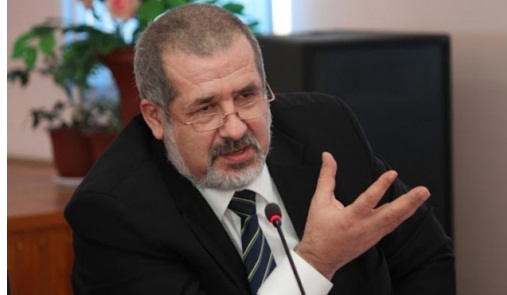
Чубаров_1The Chairman of the Mejlis [of the Crimean Tatar People], Refat Chubarov, estimated information about the presence of Chechen fighters in Crimean units as reliable.
He made this statement in an interview with “ZN.UA.”

Chubarov commented on a number of rumors that are exaggerated in the media: that Chechen President Ramzan Kadyrov is being appointed Putin’s unofficial supervisor [overlord] of Crimea; that units of Chechen fighters were seen at both Chonhar and at military recruitment offices, that they were holding activists as hostages, and that they were at the checkpoint of the Marine corps military base in Feodosia; that Crimean resorts are to be rehabilitated by Chechen billionaire Baysarov; about members of the “Crimean militia” being told to prepare for a semi-annual trip to Chechnya.

“I believe that we should prioritize the specific information that is provided by eyewitnesses. If we talk about the military recruiting office, where people were illegally detained, and we hear about specific soldiers from certain regions of Russia and how they treated hostages, then the information is credible, “- said Chubarov.

“If we talk about certain overseers being appointed in Crimea, and we know their names, then we must understand that this issue is being discussed. And it is most likely, that from the Russian side, a number of mechanisms will be deployed in order to complete the task,” – he says.

According to the Chairman of the Mejlis, he did not have any contacts with Chechens in Crimea or with specific people in Chechnya. There were only telephone calls between Mufti Muslims in Crimea with Muftis of different regions in Russia, including Chechnya, and on their own initiative.

“So once again I will say it: that all means will be used within a lot of different levers – covert and overt, formal and informal – in order to accomplish the task of fully incorporating the Crimean community,” – said Chubarov.


Posted in Crimea, English, English News, Languages, News, Pictures | Tagged , , , , , , , , , , , , , , , , , | 1 Comment

Kozak Havryliuk Thanks Everyone for Their Help (VIDEO w. English subtitles)

27.03.2014
Maria Stanislav, Voices of Ukraine

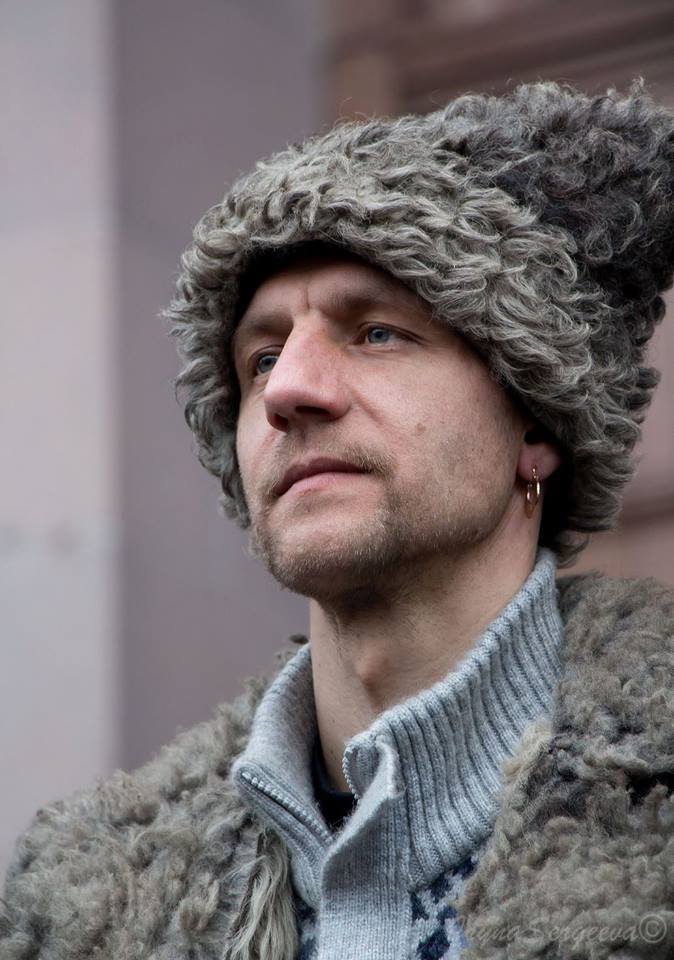
Earlier this month, a few members of the volunteer initiative Logistics Headquarters visited the home of Mykhailo Havryliuk, a Kozak and one of Maidan’s heroes. This man is best known for his amazing courage, and even greater generosity of heart. During the events of Maidan, Mykhailo was subjected to cruel torture and humiliation at the hands of Berkut [former riot police] officers, but withstood his torments with dignity. More than that, Mykhailo actually forgave his torturers. A few weeks ago, when the responsible warrant officer stood trial for his crimes, facing eight years in prison, Mykhailo said he was dropping all charges against the man. “I don’t want the father to be taken away from the kiddies, I withdraw my complaints against him. It’s better to let him raise his children, so that such things are never repeated again,” said the Kozak.

Mykhailo Havrilyuk

Mykhailo Havrilyuk

Irena Karpa of Logistics Headquarters, wrote that, sadly, the state of Mykhailo’s home is very poor – in every sense of the word.
“It’s a painful sight,” says Irena. “The floors are dismantled, and there’s barely any food. [Mykhailo’s] wife was putting the last scraps on the table for us.”

Following that visit, Logistics Headquarters made a facebook post, suggesting to pull together to support Mykhailo Havryliuk’s family. He wouldn’t take donations, being a proud Kozak, and volunteers proposed to fix up his house, instead.

“Logistics Headquarters will start this process, and maybe some more of you will jump on board? Drop us a line, friends. Let’s find some craftsmen and fix up the Kozak’s house. Maybe some of you have the right skills, or maybe some producers can donate [construction] materials for the project?”

The response to the call has been amazing, and Logistics HQ made another visit to the Havryliuks (Mykhailo himself remains at Maidan, in Kyiv, while his wife and 12-year-old son are at home in Chernivtsi oblast). This time, volunteers took pictures of the house and collected all necessary information to prepare a cost estimate for the repairs. Their next step will be finding local craftsmen who would agree to do the work, for a small fee or even for free. They continue collecting funds for construction materials. Meanwhile, several companies offered to provide windows for the house, free of charge.

Mykhailo is very grateful for all the help offered by his Ukrainian brothers and sisters, and thanks them all in this video (English subtitles included):

If you’d like to help repair the home of the Havryliuk family, visit this page on the Facebook of Logistics Headquarters for more details: Project Mykhailo Havryliuk – Helping the Kozak’s Family

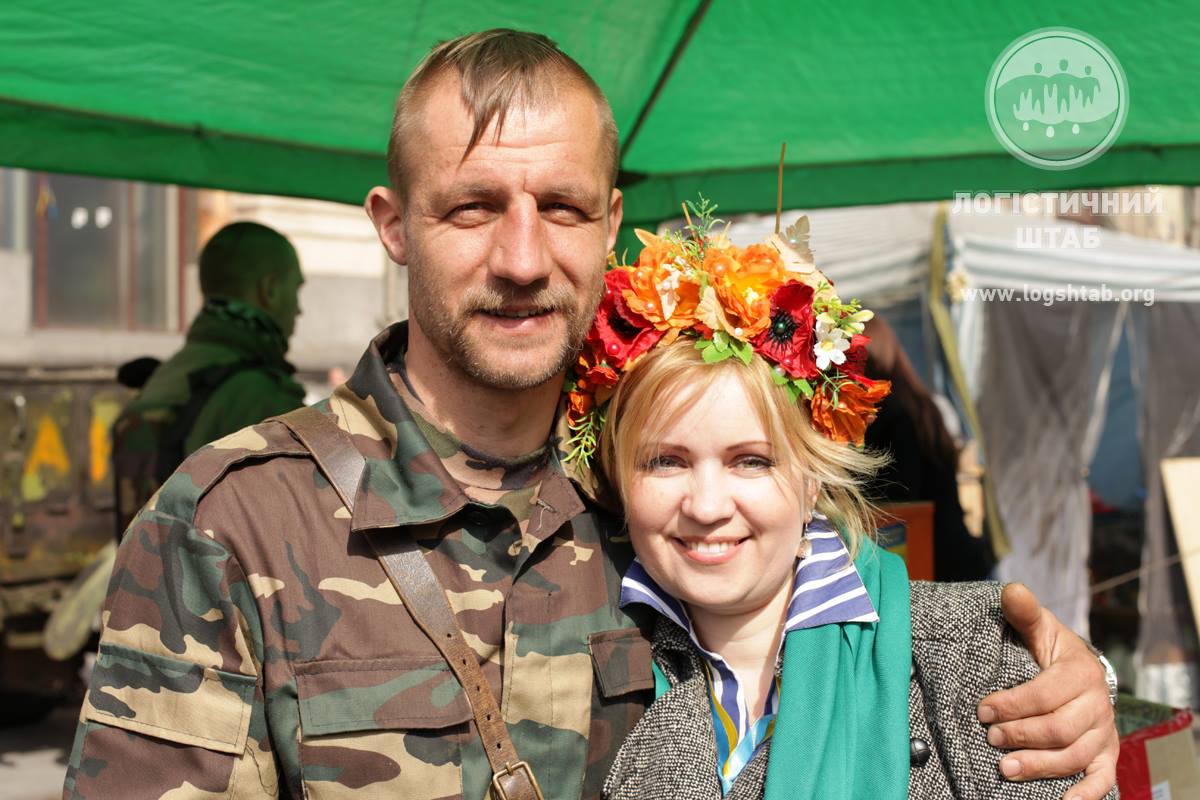
Mykhailo Havryliuk with Inna Zaliznyuk, a Logistics HQ volunteer

Mykhailo Havryliuk with Inna Zaliznyuk, a Logistics HQ volunteer

Posted in "Voices" in English, Beyond Politics, English, Languages, Maidan Diary, Pictures, Video, Voices of Revolution | Tagged , , , , , , , , , | Leave a comment

INVASION OF CRIMEA – March 26, 2014 – Dmitry Tymchuk’s Military SUMMARY

Dmitry Tymchuk, Information Resistance

03.26.2013
Translated and edited by Voices of Ukraine

Information Resistance

Information Resistance

Brothers and sisters!
Here is the summary for March 26 (for the summary from the previous day, see Summary of March 25).

The bad news:

1. The Russian military forces accumulated at our borders are increasing in number, due to the arrival of new units and detachments to the Bryansk oblast [region] of the Russian Federation. Earlier, we saw a build-up of troops in Rostov oblast, while the numbers were considerably lower in the north.

This means that Putin is preparing an invasion across our whole “eastern front” – from Chernihiv to Donetsk.

The interesting thing is, on March 23, international observers carried out a survey flight over the borderland areas of the Russian Federation. At that time, Moscow pulled some of its troops in Rostov oblast back from the border; while in Bryansk oblast, there weren’t that many to begin with. As soon as the inspectors left, the troops crawled back to the border, like cockroaches with the lights out. In short, one would have to be a complete sucker to trust the Kremlin.

Rostov and Bryansk regions of Russia, adjacent to the Ukrainian border

Rostov and Bryansk regions of Russia, adjacent to the Ukrainian border

The only encouraging detail is the fact that by now, the Armed Forces of Ukraine have successfully regrouped. Our border guards keep the border under strict control, while our intelligence services are actively neutralizing Russia’s “fifth column” in our eastern oblasts. All of these things can serve to seriously meddle with the Kremlin’s plans.

2. Ukraine, essentially, has no Navy. Earlier today, we presented a full breakdown of the situation: 10 ships are flying the Ukrainian flag, and 51 have been captured by the occupiers.

Infographic and translation by Rusudan Tsiskreli)

Infographic and translation by Rusudan Tsiskreli)

The Ukrainian Ministry of Defense is currently negotiating to reclaim at least some of the property stolen by the aggressor. But we know how this works – if Putin says “I didn’t take it,” he’s not going to give it back. Nevertheless, we have to try, at least to make ourselves look better.

The good news:

1. Aggression against Ukraine is already becoming too costly for Russia. The outflow of capital from the Russian Federation has reached USD 70 billion, since the beginning of this year. Today, the World Bank announced a forecast (as reported by the Wall Street Journal): if Putin continues to escalate the situation, Russian GDP will drop by 1.8% in 2014. Compared to the 1.3% growth in the previous year, that’s quite a difference.

Today, the President of the EU Council [Herman] van Rompuy, the US President [Barack] Obama and the President of the European Commission [José Manuel] Barroso made a solemn vow: if Putin continues messing about, the EU and the US are prepared to unleash the full extent of sanctions.

It’s obvious that getting through that nut’s [Putin’s] thick skull is not an easy task. But noticeable [financial] losses are definitely a good sign. Let’s see which force is stronger in the Kremlin – aggression or greed.

Colonel Yuliy Mamchur, one of the officers kidnapped in Crimea

Colonel Yuliy Mamchur, one of the officers kidnapped in Crimea

2. As I was writing this, reports came in that six of our commanding officers, previously kidnapped in Crimea by terrorists calling themselves “Russian military,” have been set free. Today, they are heading to Henichesk through Chonhar, and from there, to Kyiv.

I can only breathe with relief. Our heroes are free – and that is excellent.

I’m not a vicious person myself. But I’d like to wish, from the bottom of my heart, that our Russian friends find themselves on the receiving end of the same low and despicable treatment that they’ve been giving our servicemen in Crimea this whole time. Let them drink that in full and choke on it.

3. The Armed Forces of Ukraine will conduct “Spring Rain” military exercises in Kharkiv oblast.

The military, and the political importance of military exercises, in eastern Ukraine cannot be overestimated right now. Our army – slowly and gradually, with moans and groans, with exploding tanks and crashing planes – is waking up from its 20-year-long lethargy. For the first time since the years of Ukrainian independence, it [the army] is starting to understand why it even exists. The same can be said for our entire country.

We all hope that this epiphany hasn’t come too late. But, in any case – this is a huge lesson for us all, for decades to come.

Posted in "Voices" in English, Analytics, Crimea, English, Languages, Maidan Diary, News, News summary, Pictures, Voices of Revolution | Tagged , , , , , , , , , , , , , , , , , , , , , , | 5 Comments

Michael Moser: Mein neuer Leserbrief an den SPIEGEL

Michael Moser: Mein neuer Leserbrief an den SPIEGEL

Quelle: https://www.facebook.com/MichaelMoser2601/posts/10201046743485800?stream_ref=10

Michael Moser

Sehr geehrte Damen und Herren,

schon einmal habe ich mich an Sie mit einem Brief gewandt, weil mich ein Beitrag Ihres Mitarbeiters Uwe Klußmann besonders unangenehm berührt hat.

Nun ist ein neuer Beitrag von Herrn Klußmann mit dem Titel „Krise in der Ukraine: Kiews Regierung riskiert einen Bürgerkrieg“ erschienen (http://www.spiegel.de/politik/ausland/ukraine-kiews-regierung-ist-zum-scheitern-verurteilt-a-960461.html#ref=rss).

Man fragt sich einmal mehr, was Herr Klußmann eigentlich mit seinem Text bezwecken will.

Den Versuch einer halbwegs ausgewogenen Beurteilung der Lage in der Ukraine unternimmt Herr Klußmann jedenfalls nicht. Was er hier vorlegt, ist ausschließlich eine ideologisch gesteuerte Meinungsäußerung, die sich unter dem Deckmantel einer journalistischen Expertise verbirgt.

Klußmann ist es wichtig zu unterstreichen, dass die provisorische Regierung die Lage in der Ukraine „nicht unter Kontrolle habe“ und dass Premier Jazenjuk sich weigere, „Konsequenzen aus seiner verfehlten Politik zu ziehen“.

Es stellt sich die Frage, inwiefern man sich angesichts der jüngsten Ereignisse von der Rgierung erwarten kann, die Lage völlig unter Kontrolle zu haben. Unklar bleibt, welche Konsequenzen Jazenjuk denn ziehen soll, außer dafür zu sorgen, dass das Land stabilisiert wird, dass dann Wahlen stattfinden und dass sich die Ukraine in der Folge weiter konsolidiert.

Dass sich Herr Jazenjuk beispielsweise kürzlich an die Bevölkerung im Osten und Süden des Landes wandte und versicherte, das Russische würde in der Ukraine weiterhin geschützt werden und es werde schon im nächsten Jahr eine „Dezentralisierung der Macht“ in Angriff genommen werden, versteht Klußmann offenkundig nicht als „sinnvolle Konsequenzen“. Man fragt sich, warum, da doch vor allem Leute wie Klußmann gerade die angebliche Unterdrückung des Russischen und den angeblich überzogenen Zentralismus unentwegt kritisieren.

Dass sich Klußmann über die Hintergründe des Sprachengesetzes aus dem Jahr 2012 ausschweigt, erstaunt mich nicht. Dass er Jazenjuks Versprechen einer moderaten Föderalisierung als „vage“ abkanzelt, ist wohl nur folgerichtig, wenn man Herrn Klußmanns Gesamtopus in Rechnung stellt. Was aberkann es mehr geben als ein allgemeines Versprechen, nach der kurzen Zeit, in welcher die Regierung an der Macht ist?

Woher will Klußmann wissen, dass Jazenjuks Appell „wirkungslos“ geblieben sei? War dieser Appell „verfehlt“? War es „verfehlt“, dass Präsident Turchynov die Außerkraftsetzung des Sprachengesetzes nicht zuließ, obwohl dieses Sprachengesetz einst entgegen allen Regelungen der ukrainischen Gesetzgebung und gegen den Rat der Venedig-Kommission und der OSZE durchgeboxt worden war?

Hat Herr Klußmann übersehen, dass es auch im Osten und Süden der Ukraine nicht nur Demonstrationen für Putin, sondern auch keineswegs immer kleinere Demonstrationen für den Verbleib bei der Ukraine gab?

All dies zu verschweigen, ist eine unzumutbare journalistische Fahrlässigkeit.

Ich fahre fort:

Herr Klußmann behauptet: „Die meisten Menschen im russischsprachigen Osten der Ukraine glauben den Versprechungen des Regierungschefs einfach nicht.“

Hier würde man doch gerne wissen, ob sich Klußmann auch nur auf irgendeine repräsentative Umfrage stützen kann. Nein – alles ist angeblich genau so, wie Herr Klußmann es sehen möchte!

Insgesamt frage ich hiermit: Hat Klußmann denn überhaupt eine Ahnung, wovon er in Ihrer geschätzten Zeitschrift schreibt?

Wie kann ein Journalist vom Fach behaupten, der Osten der Ukraine sei schlichtweg russischsprachig? Hat sich Klußmann irgendwann mit den öffentlich zugänglichen Daten der ukrainischen Volkszählungen beschäftigt? Weiß er nicht, dass das Ukrainische auch im Osten und Süden der Ukrainische von großen Bevölkerungsanteilen als Muttersprache angegeben wurde (Im Oblast Cherson z.B. liegt ihr Anteil bei 79%!!!)?

Auch Klußmanns Teilung der Ukraine in einen „nationalukrainischen Westen“ und einen „russlandfreundlichen Osten“ ist eine fahrlässige Vereinfachung, deren apodiktische Formulierung vor keiner einzigen Meinungsumfrage der letzten Jahre bestehen kann.

Herr Klußmann sollte, bevor er weiter für Sie arbeitet, endlich seine Hausaufgaben machen und seriöse journalistische Arbeit betreiben. In einer für die Ukraine so schwierigen Zeit sollten die Journalistinnen und Journalisten bitte noch verantwortungsvoller arbeiten als sonst, nicht aber im Gegenteil.

Herr Klußmann kritisiert, dass die Partei „Svoboda“ eine verhältnismäßig große Rolle in der Regierung spielt. Dem könnte man beipflichten. Die Partei aber schlichtweg als „rechtsextrem“ abzustempeln, ist eine erneute Manipulation, denn international renommierte Politologen sehen den Fall weitaus differenzierter als Herr Klußmann, der auf Schritt und Tritt unter Beweis stellt, wie wenig Ahnung er von seinem Gegenstand hat. Kommt Klußmann dann auf den Vizepremier zu sprechen, so kritisiert er nicht etwa diesen, sondern verweist auf einen Zwischenfall, mit dem der Vizepremier selbst nichts zu tun hat, der in der Ukraine einhellig verurteilt wurde (selbst innerhalb der eigenen Fraktion) und den manche gar als eine von Moskau initiierte Provokation erachten wollten (ob dies stimmt, kann ich nicht beurteilen).

Klußmanns Vorwurf, Jazenjuk beurteile die Lage „unrealistisch“, weil die Konflikte im Osten von äußeren Kräften geschürt würden, erstaunt mich nachhaltig. Klußmann behauptet, es seien nur die Ukrainer, die „zu Zehntausenden gegen die Regierung auf die Straße“ gingen, und bietet keinerlei konkrete Zahlen der Demonstrierenden (vorher hat er ja noch zutreffend von Tausenden gesprochen), die in Wirklichkeit weitaus niedriger liegen. Klußmann verschweigt die Gegendemonstrationen. Vor allem erwähnt er nicht, dass es konkrete Hinweise darauf gibt, dass unter den russlandfreundlichen Demonstranten häufig große Mengen russischer Staatsbürger zu finden waren, die mit Bussen aus den Grenzregionen nach Donecʼk, Charkiv oder Luhans’k transportiert wurden. Er erwähnt mit keinem Wort, dass der Mann, der in Charkiv die russische Fahne hisste, ein russischer Staatsbürger ist, dessen Bewunderung für Adolf Hitler dokumentiert ist. Er merkt nicht an, dass auch der Anführer des russlandfreundlichen Mobs in Donecʼk ein „ehemaliger“ Neonazi ist.

Er erwähnt nicht, was Russlandfreundlichkeit in der Ukraine heute meistens heißt: Stalinverehrung, Sowjetnostalgie und russischer Nationalismus, der während der letzten Jahre immer deutlicher geradezu faschistische Züge angenommen hat.

Klußmann meint, diplomatische Formulierungen unbedingt in extreme umgestalten zu müssen; berechtigte Bedenken einer vom Bundeskanzleramt mitfinanzierten Stiftung betrachtet er als „Fazit eines Fiaskos“. Klußmann zieht daraus den Schluss, dass die Regierung der Ukraine „unweigerlich zum Scheitern verurteilt“ sei, und setzt damit einen weiteren empörenden Schritt in seiner abgeschmackten Hetzkampagne gegen das flächenmäßig größte ausschließlich in Europa gelegene Land, dessen Bevölkerung gerade um Konsolidierung bemüht ist.

Eine Art Journalismus wie jene von Uwe Klußmann, die klar interessengesteuert ist, sollte in der Welt des deutschsprachigen Journalismus keinen Platz haben.

Michael Moser

Professor für Slawische Philologie

Universität Wien, Katholische Péter Pázmány-Universität Budapest/Piliscaba, Ukrainische Freie Freie Universität München

Präsident des Internationalen Ukrainistenverbandes

P.S.: Freunde von mir haben eine Petition auf Avaaz gestartet.
Sie sollten von ihr wissen:

https://secure.avaaz.org/de/petition/Spiegel_offizielle_und_oeffentliche_Entschuldigung/?fbss
Posted in "Voice" auf Deutsch, Analytik – Deutsch, Appeals, Deutsch | Tagged , , , , , | 1 Comment