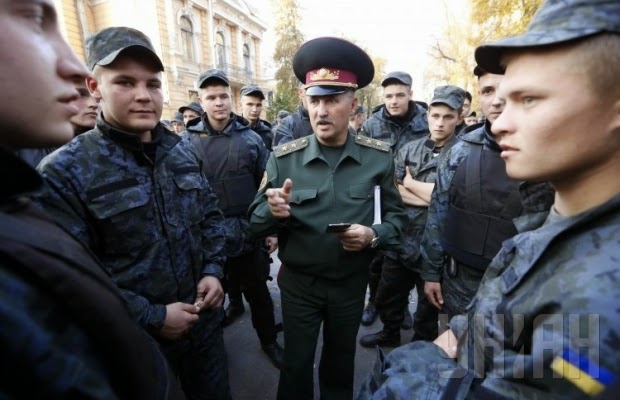
More than 300 National Guards soldiers protested near the Presidential Administration in Kyiv demanding the overdue discharge from service, payment of salaries and normal treatment by commanders. The authorities assessed the incident as a provocation and violation of the statute.
President Poroshenko has proposed National Guard commander Poltorak as a candidate for the Defense Minister Position for approval by the Parliament.
The Cabinet of Ministers proposed to eliminate commercial courts, combine the High Council of Justice and the Qualification Commission of Judges and return powers to the Supreme Court within the judicial reform project, as well as to strip the prosecution of general oversight functions.
National Bank continues the policy of the exchange rate support via sales of cash foreign currency reserves to banks. Official exchange rate has been established at 12.95 UAH/USD, 16.36 UAH/EUR (-16 cop) and 3.22 UAH/10 RUR (-2 cop).
Donetsk Governor Kihtenko decided to move the regional administration to Kramatorsk. However, headquaters of power agencies will remain in Mariupol.
Sociologists from the «Rating» group are forecasting that Porosenko block will get up to one third of the elections votes, Radical Party of Lyashko and «Narodny Front» are on second and third places respectively. In their opinion, the President has support of 48% of Ukrainians.
At least 10% of the candidates on the elections lists of political parties are engaged in corruption, as per Transparency International data.
111 senior officers will be dismissed from the Border Control Services according to the Authorities Purification Law.
The rights for natural gas extraction in 5 fields and several special permissions for minerals extraction have been auctioned by Ukrainian authorities.
Kyiv
Kyiv city train, considered by authorities as an alternative to the development of the new metro stations, have been launched at full scale with the scheduled interval of 15 minutes between trains.
War in Ukraine
Battles for Donetsk International Airport have resumed again. Ukrainian army positions are being attacked and shelled within 5 areas of the Donbass conflict zone.
Dmitry Tymchuk, Head of the Center for Military and Political Research, Coordinator of the Information Resistance group
10.14.2014 Translated and edited by Voices of Ukraine
According to Information Resistance operational data, a tense situation remains in the region of the city of Mariupol.
Mariupol volunteers. Photo: AFP
In this area, the activity of the opponent’s DRG [Russian sabotage and intelligence group] has been noted. Also Russian-terrorist troops have carried out a regrouping and are conducting exercises. Yesterday, October 13th, units of the Russian army and the terrorist group stationed in the area of Novoazovsk raised the alarm (the legend – was that Ukrainian troops were attacking).
In the district of Novoazovsk, columns are arriving with ammunition and equipment from Russia. Yesterday, October 13th, a column numbering up to 10 trucks was recorded crossing the border by Fedorivka (Rostov region of the Russian Federation). The column headed toward Novoazovsk.
In the district Sakhanka (Novoazovsk district of Donetsk Oblast/region) a subdivision of the GRU [Main Intelligence Directorate of the General Staff of the Armed Forces of the Russian Federation] arrived, numbering several dozen people. Simultaneously, a group of local militants were withdrawn from this area. The soldiers who arrived do not hide their affiliation with the Armed Forces of the Russian Federation.
From the border districts of the Rostov region of Russia, Russian troops appear in places of permanent deployment. Noted is the deployment of personnel from the Dolotinka Millerovsky District, Rostov region, of Russia personnel from the units of the 138th Motorized Rifle Brigade to places of permanent deployment (positions in the Kamenka Vyborg district of Leningrad Oblast/region).
However, according to our data, mainly conscripts are being deployed. Contract servicemen remain in the border areas.
Dmitry Tymchuk, Head of the Center for Military and Political Research, Coordinator of the Information Resistance group
10.14.2014 Translated and edited by Voices of Ukraine
Operational data from the Information Resistance group:
Last night in the ATO zone, it was relatively calm. One firing was reported – yesterday around 23:00 [11pm EEST] militants fired an MLRS “Grad” onto positions of our troops near the village of Tonenke.
Over the past 24 hours, Russian-terrorist forces violated the ceasefire silence more than 30 times, shelling our positions with all kinds of weapons provided to terrorists by the Russian Federation. Militants also made another unsuccessful attempt to storm the airport in Donetsk.
The most active shelling onto the positions of our troops occurred as follows:
• The Donetsk Airport, in the populated areas of Pisky, Chornukhyne, in the suburbs of Debaltseve – where 3 fire strikes of the Russian-terrorist forces were recorded.
• The positions of ATO [anti-terrorism operation] forces near the settlements of Talakivka, Olkhovatka, Avdiivka, Tonenke were attacked twice.
The insurgents have also been shelling the bases and roadblock checkpoints near the settlements of Shchastya, Smilyve, Stanytsia-Luhansk, Novotroitske, Krasnohorivka, Hranite, Nykyshyn, Sartana, Pavlopil.
Units under the control of terrorist leader I. Bezler (“Devil”), left a number of checkpoints on the right flank of the Debaltsevebeachhead and moved to the area of fortified positions previously occupied by them in Horlivka. In this regard, the “DNR” [‘Donetsk People’s Republic’] management demanded explanations of Bezler, but he did not argue this withdrawal of troops from Debaltseve whatsoever.
The “mobilization activities” amongst former employees of Ukraine’s Interior Ministry, who remained in the “DNR” have come to no avail. Attempts by the “DNR” leadership to turn them into “special forces” have become a fiasco because of the instant desertion of more than two thirds of the personnel comprising these subdivisions.
In the Telmanove–Novoazovsk strip, Russian military and insurgents under their control carried out an operation on an unprecedented scale to search for their missing DRG [Russian sabotage and intelligence group]. According to our data, citizens of the Russian Federation also are involved in the “search operation,” traveling in vehicles with the designation “OSCE.” Information about the destruction of the given DRG has been received across the channels of Ukrainian troop military control bodies. The circumstances of the disappearance of the DRG and the reasons for its “value” to Russian command are currently unknown.
There has been a marked intensification of enemy UAV [unmanned aerial vehicle, i.e.: drone planes] reconnaissance flights in the district of Mariupol. Recently, the “drones” are run mainly in pairs.
In the district of Perevalsk and Alchevsk there is exacerbated conflict between militant groups of local terrorists and troops of the so-called “Don Cossacks.” There have been several clashes between “LNR” [‘Luhansk People’s Republic] factions and A. Mozgovoy’s [Luhansk people’s] “militia.”
In areas controlled by the “LNR,” a massive, centralized collection is being organized of scrap metal in the form of battered weapons and equipment that cannot be restored. To do this, a number of local residents formed a special “scrap metal” command. These teams are working in areas where there was particularly fierce fighting. On this basis, conflicts have been observed with Russian soldiers who are trying to evacuate the equipment of their units in a battered state to the territory of the Russian Federation.
On territories controlled by the “LNR,” militants are strongly spreading rumors that today, on the occasion of the Orthodox Christian holiday of the Holy Virgin, Ukrainian troops will carry out artillery attacks on churches in the conflict zone. In connection with this, armed provocations on the part of Russian-terrorist troops under the guise of ATO forces cannot be excluded.
In the ATO zone, the civil-military cooperation group of the Armed Forces of Ukraine (the Ukrainian anologous structures, CIMIC – Civil-Military Cooperation) continues its work. The purpose of this structure – is the organization of cooperation between the military control with the civilian population, local authorities and organizations. The priority objective of this structure is the search and recovery of bodies of dead servicemen in the conflict zone (in the past month, this structure evacuated more than 130 bodies of dead soldiers). There is cooperation on this issue with the Ukrainian military groups of the “DNR” (often information about the whereabouts of the remains of our soldiers comes from them, and they also provide security in the evacuation of bodies). In absolutely stark contrast is the behavior of “LNR” terrorist groups who are not in contact, and do not allow for the possibility of carrying out the same work [in territories controlled by them]. On this issue, the “LNR” is not in contact with even the mediation representatives of the “DNR.”
Senior representatives of the “LNR” are expressing a claim to the Russian government about its reluctance to actively introduce the Russian ruble instead of the Ukrainian hryvnia in circulation in the occupied territories in the Donbas. Earlier, the “LNR” has repeatedly appealed to the Kremlin with the requirement to solve this problem, but always received the rejection of the Central Bank of the Russian Federation. In the “LNR’s” version, the reason for this is fear, on the part of the financial institutions of the Russian Federation, of receiving new sanctions by the West in the banking sector. At the same time, in areas controlled by the rebels, some working people are paid in rubles, but for the implementation of the currency they basically go into the territory of the Russian Federation.
Portraits and stories of people who have experienced the inferno of war
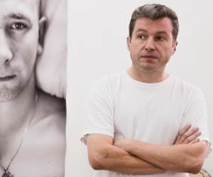
By Taras Polataiko, Ukrainian Canadian artist, Assistant Professor, University of Lethbridge, Canada 10.13.2014 Transcribed and translated by Maria Stanislav for Voices of Ukraine
Taras Polataiko’s project War. 11 Portraits showed in August and September at the National Art Museum of Ukraine’s [NAMU] charity fundraising initiative to help wounded soldiers and museums who have suffered or been damaged within the Ukrainian ATO (Anti-Terrorism Operation) zone.
For several days in early August, the artist talked with patients of the surgical department of the Central Military Clinical Hospital in Kyiv who came there from the front with serious injuries. Polataiko had 11 photo-portraits taken and recorded the stories of the people who have been in the inferno of war. They are very diverse people: volunteers, mobilized and contract soldiers, veterans of the Afghanistan War. They belong to different generations and went to the war zone from different regions of Ukraine. They have different attitudes to war and their experiences.
Voices of Ukraine has transcribed and translated each of the 11 audio stories that are part of this exhibition so that they may be read in English. This is the third in a series of the stories in English for our readers. This exhibition, and the stories, will travel to other parts of Ukraine, the USA and Canada. See it if you’re nearby and support our troops!:
Denis, reconnaissance: After surviving, you begin to value your life differently
Denis: My name is Denis, from Khmelnytskyi Oblast [region].
Taras Polataiko: How did you get to the ATO? Were you drafted?
No, I’m a contract soldier. I was already serving before the ATO. I was in reconnaissance.
Was it your first time in a real war?
Yes. (chuckles) We haven’t had wars before.
What were your first impressions? What is the honest impression of an average person ending up at war?
It’s difficult to explain. When you see your officers, missing half their head, or something along those lines… It’s difficult to explain such things. You want impressions? There definitely aren’t any good ones.
Did anything at the war change you personally?
After surviving, you begin to value your life differently.
Is it a change of priorities? Or just the appreciation for the fact that you survived?
All your needs in life become different. For a while, even going to have a wash was luxury for me, being bed-bound. I’m feeling a bit better now, but it was very difficult at the time. All in all, after experiencing such things, you find you really need very little in life.
When you end up in a frightening situation, between life and death, what helps you hold on?
Personally, when combat was happening, I wasn’t even thinking of anything. Over there, you can’t think. You just go ahead, and onward.
You were scared at first, weren’t you?
Who wasn’t? But an order is an order.
Are you scared all the time, or does it pass?
No, you gradually get used to it. It becomes a habit. But some fear remains. Everyone wants to live, after all. It’s the survival instinct.
How long have you been at war?
In the east, starting from the 8th of April. In the ATO area, since the 23rd [of April]. And a whole month in the most active combat area, between May 2nd and June 3rd. Then I got wounded. I spent a whole month at the Karachun [mountain], on different combat missions. There was constant shelling there, the bombings never stopped.
Do the locals support us [Ukraine]?
No. Over there, there was no support. When we arrived, a bridge near Sloviansk was blocked. [Russian] special ops were working in the city at the time. People were shouting ‘Russia!,’ calling us fascists, Banderites, and suchlike. ‘Get out of here!’ they told us. All they wanted was Russia. And now, once Sloviansk has been liberated, they’re shouting ‘Ukraine!.’ I don’t understand those people.
The result of propaganda, I guess?
Yes, people have been brainwashed. When we took the [TV and radio broadcasting] tower on the Karachun [mountain], there was no Ukrainian television at all. People were watching Russian television, and seeing things the way Russia wanted them to see.
What are you going to do after the war?
Getting treatment now, and then I’ll see.
Thank you very much. Glory to Ukraine!
Slava [Glory] to the heroes!
… [continues on] …
What kind of shortages are there?
We need thermal imagers and night vision devices. Personal medical aid kits, those are important too, because the only thing we have is a tourniquet and a first aid kit. As for the gear, myself, I had a bulletproof vest, grade four, and a Kevlar helmet.
Did you buy those yourself?
No, we were issued the gear. I’m from the 95th [separate aeromobile] brigade. We were issued with armor and helmets right away. We have been supplied with everything we needed when were heading out to the first combat mission. I’d be lying if I said we didn’t have helmets or vests.
So the main things we need are thermal imagers, night vision devices, and medical kits. We had no problems with armaments, and we had equipment protection, like radio jammers, and mine dampeners. For example, if a bridge is rigged with mines, two such dampeners suppress the mines within a 300-500 meter radius, so the bridge would not blow. We had some of those, too.
As for other things… We had enough radios, eventually. Many different kinds, some Ukrainian-made, some imported. But many of those radios, the enemy could tap into. More expensive radios, costing 1,000 hrvynya [USD 80] or more, work through a satellite and are protected, so the channel can’t be tapped.
Were you issued with everything at the start?
Got some things at the start, and then more as I went on further missions, as needed. Got a uniform, a balaclava, a wind protection suit [for mountain terrain]. We were well-supplied, and people helped, too. Myself, I had no complaints about my gear.
What about medicines?
Medical kits, we need those. All we get is a tourniquet and a basic first aid kit. But to stop the blood properly, you need some medicine. Everyone has butriphenol for anesthetic, but the guys need more medical supplies. That’s what I know about the current needs, based on what I saw. But different units may need different things, of course.
Serhiy, “Dynamite,” volunteer: We will not give away a single piece of our land
Serhiy: My name is Serhiy Ovrazhko, I’m originally from Khmelnitsky Oblast, currently living in Boryspil, Kyiv oblast. I went to the ATO as a volunteer.
Taras Polataiko: Did you go there from Maidan?
I was at Maidan, back in the day. Then, after Maidan, I was doing a lot of work for Kyiv. Then I headed to the ATO as a volunteer. My call sign in the battalion was ‘Dynamite.’
How did you find out about volunteering? Was there a call for volunteers?
No calls or anything. My friends were going, and I went too. I wanted to volunteer for the 72nd [mechanized brigade], but my friends were going to Aidar, so I went with them.
Was this your first war?
Yes.
What were your first impressions at the front line? Anything that particularly stuck in your mind?
Not really. I was morally prepared, so nothing shocked me. War is war.
Were you scared?
No. In my life, I’m not scared of anything. Fear is something I simply don’t understand. Survival instinct, yes. I have a very strong survival instinct, it’s like a sixth sense for me. But not fear. I’m never afraid.
Did your experiences in the war change you? Did your priorities change?
Somewhat, yes. You start treating different things as more important or secondary. Secondly, I knew that our country was at war, but after being there, I can see that we’re fighting two wars. The way things are going over there are beyond sense and reason. The army command is in complete disarray. Half of the higher-ups should be fired. More than fired – half the generals should be kicked out on their asses and stripped of their rank. They’re not fit for their ranks, and too many of their titles have been bought. This is something I could go on about.
When you end up in a life or death situation, what helps you hold on, in the most difficult moments?
The fact that we’re fighting for our own land. I want to live in an independent country, without some scum coming here and telling me what to do. I remember the words of my late friend about this. On our way to the ATO, we were passing Kharkiv, and the region once called Slobozhanshchyna [Sloboda Ukraine]. And my friend, from Volyn [western Ukraine] himself, he said, “This is a land you can give your soul for. Your very life and soul.” And this is the way this is going to be. We will not give away a single piece of our land.
Roman: For two weeks at a check point, we were short on bread and craved fruit and vegetables
Roman: We spent two weeks on a check point between Shchastya and Luhansk. Until our kitchen was set up, we were always short on food. Even after it was set up, during the last week, we didn’t have enough bread, and we were really craving fruit and vegetables.
Our position was held pretty well. I got wounded on the 8th of July. That’s all I’ve got, in brief.
Maksym: Now that volunteers are helping us, I don’t think we’re short on anything
Maksym: At the time, we didn’t have enough bulletproof vests. We were also short on helmets, the good Kevlar kind. The rest was fine. That was back then. At this time, volunteers are helping, so I don’t think we’re short on anything right now.
Taras Polataiko: When was that?
Two months ago. I’ve been in the hospital since then.
Dima: First of all, the ATO is lacking supplies for individual medical aid. We also need more air drones for reconnaissance and target detection. We don’t have enough high-quality collimator [red dot] sights, they are expensive. Range finders, too. We need more protection, high-quality bulletproof vests and helmets, as well as good protection for armored vehicles. We also need anti-sniping devices.
Sasha: I heard from the guys that they’re lacking water and sleeping bags. Aside from that, they seem to have everything. The guys are very courageous, they will succeed.
Taras Polataiko: What is their situation like?
Their situation is one word – war. They sleep in the trenches.
Were you drafted to the ATO?
Yes, I was mobilized, on March 31st, nine years after I finished my compulsory service. I believe that all will be well.
By Segodnya.ua
10.13.2014 Translated and edited by Voices of Ukraine
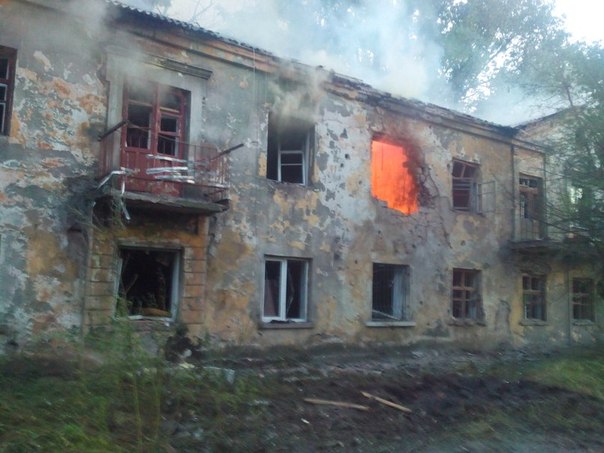
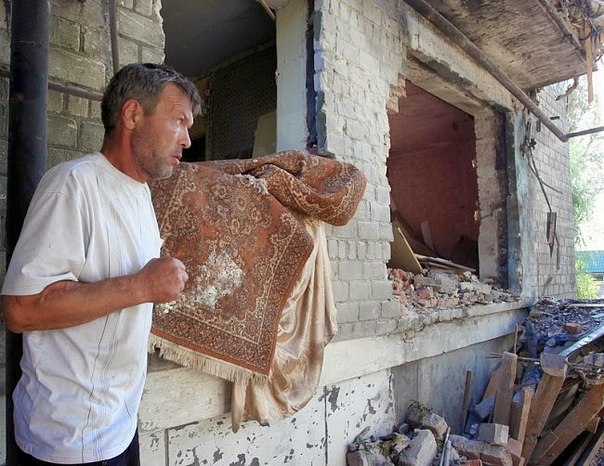
We have collected 873 photos from eastern Ukraine, which show the real picture of the situation: all the pain, extreme survival conditions, the extent of the destruction, the military situation in the region. If you have photos that you want to share with other users, join Segodnya.ua now and send in your photos.






 Voices of Ukraine