VITALY PORTNIKOV: The Need for Fear

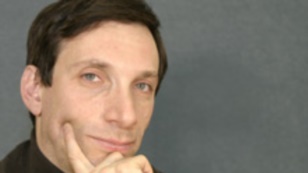
By Vitaly Portnikov
04.04.2014 10:51 Radio Svoboda
Translated and edited by Voices of Ukraine
Source:http://www.svoboda.org/content/article/25320784.html
45C239F3-B06F-4176-8795-7B6AAB50599B_w308_r1In these gloomy days many in Russia are pondering a question that only recently would have seemed phantasmagorical. How is it that Russians, who not long ago considered Ukrainians their brothers and almost more “their own” than many citizens of their own country, have come to see them as “Banderites,” and war with them has become not only acceptable but necessary? Maidan? Propaganda? But in 2004 there were also both Maidan and propaganda – and there was no such universal bitterness, such thirst for war.

To find an answer to this question, it’s worth revisiting another painful question of European history. How did Germans, who had seen Jews as compatriots and who were having trouble telling apart a German Jew from a “true Aryan,” suddenly become anti-Semites, ready to chase Jews from the country and to seek out Jewish ancestry among their best friends? And let’s be clear here – this is not even anti-Semitism as such, this is a desire to find an object of hate.

Of course it is true that pogroms and exile happened in Germany before Hitler, that the Holocaust did not spring from nothing. That is true. But what is important is that the idea of the “final solution” only formed after German Jews began to see themselves as simply Germans of Jewish faith. This was quite logical for a country populated by German Catholics and German Protestants. Of course, one can look for reasons in the xenophobic nature of national-socialism, or the desire to seize Jewish capital. But there was something in which the nature of national-socialism resonated with the mood of the German society itself – the perceived uselessness of their country as a civilisation. The years after Germany’s defeat in the First World War were for many Germans a time of decline and disappointment. When they compared their nation, shrunken into an ethnic republic, to neighbouring empires with their overseas possessions and economic achievements, Germans felt a sense of inferiority that could not be compensated by either democracy or the “Golden twenties.”

The very first serious economic crisis opened the gates to dictatorship and hatred. German Jews became the first object of this hatred simply because they were the most vulnerable sector of the population. Persecution of Jews became a parade that did not require any victims from the victors. The victims came later, when the regime was strong enough and did not need to reckon with either its own people, nor with strangers who had turned into a hindrance to the development of a new living space. But by that point, talk of the uselessness of German civilisation only came from a tiny handful of national traitors.

Something similar happened with Russia. A huge part of her population took the end of the Cold War not as their own victory against totalitarianism, but as the humiliating defeat of a great nation. The citizens of this nation were proud of the fear that they instilled in the rest of the world, and were not ready for fear to suddenly disappear to be replaced by the competition of economies, cultures and social models. In this competition, Russia, shrunken in the mind of the Kremlin to the size of a former Soviet republic, lost, and no democracy, no “golden Noughties” could change that sense of inferiority and provincialism which only increased when travelling to the “decadent West.” And once again there was the need for fear. This desire to instill fear is what many perceive as the new rules of the game from Vladimir Putin.

This drive for the government to instill fear on the world around them exists because of the demands of their own society, a society that does not know how else to make themselves known in this fast-changing world. The Ukrainians became objects of hatred simply because their country became weak after the marauding rule of Kremlin puppets – and also because they never dreamed of shooting at Russians. Thus a young hooligan, who is just starting out in banditry, first attacks a defenseless woman who cannot fight back. For the bully, the main thing is to overcome a sense of shame and to feel the heady buzz of impunity.

But now no-one talks of the uselessness of Russian civilization, except for a tiny handful of national traitors. What happens next, we all know from history. The potential aggressor is either stopped by stronger players – and by stronger values than fear – or goes further and further, until their own and everyone else’s catastrophe. The Germans felt their genuine use as a civilization after the war, when brick by brick they were rebuilding not only their shattered country, but the mutilated soul of their people. I would not want to know that Russians are heading towards a similarly terrible fate.

Posted in "Voices" in English, Analytics, Crimea, English, Languages, Maidan Diary, Voices of Revolution | Tagged , , , , , , , , , , , , , , , , | 3 Comments

Mejlis Vice Chairman: Active Pro-Ukrainian Movement Needed in Crimea

viaMejlis Vice Chairman: Active Pro-Ukrainian Movement Needed in Crimea.

Kyiv, 4 April 2014 – Nariman Jelyal, Vice Chairman of the Mejlis of the Crimean Tatar People, spoke about the current situation in Crimea during a live broadcast at Ukrainian Crisis Media Center: “Crimea is already being mastered by the authorities of the Russian Federation. The assets are being actively redistributed – real estate, forest resources, gas deposits etc.”. He added that many everyday problems for ordinary people are arising, for example, pensions and salaries of civil servants in fact decreased due to RUB currency rate difference. Mr. Jelyal is also concerned about insufficient capacity of Kerch ferry crossing for providing the peninsula with essential commodities.

Read more HERE

viaMejlis Vice Chairman: Active Pro-Ukrainian Movement Needed in Crimea.

Posted in "Voices" in English, Crimea, English, English News, News | Tagged , , , , , , , | Leave a comment

Charis Haska: Schrecklich zu sagen

Charis Haska: Schrecklich zu sagen

Quelle: https://www.facebook.com/charis.haska/posts/629860973747264?stream_ref=10

Wieder sind wir mit dem Taxi unterwegs. Den Fahrer schätze ich mit meinen mitteleuropäischen Augen auf Ende Fünfzig. Wahrscheinlich ist er zehn Jahre jünger. Er rast die Kruglouniversitetska hinunter und schneidet die Kurven, sodass ich um unser Leben fürchte. Ich sage: „Können wir etwas langsamer fahren? Heute brauchen wir keine notärztliche Konsultation, wir sollen uns nur zur Kontrolle noch mal vorstellen.“ Ganz ruhig erklärte er mir: „Wir sind weder zu schnell gefahren, noch haben wir eine Verkehrsregel übertreten.“ (Wie war das noch mal mit dem Überfahren der Mittellinie in unübersichtlichen Kurven?) Ich sage: „Ich habe trotzdem Angst.“

Nach einigen Minuten Fahrt fragt er fürsorglich: „Ist die Geschwindigkeit jetzt OK?“ Gerührt bejahe ich. Dann wage ich eine Frage: „Ihr Auto hat kein Kiewer Nummernschild. woher kommen Sie denn?“ Wie aus der Pistole geschossen kommt die Antwort: „Das ist, ehrlich gesagt, schrecklich zu sagen. Aus Donezk.“ Nanu? „Warum schrecklich?“ hake ich nach. „Weil da die Situation jetzt so schwierig ist?“ – „Nein, weil Janukowitsch von dort stammt, der Mistkerl.“ Ich sage: „Aber er ist doch nicht Ihr Freund.“ – „Ich bin weit davon entfernt, sein Freund zu sein.“ sagt er. In seiner Stimme schwingt etwas wie Scham mit, vielleicht schämt er sich für die mit, die Janukowitsch unterstützt haben?

Nun beginnt er zu erzählen: „Ich hatte dort ein Geschäft. Vierzig Mitarbeiter haben für mich gearbeitet. Dann kam die Wirtschaftskrise. Und dann kam Janukowitsch an die Macht. Vorher wars schon schwierig, aber er hat mir dann alles kaputt gemacht. Nach Kiew bin ich gegangen, um meinen Kindern eine vernünftige Ausbildung finanzieren zu können. Ich habe drei Töchter, zwei studieren am Konservatorium, eine ist Ballerina. An den Wochenenden fahre ich Taxi. Das Auto hab ich mir von meinem Schwager geliehen. Es ist alles nicht so einfach.“ Draußen huschen Kiews elegante Cafés an uns vorbei, das moderne Einkaufszentrum Ukraina und der berühmte Zirkus. Voller Stolz fährt er nun fort: „Ich bin im Begriff, ein Patent anzumelden. Schauen Sie mal!“ Mit dem Ellbogen zeigt er mir kleine Bildschirme, die in den Fensterrahmen der Frontscheine angebracht sind. „Damit sieht man jedes kleine Detail rund um das Fahrzeug. An Wochentagen bin ich unterwegs, um die Formalitäten dafür zu erledigen und die Dokumente dazu fertig zu machen. Das zieht sich unglaublich in die Länge…“ – „Gott gebe, dass die Ukraine sich nun endlich entwickeln und entfalten darf!“ sage ich.

„Ja, schön wärs, wenn es so käme. Aber wirklich, es sieht nicht besonders gut aus. Wir hoffen sehr darauf, dass Deutschland starke Maßnahmen gegen Putin ergreift. –J a, wir hoffen auf Deutschland, denn es ist das stärkste Land Europas. Aber leider scheint die Freundschaft mit Putin der Kanzlerin ja sehr wichtig zu sein. Wozu sammelt er all diese Truppen? Wir können wirklich keinen Krieg brauchen und ganz besonders keinen Bruderkrieg. Leider wiederholt die Geschichte sich zyklisch: Der Anschluss Österreichs, der Anschluss der Krim. All das scheint irgendwann wieder zu kommen, so wie Sie irgendwann ins OchMatDit gefahren sind und heute wieder hinfahren.“

Ein panzerähnliches Fahrzeug überholt uns. Ist das normal? Es ist das erste Mal, dass ich so etwas im Straßenverkehr erlebe. Es läuft mir eiskalt den Rücken hinunter. Der Redestrom des Taxifahrers ist nicht abgerissen, wobei er sich nicht echauffiert. Er klingt überlegt und melancholisch. „Es sieht nicht gut aus für die Ukraine. Das einzig Gute an dieser verfahrenen Situation ist, dass wir Ukrainer jetzt begreifen, dass wir diesen Putin wirklich nicht brauchen. Ehrlich gesagt, im Vergleich zu Putin habe ich sogar vor Hitler mehr Achtung.“ Empört will ich etwas einwenden, das gelingt mir jedoch nicht besonders gut. Er fährt fort: „Das Widerliche an diesem Putin ist, dass er uns all die Jahre seiner Bruderliebe versichert hat. Er hat sie uns immer wieder geschworen. Und nun rammt er uns den Dolch in den Rücken. Hitler hat seine Nachbarn wenigstens nicht so an der Nase herumgeführt.“

Wir sind angekommen. Die Ärzte haben gerade Übergabe. Wir dürfen auf derselben Liege Platz nehmen, wie gestern und haben etwas Wartezeit. Ich nehme meine Bibel heraus, um den Kindergottesdienst weiter zu durchdenken. Ich lese Johannes 11, 46 – 57 und kann mich von folgenden Versen nicht losreißen:

„47. Da versammelten die Hohenpriester und die Pharisäer den Hohen Rat und sprachen: Was tun wir? Dieser Mensch tut viele Zeichen.

48. Lassen wir ihn so, dann werden sie alle an ihn glauben, und dann kommen die Römer und nehmen uns Land und Leute“

Meine geniale Tanja, die mir mit Bastelangeboten und seit neuestem während der Erzählung der biblischen Geschichte sowohl mit der Übersetzung als auch mit den Einwürfen der Handpuppe Michi zur Seite steht, wird sie später mit Michis Worten spontan auf den Punkt bringen: „Ich glaube, das Schlimmste an dem, wie die Hohenpriester reagieren, ist die Angst. Durch diese Angst haben sie den Sohn Gottes nicht erkannt, der doch stärker ist als der Tod!“

Aber wie real sich das plötzlich anhört: Sie nehmen uns Land und Leute…

Ich schrecke auf. Im Raum habe ich jetzt immer wieder ein Wort gehört: „Mamo, Mamo… Mamo…“ Himmel, dieser ukrainische Vokativ gilt ja mir (Mama, Mama!). Die Krankenschwester schickt uns zum Blutabnehmen. Alle Werte sind in Ordnung. Wir dürfen nach Hause.

Bei der kleinen Krankenhausapotheke kann die Apothekerin mir auf 200 UAH kein Wechselgeld herausgeben, als ich Kamillentee kaufe. Das passiert in kleinen Geschäften ziemlich häufig. Während wir auf das Taxi warten, beobachten wir eine Horde halbwüchsiger Mädels, mit nackten Füßen in billigen Plastikbadeschlappen, die sich Trinkwasser aus der Apotheke kaufen und fröhlich miteinander schwatzen. Patientinnen vermutlich.

Ein anderer Taxifahrer holt uns ab. Ich weise Bernhard zurecht, er soll endlich sein Handyspiel ausmachen. Wir fahren durch ein Schlagloch und hopsen vom Rücksitz fast an die Decke des Fahrzeugs. Der Fahrer bittet um Entschuldigung. Ich sage: „Nicht so schlimm. Es ist halt so eine Straße!“ Der Fahrer grinst: „Das Geld für die Reparatur wurde gestohlen.“ Er überlegt kurz, dann sagt er: „Aber wir hoffen, dass das bald besser wird. Wissen Sie, ich verstehe etwas Deutsch. Und ich möchte Ihnen sagen: Wir beobachten Deutschland ganz genau. Und auch mit einer kleinen Portion Neid. Weil bei Euch alles so ordentlich zugeht. Bei euch würde es das nicht gehen, dass ein Beamter nach fünf Jahren auf seinem Sessel Milliardär wird. Meiner Meinung nach ist übrigens das Schlimmste, was Janukowitsch uns angetan hat, dass er das Heimatland verraten hat. Soll er doch mit seinem geklauten Geld glücklich werden. Aber diesen Verrat kann man ihm nicht verzeihen. Wenn bloß Deutschland ordentlich durchgreift! Denn Putin wird so weit gehen, wie man es ihm gewährt. Dagegen helfen keine diplomatischen Verhandlungen.“

An die Außenwand der in den heißen Tagen der zweiten Februarhälfte angeblich wegen Renovierung geschlossenen edlen Bäckerei gegenüber in der Luteranska haben Annegret und ich heute ein kleines Graffiti entdeckt: „Sarg“ hat da jemand in grellen Buchstaben hingeschrieben. Und noch eines: „Stempel“. Eine Drohung gegen den Inhaber dieser teuren Ladenkette, den normale Sterbliche selbstverständlich nicht ausfindig machen können?

Posted in "Voice" auf Deutsch | Tagged , , , | 1 Comment

“I am embarrassed to be a citizen of the Russian Federation”

robinrohrback's avatarEuromaidan PR

Yevgeniy Kiseliov

Former director of television broadcasting company NTV Yevgeniy Kiseliov talks about Maidan, the presidential elections in Ukraine, and the Kremlin’s TV propaganda

by Dmitriy Volchek

The Russian state TV channels present the Ukrainian revolution as a criminal coup and the Maidan protesters as Nazis. They claim the new government is illegal and talk endlessly about the suffering of the Russian-speaking population, as if it’s languishing under a fifth column of ‘Banderites.’

One can figure out how this propaganda works from the recently published guidelines for journalists. These so-called ‘gag orders’ instruct the mass media to talk about the ‘rule of crime’ in Ukraine, ‘growing squabbles over power’ and the ‘criminality disguised as Maidan.’ And then the journalists are encouraged to promote vacations in Crimea.

Prominent Russian journalist and political analyst Yevgeniy Kiseliov, former director of the television broadcasting company NTV, former chief editor of Moskovskiye Novosti, and who currently…

View original post 2,685 more words

Posted in Reblogged | Leave a comment

Dmitry Tymchuk: FSB presence in Ukraine on February 20-21

By Dmitry Tymchuk, Information Resistance group
04.05.2014
Translated and edited by Voices of Ukraine
Source 1, Source 2

According to data by Information Resistance group, the Commander of the Fifth Service of the Federal Security Service of the Russian Federation (territorial intelligence) [see Federal Security Service #5], Colonel-General Sergei Orestovoch Beseda, arrived in Ukraine on February 20, 2014 after the shootings on Maidan took place.

Sergei Beseda (photo - 1tv.ru)

Sergei Beseda (photo – 1tv.ru)

An unofficial delegation of seven people joined him in Boryspil, including Vladislav Surkov, the “Ukrainian scenario” supervisor in the Kremlin.

Volodymyr Valentynovych Bik, Major General with the SBU, as well as the coordinator of all activities regarding the forceful dispersion of Maidan (who appears in the so-called “Hennadiy Moskal documents” where his role is understated) met the distinguished guests at the airport.

According to our sources, this group was sent to Kyiv by the Kremlin to influence Viktor Yanukovych, the Ukrainian President at the time, and it was Surkov who gave the command to hold a Kharkiv Separatist Congress.

In addition to the statement by Russian Foreign Minister Sergey Lavrov, that Beseda was seemingly “in contact with the SBU to assess the security level and protection of the Russian embassy and ‘other Russian institutions’ in Kyiv,” we would like to clarify that it is actually the FSB agents who provide the protection of the Russian diplomatic mission in Kyiv. However, they belong to the Border Service of the FSB of Russia.

That is, the “border” protection of the diplomatic mission of the Russian Federation in Ukraine has no special relation to the “intelligence” Fifth Service of the FSB which is headed by Colonel-General Beseda.

Here’s the full list of the delegation of the FSB and Kremlin officials, who arrived in Kyiv by an 1818 Aeroflot flight “Sheremetyevo-Boryspil” [with the arrival time of 7:40 pm]:

Screen Shot 2014-04-05 at 2.36.21 PM

  1. Beseda, Sergei, born in 1954, Colonel-General, Commander of the Fifth Current Information and International Relations Service of the FSB [the structure of the 5th part of the Service department of intelligence, the Directorate for the Coordination of Current Information (UKOI), deals directly with intelligence against Ukraine].
  2. Kozlov, Vyacheslav, born in in 1952, the FSB operative (Part of the FSB task force that stayed in Ukraine from January 26 to January 29, 2014 and lived at the SBU “Alpha” counter-terrorist group base in Koncha Zaspa, not at the Russian Embassy in Kyiv.).
  3. Bolyukh Anatoliy, born in 1956, the FSB operative (Worked on “breaking the economic blockade of Transnistria” through organizing the smuggling channels.).
  4. Pavlov, Aleksandr, born in 1984.
  5. Revzin, Dmitry, born in 1974.
  6. Tkachuk, Oleg, born in 1964.
  7. Surkov, Vladislav, born in 1964 – Advisor to the Russian President Vladimir V. Putin (diplomatic passport #100117746).

The delegation went through passport control in the usual manner. There were no representatives from the Russian Embassy to meet the delegation. Instead, Volodymyr Bik, the Major General with the SBU, met them at the airport.

The Russian Embassy in Ukraine has had no one to protect it, since the following people were in Kyiv along with Colonel-General Sergei Beseda:

Border Service of the FSB of Russia:

  1. Usanov, Vladimir Alekseyevich, Colonel
  2. Groshev, Konstantin Georgiyevich
  3. Malov, Sergei Nikolayevich
  4. Mirolov, Yevgeniy Vladimirovich
  5. Chelishev, Andrey Yevgenyevich
  6. Antipin, Sergei Nikolayevich
  7. Belan, Vitaliy Aleksdandrovich
  8. Kalitka, Aleksandr Anatolyevich
  9. Chervyakov, Ilya Viktorovich
  10. Nikolayev, Aleksandr Ivanovich

Foreign Intelligence Service of Russia:

  1. Ionov, Mikhail Arsenyevich, Lt.-General
  2. Golubev, Andrey Sergeyevich, Colonel
  3. Minayev, Sergei Yuryevich, Lt.-Colonel

Main Intelligence Directorate of the General Staff of the Armed Forces of the Russian Federation:

  1. Naumov, Aleksandr Anatolyevich, Colonel
  2. Samul, Aleksandr Vladimirovich, Lt.-Colonel
  3. Kolyuchkin, Kirill Sergeyevich, Lt.-Colonel
  4. Belashev, Eduard Kirillovich, 2nd Captain
  5. Popov, Pavel Vladimirovich, Lt.-Colonel

The Federal Security Service of Russia:

  1. Sviridov, Gennadiy Aleksandrovich, Maj.-Gen.
  2. Chashchin, Viktor Vladimirovich, Colonel
Posted in Analytics, English, Languages, Maidan Diary, News, News summary, Pictures | Tagged , , , , , , , , , , , , , , , , , , , , | 3 Comments