A Long Way to EuroMaidan
This text was originally posted to our Facebook page, Euro-Maidan As It Is, on December 14, 2014. Since many have commented on, or asked about, the common origins of Russians and Ukrainians, this text points to some of the similarities in the shared history and some of the divergences in development. So we re-post it here again; in light of current events it gains renewed relevance, and is now searchable on our Voices of Ukraine blog.
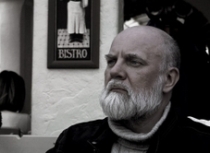 By Alexei Shiropaev
Translated by Isis Wisdom, Voices of Ukraine
Source: http://rufabula.com/articles/2013/12/06/long-way-to-euromaydan
The Ukrainian revolution, which has received the landmark name of “EuroMaidan” has ancient roots. Her motives are not reducible to purely economic factors. Of course, supporters of European integration want to attract a European standard of living, that’s normal. However, as I see it, a million people in the streets of Kiev are driven not so much by pragmatism as idealism: by the desire for freedom, for human and civil dignity, for a well-defined civilizational choice.
EuroMaidan – is the choice not only of the Ukrainian intelligence, but also of the Ukrainian soul.
Ukraine has been coming to this choice for a very long time. Relatively speaking, this path began with Prince Danylo of Halych [Daniel of Galicia, Prince of Galicia, King of Rus’ from 1253], who took the royal crown from the Roman Pope, who wanted to establish an anti-Horde alliance with Europe. At the same time, Alexander, having received the beautiful nickname “Nevsky” [by winning the battle of Neva in 1240, at the age of 20, forcing the Swedes to turn back. Alexander Nevsky was the Prince of Novgorod, Grand Prince of Kiev and Grand Prince of Vladimir], he sought quite another alliance – with the Golden Horde. By the way, Nevsky was a true pragmatist: resting against the Tatars, he established his dictatorship, laying the foundations of the Russian political system that exists today. And Danylo of Halych was an idealist, who keenly felt a spiritual connection with Europe. Simply put, a true Knight.
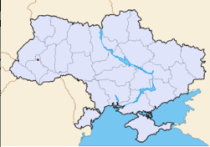
Map of Halych territory ruled by King Danylo
Choosing Alexander Nevsky was our predestined, Russian history. On the basis of this choice was developed an entire historical philosophy, a philosophy of patriotism, the essence of which – is the “special way.” “Special Way” – this means not with Europe, not with the West, and not just outside of – but against them. Alexander Nevsky and the Horde’s “iron curtain” to us, the Muscovites, was in fact, never a choice and there was never a choice but to become Asians. Our only outlet and opportunity was Novgorod (which we later ourselves turned our heads on, since the passing school of Hordes already perceived him as an outsider). Actually, in Russian historiography there are two unpleasant, “seditious” moments: Novgorod and Ukraine. Novgorod to a lesser extent, because the memory of it is successfully erased from the people’s memory, pardon the pun. The great Novgorod Hanseatic efforts of the Russian state turned into an ordinary regional town. But Ukraine was more difficult. Ukraine was lucky – we could not reach what she had. She was then in the midst of the Great Duchy of Lithuania, in the bosom of the Commonwealth. That is, in Europe. And so not only retained her inherently RUS-sian features, but also acquired a lot that we, Muscovites, had never dreamed of. For example, such glorious European inventions as Magdeburg Rights, which imply primarily a system of municipal self-government. Few people know that in Kiev these lasted until 1835.
Few people know that the Ukrainian Kozaks were an organic social component of the Rzeczpospolita: Zaporizhzhya Sich received its horsetails and regalia (fasces) from King Stefan Batory, and in 1683 the Zaporizhian Kozaks in the army of King Jan Sobieski participated in the victorious defense of Vienna from the Turks, which had great importance for the future of Europe. What I mean is that Ukraine, unlike Muscovy, existed within the context of European history, taking part in it. Incidentally, Bohdan Khmelnytsky, who belonged to the nobility/gentry [szlachta], with a detachment of kozaks took part in the famous siege of Dunkirk, and perhaps was friends with the musketeers. He visited many other European countries. Roughly speaking, Ukraine, unlike Muscovy, was in a kind of “Schengen zone” of European cultural and historical space. A telling detail: the Kozaks not infrequently called themselves “Maltese gentlemen,” clearly implying that they, like the Maltese Knights, guard the borders of the European ecumene.
Incidentally, on Pereyaslavska Rada [Preyaslav Council], Kozaks behaved quite like nobility when they demanded from the Moscow king an OATH in compliance to Kozak liberties. Muscovites, with their Asiatic views towards power as such, of course never swore an oath. That is why the four regiments of the king never swore, in Kiev and some other cities the swearing-in was done by force. But after the end of the “Pereyaslavska Rada” relations between Ukraine and Moscow were uneasy – soon the turmoil provoked outrage in imperial authorities and their attempts to impose their own rules in Ukraine are well known to us…
Just imagine how Khmelnitsky – a brilliant graduate of a Jesuit College (among the Ukrainian Orthodox it was not considered shameful to study in such institutions), who drank Burgundy in France with the musketeers – perceived Moscow boyars, who were leading talks with him about the “reunification.” It was he, not Mazepa, who was the first to seek an alliance with the Swedes: “The Swedes – a truthful people, who keep their word” (as opposed to Muscovites). Mazepa’s act, produced by anxious concern over the independence of Ukraine, was due strictly to the historical context and logic of all previous events. It can only amaze and baffle us–Muscovites brought up on the concept of semi-official imperial history. We are generally dumbfounded at even the slightest manifestation of Ukrainian identity. “We are one people” – this is our utter conviction, as a matter of course, with everything from plumbers to political scientists. The opinion of Ukrainians themselves, in which no one is interested, if it still registers, responds as a rising wave of resentment, irritation and indignation. “Brotherly Love” was immediately replaced by a rapacious desire to enter Kiev in tanks or with petty plans to split Ukraine in two – into East and West. We are not averse to Moscow “brothers” and chopping off Crimea – with the pretext of protecting native Russian speakers. In general, Ukrainians are well aware of the price of our “brotherly” feelings. A typical example is Peter the Great, originally a friend of Mazepa’s and who probably drank with him. But as soon as the Hetman [Mazepa] became a conscious Ukrainian – the king immediately arranged for a demonstration massacre in Baturyn [a town in Chernihiv Oblast of northern Ukraine], taking advantage of its peaceful population.
This slideshow requires JavaScript.
For two centuries – the 18th and the 19th – the Russian Empire tried to suppress Ukrainian identity. During two purges to wipe the Zaporizhian Sich off the face of the earth, it abolished the Hetmancy. Ukraine was converted into a standard set of typical provinces, the colony of “Little Russia.” When Ukrainians tried to say something, they were gagged. Stolypin tried to russify it, to, as they say, generally eliminate the problem. Not a people – not a problem. But the people remained. And at the first convenient historic opportunity this people gave its opinion: in 1917-1918. After the collapse of the Russian Empire, Ukraine revived as a sovereign state – the Ukrainian People’s Republic. And again it did not like us – regardless of the color of the politico-military camps: and red and white. Against Ukraine, with striking imperial unanimity, fought one and the other. For it was only Pilsudski. Ultimately, Ukraine inherited red Imperials. They have forgotten nothing and have forgiven nothing. They fiercely hated the Ukrainian peasant–the “farmland owner-nationalist.” Hence the genocidal Holodomor [of 1932-3] – it was created fundamentally to slash the will of the Ukrainian people, to break them. Hence Stalin’s de-Ukrainization of the Kuban people – the presently Russian, patriotically-leavened Kuban almost can’t remember that their grandparents spoke Ukrainian (nor do they remember such powerful political creativity as the project of the Federation of Kuban, Don and Ukraine, which existed during the period of civil war). Hence also the Soviet mobilization policy of the “Great Patriotic War” against Ukraine, which became, in fact, a continuation of the genocidal terror: in 1943-44. Untrained, unarmed men in civilian clothes from the ages of 15 to 45 years, were driven into battle in masses, so that they would “wash away the guilt of the Motherland and Stalin.” In those years, a symbol of Ukrainian identity became UPA, which fought on two fronts against two totalitarian empires. Let me remind you, the rebel resistance continued in Ukraine until the mid ’50s. There were even rumors about the Kremlin’s plans for mass deportations of young people in western Ukrainian Donbass. How riot NKVD and MGB disguised as UPA committed atrocities in Ukrainian villages, creating “the right environment,” is now well known…
For the entire postwar period, until perestroika, the Ukrainian identity tried not to notice. More precisely, we put up with her as long as she did not go beyond a harmless – hopak/embroidery – purely ethnographic format designated by authority of the CPSU. But at the same time, Ukraine was very closely monitored and personally overseen by KGB Comrade Scherbitsky [First Secretary of Ukrainian Communist Party, the last Soviet leader of Ukraine], if you remember, who never found the Banderite caches. A weighed down, Soviet, Ukraine somewhat resembled Shcherbytsky’s predecessor – Pyotr Shelest, who all his life spoke in Russian, and before his death, in his delirium, he suddenly spoke again in his native Ukrainian. It burst through…
However, in the bigger historical picture, conversely, everything turned out great, thank God. When Ukraine spoke again in her own language – the language of sovereignty, she was at death’s door of, not her own, but the Soviet empire. Over her dead body was hoisted the yellow-blue flag, and then attention moved on to the complex process of overcoming the colonial past. The restoration of architectural, cultural and historical meaning began – it was actively engaged in by Viktor Yushchenko. The names Mazepa, Petlyura, Bandera returned. The names Shevchenko and Lesya Ukrainka sounded anew. And what is important for our discussion, the originating civilizational refrain sounded on different levels: “We–Europeans.” Yushchenko tried to bring Ukraine into NATO, but, alas, it has not been possible because of the intrigues of Moscow and the cowardice of some European politicians.
Today, that desire of Ukrainians to be in the EU – is the continuation of their long vector of integration into the West. This entry is not into Europe, but a RETURN to it, paid for by the huge historical sacrifices of the Ukrainian people.
In this case one cannot speak without pathos, forgive me. To sum up, and to put it simply:
Ukraine now stands again between Europe and the Horde. And is choosing, as always, Europe.
Maybe, looking at raging revolutionary Kyiv, and at ourselves, are we in the end able to finally “kill the Muscovite within?”…
≈§≈
This slideshow requires JavaScript.
One of the fountains on Maidan Nezalezhnosti (Independence Square) is decorated with statues of the legendary brothers Kyi, Shchek, Khoryv and their sister Lybid, who according to the Primary Chronicle were the founders of the medieval Kyiv city, now the capital of Ukraine. They chose Kyiv for the city foundation and decided to name it in honor of the elder brother, Kyi according to some legends.
Related references:
Kyivan Rus’
Kyivan Rus’