PROJECT POSTCARDS FROM MAIDAN: Ihor Platonov from Truskavets

03.21.2014 Postcardsfrommaidan.org
Translated and edited by Voices of Ukraine

Postcards from Maidan is an art initiative that helps facilitate the psychological rehabilitation and physical recovery of patients. Artists visit the wounded and use drawings as a storytelling mechanism of Maidan. The wounded are later presented with the drawings. This is the story of one Maidan protester. This is story #15.
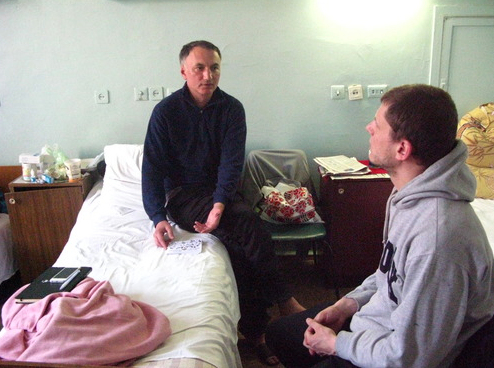
Ihor Platonov

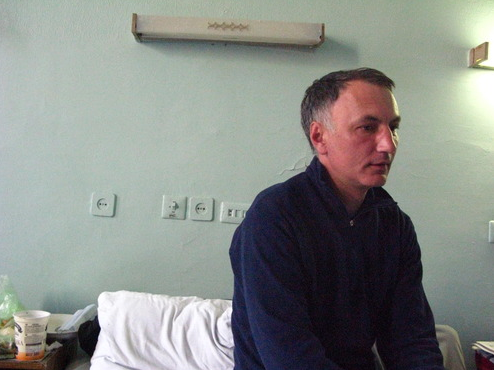
Ihor Platonov

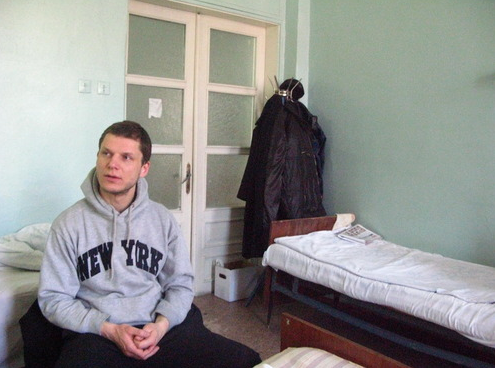
Ihor Platonov, 44 years old, Truskavets, Lviv Oblast [region]

Beaten by law enforcement on February 18-20, suffered pneumonia on Maidan.

Ihor Platonov spoke about his participation in the protests with artist Oleksiy Salmanov.

“I wanted to be directly involved in the events because I had a specific set of skills—I served [in the military], as a commander during the Soviet era. And we guarded the medical unit at a library on Hrushevsky Street. We were captured the first time when we brought [Serhiy] Nigoyan—the first corpse. Then the operatives and criminal police came over to witness it, and at the same time, the assault began. There were a lot of people at the entrance to the medical unit, and we were warned that the enemy was coming through from [the direction of] the monument to Lobanovsky [soccer player and coach]. They came out, so brazenly, and started throwing grenades. Usually when the first started to run, they are followed by [many]… And [so] we closed [the doors] and barricaded [ourselves] inside the medical unit. There were about ten of us, there was the head of the [Maidan] medical service with us, the body was lying down, and then there were these [guys] from criminal police. The “Berkuts” ran past us, one of them stopped and tore down the [Ukrainian] flag. And one of them stopped and looked into a window. We asked, rather rudely, for a deputy minister to be there, to come over to this soldier [who in fact was] the ‘Berkut’ guy, show his ID and ask them not to storm [the building]. Because we were ready to go to extreme measures—such as take one of the police officers (who was with us) hostage—we heard a rumor that they wanted to take the body. The ‘Berkuts’ passed the medical unit and didn’t touch anyone. They walked back, dragging the barrels [Berkut stole some of the protesters’ fire barrels in the early attacks]. There was a reporter there, I don’t remember where he was from, he recorded all this. Then the attack began.”

“And then there was another capture. There was an interesting person in our Company [4th Sotnya], Misha, the one who was stripped naked [Mykhailo Harvryliuk]. Nobody knows how it all happened, because he doesn’t remember who knocked him down off his feet. They came over, we tried to barricade ourselves in, but they broke the windows and threw grenades. Two of ours got wounded, and everyone left through the back door. Only Misha and another guy, the Tajik, weren’t able to leave. The fate of the Tajik was unknown for a long time, he was at the detention center—they let him out, but with ‘bracelets’ and he was released on his own recognizance. Misha was supposedly captured while holding a bottle with a Molotov cocktail—but someone among our guys knocked him down. He definitely remembers this. And when the last people were leaving through the back door, they were shot in their backs.”

“There were two more attacks like this, when all the people were leaving in the same chaotic manner, and the medical unit was blocked.”

“I was at the Trades Union House. We were the last ones to leave the 6th floor. Our neighbors left at 8 o’clock­—they left the building and came up to our commandant saying, ‘Guys, leave [the building] because an assault will take place.’ How did they find out about it? We decided to stay. We had one wounded, a grandfather who got beat up at Mariinskyi Park. And we had a girl, who now works at the medical unit. And the commandant. We knocked the windows out, made Molotov cocktails, and tried to throw them—there was a barricade that the APC [armored personnel carrier] approached. This was all we could do. There is the video we made from the 6th floor—I don’t have it with me. The reporters came, we let them in for five minutes. And then someone started the fire, it came from somewhere. We ran to the 2nd floor to find out how long we could stay there, because we were afraid they would come over. They had already closed in, by the portable toilets, across from the ‘Russian Sberbank.’ We were afraid we wouldn’t be able to leave on time. We can’t understand how the building fire was started because we were the last ones to leave. There are versions [of the story] that some people remained inside, but all the offices were open. It burned on the bottom and on the top. They said there were machine gunners on the roof already. There was panic. We took this wounded man and the girl out. Then we tried to come back, but there was smoke. And then there was fear, we were afraid about how we would exit.”

“Also, there was an armed fight on Shelkovychna Street when everyone went to the Verkhovna Rada [Ukrainian Parliament]. We stopped there. People climbed onto the roof and started throwing grenades. Myself and another guy, we kicked them out from there—there is a video on the Internet. We hung the [Ukrainian] flag… There are many inexplicable things, the armed fight lasted a very long time. We came back to Mariinskyi Park and looked for our company. There, people were standing relaxed, waiting for something to go down: some drank coffee, some tea, talking. We came over, and then everything started. Running, chaotic running. Everyone ran, people in front kept falling. There were about 20 people left in our sotnya that night. There was no commander left, nobody. We were afraid, we waited. I was waiting for them to drive out of Lviv already [Ed. note: not sure who he means here]. Of course, I’m older, but still want to live a normal life…”
Screen Shot 2014-06-28 at 4.05.00 PM

“About Crimea: what a story it was! On February 20 and 21, a man and I worked at the medical unit. I had two acquaintances with cars, and the nurse in charge asked for help: we transported medications, picked up the wounded, searched for houses to shelter them in. Then one time a guy approached me and suggested I go to Crimea. I asked him how the situation was there—I had practically no time to watch TV. I didn’t have any compelling reasons not to trust him, but he said that there were the same barricades and the same Maidan there, and that they needed some kind of support. I told him, ‘Warn the people, so that they know we are coming.’ When he came over, he said that we have the tickets and the money, and their headquarters asked us to hurry up and come faster—since there was some action there, let the guys come to Crimea. I wore the captured bulletproof vest—got it on Shelkovychna Street, there were two or three of these vests on the whole Maidan. So sorry about that (but I even promised I will take everything back)! But they confiscated practically everything of mine.”

“We boarded the train, behaved normally, I hid my bulletproof vest, everything looked like a civilian traveling—the only thing that stuck out was the scout-looking jacket. When we were on the train, everything was ideal. Maybe a couple of people passed that could make me suspicious. But when we came up to Dzhankoy, about 10 people approached the train, half of them in civilian clothing, half in uniforms. They came inside the train and asked who was riding in that spot. And I was the one in that spot. They asked if I had some special equipment. I said, ‘What special equipment?!’ And they, ‘We’ll see which one.’ They looked through my bag. Those in civilian clothes searched us. A policeman came over, saying ‘I won’t touch, let the people look through.’ They asked what I was bringing with me; I said nothing, just a tank top. They asked, where are you going? I said, to Yalta. I have lots of acquaintances there, so I said I was going to visit them. ‘Where are you coming from?’ I said, ‘From Kyiv.’ They searched the people from our compartment, opened the luggage. I thought that was the end of it.”

“But when we arrived in Simferopol, 15 people were there to meet us. When we began leaving the train, they encircled us and said, ‘Go here.’ I had the bulletproof vest under the jacket. Grabbed the bags, ‘Where are your documents?’ Nothing said there was trouble, but when they were taking us to the railway station, I didn’t notice any sympathizers. There were people shouting, ‘Kill them.’ We were led in front of all the people. They told me to take off my bulletproof vest, people noticed it. They were wearing civilian clothes, so many of them in civilian clothes. One gray-haired man acted in a very defiant manner. Came over and asked, ‘You think you are immortal?’ But I saw him for the first time [in my life]! I can give people a call, who would confirm that I am a normal person, that I have a job in Yalta, that people will be happy to see me. But this man said that I should carry the bulletproof vest in my arms—for everyone to see. They took us to the [police] station located at the railway. Someone took our pictures, someone videotaped us, some shouted. I realized that the situation here was completely different from what I had been told. They brought me inside the police station, told me to put everything I had on the table. Everything. They started examining the plates from the bulletproof vest—if there were warped spots, its number, any rips, stains on it. Then they examined my hands, searched for baby lotion, asked if I moisturized my hands with it—no idea why. They examined my neck, I lifted my pant legs. They recorded me on camera, recorded my voice. I had exclusive videos on my phone, from the very heart [of events]: from the Trade Union, from Shovkovychna Street, on the roof, somewhere else. I didn’t show them to anyone. They asked where my phone was. I showed them this one: they gave it to me to use on Maidan, the other one was pricey. They said to me, ‘This isn’t the phone you are showing me!’ They found my medal. The guy said, ‘The medal is also ours.’ Those were the cops. Then the ‘Berkut’ came over. I turned around, and he put the barrel into my mouth. Kalashnikov [assault rifle]. He was in a maroon beret, the chief, a big guy. The others didn’t wear berets. They were unshaven, and looked a tad spent. Held me by the arms unenthusiastically, stood arrogantly, indifferently. He hit me a couple of times. And the one guy in civilian clothes told him, ‘No,’ because they were filming. They took all of our belongings and made us sign some papers.”

“We went to Yalta. Boarded a minibus: got the impression that nobody could understand anything, but everyone looked at us with hostility. We arrived. You know, guys, I know this city very well, I spent a lot of time there. I might come there for half a year, for two to three months. I talked to normal people there. I have a small business there. When I came, I just saw many people who had nothing to do with Yalta. I felt that wherever I walked, they were following in my steps. At first, I thought that it was probably because of my military boots, so I covered them with pants. You know, I’m a cautious person. Then I went to the market to visit a man, he’s a Tatar. He says, ‘How are you?’ I explained that I could be having a problem now. He just advised me, ‘I’ll give you the money—leave!’ A lot of athletic guys, not Ukrainians. They send them over. They sent over a girl, she tried to treat us to beer, asked if I was from Dagestan or not. What, Dagestani, me?.. Then they sent over a more interesting intellectual man. Who out of the blue started offering 70-Hryvnia wine [USD $6], started the conversation about a monument to Lenin, invited us to his house. We felt that we had to leave—even into the forest, just leave this place. They set up the tents, these young people with ‘aiguillettes…’ [military shoulder braids].”

“We were told to go to Simferopol, as there were fellow ‘Maidaners’ there. I felt that we could be in the same situation again, but we had no other choice. I got off in the downtown area. As I walked, I found myself at a pro-Russian rally. Everyone with the flags and looking at you in the same manner. I saw a man in the maroon beret from before—he was wearing civilian clothes already, walking toward me and looked up at me. We saw many of them from the Interior Ministry. Wherever I went, I ran into those whom I didn’t want to see. We went at night, a KAMAZ [Russian truck model] was standing there, soldiers stood in masks, with automatic machine guns, ones I’ve never seen before. Ten meters away [from us]. They looked at us brazenly, and behaved with prejudice. They didn’t just stand there, but danced, they all had relaxed postures.”

“We left for Kharkiv. In Kharkiv, people led us practically everywhere. A girl took me by the arm because the police were following us. About five men with machine guns. They were hanging around the [railway] car. When we came to Kyiv, I began to understand a little what it was all about.”

“I have certain intentions; after all, I plan to get to Crimea somehow. The mood there … People need to be fed information very, very lightly… They say that all Ukrainian [TV] channels are completely blocked there. And we don’t know what’s going on there! We can only find out when you chat with a Tatar as a friend. When you talk to a soldier.”

“The threatening moment is in this. They say that there is a Chechen battalion in Dzhankoy now.”

“Personally, I didn’t necessarily feel the unconcealed hatred, but [their] willingness to use some force. Even if they didn’t touch us, they still steered us. Wherever I went, whomever I talked to, whatever attic the gun was hidden in (laughs).”
Screen Shot 2014-06-28 at 4.06.34 PM

artist Oleksiy Salmanov

“There are stories that not everyone wants to hear about. About fleeing from Mariinsky Park, about when someone ended up somewhere for unknown reasons. And then there is this story­­­—my best friend and I once took a b-i-i-g box with condensed milk and thi-i-is big of a box with chocolate. We thought to distribute it among our [guys]. But knowing the specifics quite well, in the end we decided to go to Troyeshchyna [Kyiv suburb] and give it to children outside in the courtyards. We were sitting down, people were asking us questions, trying on the bulletproof vest. Not everyone even knew what was happening on Maidan, what it was. We gave all of this condensed milk away, all this chocolate! And people were so happy and content. They invited us to bathe, shave, [people] brought camouflage, medications. So many of these stories, very many.”

“I’m on the mend!”

After the conversation with Ihor Platonov, artist Oleksiy Salmanov made portraits of the protester.

Source: postcards from maidan

____________________

Postcards from Maidan is an art initiative that helps bring support through truthful images of Ukrainian protests in different regions of the country, and also tells the stories of people who suffered during events on Maidan this winter in Kyiv.
The project consists of two elements:
#postcards from maidan
The Postcards Project contains a series of cards based on works of contemporary artists. Artists who participated in protests on Maidan create works reflecting on the events and as a message to fellow citizens. These cards may serve as support and a means to bring the spirit of protest to one’s relatives and friends in any part of Ukraine or the world. They are distributed on Maidan and available to everyone for free download in a format suitable for printing.
#stories from maidan
In The Stories Project, contemporary artists visit hospitals, talk to people [protesters/activists] and work on an artistic embodiment of their stories from Maidan. Activists receive these works as gifts by which to remember the events. This project is documented; the stories may later be used by various media. Through social networks, with the help of journalists, volunteers and the project’s website, organizers of this project help to recover lost contacts and enable protesters to learn about each other.
Postcards from Maidan was founded by Kadygrob_Taylor Platform for Contemporary Art, an independent non-profit.  Source: http://postcardsfrommaidan.org/about
Posted in "Voices" in English, English, Eyewitness stories, Languages, Maidan Diary, Media, Pictures, Voices of Revolution | Tagged , , | 1 Comment

Charis Haska: Tag der Konstitution

Charis Haska: Tag der Konstitution

Original: https://www.facebook.com/charis.haska/posts/670058103060884

Hoffentlich hält der Sonnenschein heute den ganzen Tag an. Blaugelbe Flaggen überall in unsrer Straße. An der Kreuzung mit der blaugelben Flagge auch die Flagge der EU. Wir wollen heute mit der Gemeinde einen Ausflug auf dem Dnjepr unternehmen. In den letzten Tagen war es kalt und regnerisch, als ob der Himmel weine… Ich öffne mein Mail.ru- Postfach und sehe nebenbei in den Mail.ru- Ukraine- Nachrichten eine Schlagzeile: „Poroshenko hat den Waffenstillstand um 72 Stunden verlängert.“

Es gab keine Waffenruhe. Jedenfalls nicht auf der Seite der Separatisten. So teilt es mir unsere Ärztin mit, die mit der jungen Ärztin Vika in der Ostukraine in Telefonkontakt steht. „Jeden Tag sind sie beschossen worden.“ Ich habe Angst um Vika.

Gestern war ein besonderer Tag! Endlich wurde das Assoziierungsabkommen mit der EU abgeschlossen. Gott sei Dank! Hoffentlich gibt es jetzt viele Erleichterungen für die Ukrainer!

Außerdem waren wir gestern als Familie zu einem schönen Anlass eingeladen: Dem Sohn unserer Freunde ist am Institut für Journalistik und internationale Beziehungen sein Diplom im Fach „Internationales Recht“ feierlich überreicht worden. Unsere Freunde wollten das gerne mit uns feiern. Ob wir uns um zehn vor Elf am Institut treffen könnten? Ich bin vor über einem Jahr mit Annette und Farah schon mal dorthin eingeladen worden, als er in einer Theateraufführung (Oscar Wilde auf englisch) mit auftrat. So wusste ich noch ungefähr, wie wir mit öffentlichen Verkehrsmitteln dorthin gelangen. Aber beim „Ungefähr“ bin ich immer recht unsicher. Wie viele Haltestellen mit der Marschrutka waren es noch mal? Ich fragte den Busfahrer „Kommen wir mit Ihrem Bus zum Institut für Journalistik?“ – „Ja.“ brummte er und ich legte für uns fünf einen Zwanzig- Griwen- Schein hin, auf den ich etliche Zweier- Scheine herausbekam. Im rasant anfahrenden Bus taumelte ich auf den Platz, den Friedrich mir freigehalten hatte. Kaum saß ich, drehte sich ein unauffälliger Mann zu Ralf um: „Erinnern Sie sich, dass ich am 20. Februar in der Institustka- Straße neben Ihnen gestanden habe? Ich habe Ihnen damals meine Visitenkarte gegeben…“ Von hinten wurde mir ein weiterer Zwanzig- Griwen- Schein gereicht, das Mädel hinter mir bat mich, ihn weiter zu geben, damit ihr Fahrpreis beglichen werde. Das praktiziert man auch in einer völlig überfüllten Marschrutka so. Sogar mit einem Zweihundert- Griwenschein. Der wird dann von Fahrgast zu Fahrgast weiter gegeben. Das genau abgezählte Wechselgeld kommt alsbald auf dem gleichen Wege zurück. Phantastisch und unbürokratisch funktioniert dieses System, ich bin immer wieder beeindruckt. Indessen tauscht Ralf mit dem Mann noch einmal Kontaktdaten und ich versuche, angestrengt aus dem Fenster sehend, die richtige Haltestelle frühzeitig zu erkennen. Aber das brauche ich gar nicht. Zum Einen erkennt Ralf, der niemals dort war, das Gelände sogar vor mir, zum Anderen ruft der Fahrer extra für uns die Haltestelle aus. Man kann in diesem Lande einfach als Ausländer nicht verloren gehen. Mit uns steigt auch der Mann aus. Es stellt sich heraus, dass er als Fotograf zur gleichen Veranstaltung geladen ist. Wir sind so früh dran, dass wir uns auf einer der Bänke im weitläufigen Vorhof niederlassen und die verschiedenen Kleider und Schuhe der gestylten jungen Damen diskutieren können. Unglaublich, diese kilometerhohen Nadelspitzenabsätze! Mit supereleganten Hochplateauabsätzen bewegen sich weitere Mädels nicht natürlicher. Auch ihre Kleider entsprechen nicht ganz unserem Geschmack, die Mehrzahl würden wir eher in einem Nachtklub erwarten. Ein längeres, „anständigeres“ Kleid ruft trotzdem unseren Spott hervor, es hat ein Gardinenmuster, das in den sechziger Jahren aktuell gewesen sein mag. Seine Besitzerin hat ihr sehr langes Haar in mittegroße Kringellocken legen lassen, sodass der Morgenmantellook ihre Schönheit nicht trüben kann. Von den jungen Männnern trägt, soweit ich es sehen kann, nur ein Einziger ein Wyschiwanka.

Unsere Freunde sind mit dem Taxi gekommen und im Verkehr hängen geblieben. Sie kommen gerade noch rechtzeitig, aber außer Atem an. Wieder war der Verkehr unkalkulierbar. Ich erzähle meiner Freundin von unseren Betrachtungen über die Modenschau und sie flüstert mir zu: „An den exklusiven Autos, die da vorne parken, kann man sehen, wer hier studiert.“ Sie führt uns in die riesige Aula, die schon gut gefüllt ist, findet aber noch sieben Plätze nebeneinander für uns alle, ruft per Telefon ihren Sohn, der seinem Vater wie aus dem Gesicht geschnitten ist, damit er uns begrüßt. Das tut er auch, eilt dann aber wieder zu seinen Kameraden. Mit Recht können unsere Freunde stolz auf ihn sein, etwas später erfahren wir, dass er wegen seiner guten Leistungen einen der ersten Plätze in seinem Fach belegt.

Auf der Bühne nimmt ein Kollektiv älterer Herren Platz. Nach einiger Zeit beginnt die Veranstaltung. Wir alle stehen zur Nationalhymne auf. Nur ein Teil der Dozenten legt dabei seine Hand aufs Herz. Der erste Teil der Hymne ist instrumental, gegen Ende hören wir rechts hinter uns eine große Gruppe inbrünstig mitsingen. Die Mehrheit im Saal scheint zu schweigen. Danach nehmen alle Platz, bis auf den etwas jüngeren Herrn vorne in der Mitte, der eine Rede auf Ukrainisch hält. Relativ lang und schmucklos. Soweit ich es verstehe, preist er im Wesentlichen die Vorzüge des Instituts an. Gegen Ende erwähnt er „die gegenwärtige Situation in unserem Staat“ und den Wunsch, dass die Absolventen ihre Kenntnisse zum Wohl dessen einsetzen mögen. Ich bin verwundert über die Gewichtung der Themen der Rede, finde sie etwas lieblos, aber das mag auch daran liegen, dass ich im Ukrainischen nicht alles verstehe. Zu meiner großen Überraschung kündigt er nun an: „Wir haben 80 Absolventen. Um die Veranstaltung nicht zu lang auszudehnen, bitte ich jetzt die Absolventen der verschiedenen Fächer, sich in folgenden Räumen einzufinden…“ Alsbald summt und wuselt es im Publikum wie in einem Bienenhaus, der größte Teil des Publikums verlässt den Saal, die übrig Bleibenden kommen in die vorderen Reihen. Wir haben Glück gehabt und können einfach sitzen bleiben. Auch auf dem Podium gibt es nun einen Wechsel. Zu zwei grell gekleideten und ebenso grell frisierten älteren Damen gesellt sich ein stattlicher Herr im grauen Anzug. Meine Freundin erklärt uns später, er sei der Dekan des Instituts. Er ist direkt von der Vorbereitung der Unterlagen für das Assoziierungsabkommen gekommen, deshalb sei er erst jetzt zur Veranstaltung gestoßen. Ihrem Jungen war es leicht, bei ihm zu studieren, weil er mit den Studenten auf Augenhöhe umging. Eine der grellen Damen begibt sich jetzt an der linken Seite der Bühne ans Mikrofon, fragt: „Na, fangen wir an?“ und als kein Widerspruch eingelegt wird, beginnt sie, die Namen der Studenten zu verlesen. Emotionslos und so langsam, dass auf Wunsch bei jedem geklatscht werden kann, bei einigen wird sogar gejohlt. Doch viel zu schnell, als dass der Name auch wirklich mit dem jungen Menschen zusammenfällt, der im gleichen Moment auf der rechten Seite des Podiums aus der Hand des Dekans sein laminiertes Diplom erhält, das er dann gut sichtbar zeigt und einen feierlichen Moment für die Kamera stehen bleibt. Allen schüttelt der Dekan die Hand, das Gardinenkleid nimmt er sogar in den Arm. Soweit ich es beobachte, ist dieses Mädel das Einzige, das zweimal ein Diplom überreicht bekommt. Bei einem jungen Mann ist offensichtlich das Zeugnis mit dem eines Anderen versehentlich vertauscht worden. Es wird herbei gebracht. Ein wenig gelacht. Der Sohn unserer Freunde nimmt sein Zeugnis entgegen. Aufrecht uns stolz, wie fast alle anderen, schreitet er vom rechten zum linken Ende der Bühne und lässt sich nachher noch mehrere Male zusammen mit seinem Freund und ihren Diplomen fotografieren. Ihn zu filmen gelingt uns leider erst nach dem entscheidenden Moment der Übergabe, weil ausgerechnet da ein baumlanger Schlingel sich direkt in der Reihe vor uns niederlässt. Schade!

Interessant ist die Abschlussrede des Dekans. Er erwähnt, dass eine neue Zeit angebrochen ist. „Denn in unserem jungen Staat ist der neue Präsident zum ersten Mal einer der Unseren.“

Herzklopfen bekomme ich bei diesen Worten und lasse sie mir nachher von meiner Freundin erläutern: „Das bezog sich darauf, dass der Präsident eben dieses Fach an diesem Institut absolviert hat. Er hat auch gesagt, dass wir deshalb darauf hoffen können, dass das internationale Recht in der Ukraine jetzt weiter entwickelt wird.“ Und mit Bedauern weist er darauf hin, dass aufgrund der prekären finanziellen Lage des Staates die Mittel für die folgenden Semester radikal beschränkt wurden. Meine Freundin erklärt mir beim Mittagessen, dass das vor allem die Budget- Plätze, also Studienplätze für Stipendiaten betrifft. Die Studiengebühr beträgt eine fünfstellige Summe, wer kann sich das schon leisten? Für ihren Jungen hofft sie, dass er aufgrund seiner hervorragenden Zensuren und seines roten Diploms trotzdem zur Magistratur zugelassen wird. „Ja, man kann hier zum Glück mit ehrlicher Arbeit etwas erreichen. Obwohl es leider auch an diesem Institut Korruption gibt.“ Vor meinen Augen ziehen noch einmal die stolzen Absolventen vorüber und ich versuche mir das Gefühl vorzustellen, dass ein Kind reicher Eltern hat, wenn es für seine gekauften guten Noten ausgezeichnet wird. Welch ein gigantischer Selbstbetrug! Welch katastrophale Folgen für das Land, das doch auf gut ausgebildete Spezialisten angewiesen ist! Es muss ein großes Gebetsanliegen bleiben, dass den wirklich begabten jungen Menschen mehr Chancen auf eine gute Ausbildung eingeräumt werden. „Die Sprachenabteilung ist erst vor kurzem erweitert worden, in der Hoffnung auf viele ausländische Studenten. Aber wer möchte in einer solchen Situation sein Kind in der Ukraine studieren lassen? Da sind noch weitere finanzielle Einbrüche zu erwarten, wenn diese Studiengebühren ausbleiben.“ sagt meine Freundin später besorgt.

Jovial beendet der Dekan seine Rede. Die Lage des Landes hat er gewürdigt. Nun fragt er: „Haben Sie noch Fragen?“ Schweigen im Saal. „Keine Fragen? Nun, Gott sei Dank!“

Nachdem wir unserem Absolventen gratuliert haben, führen uns unsere Freunde in ein hübsches ukrainisches Restaurant im ersten Stock in einem unansehnlichen Gebäude schräg gegenüber. Wir haben unseren Kindern vorher eingeschärft, beim Bestellen unbedingt den Preis zu beachten, um unsere Freunde nicht in Schwierigkeiten zu bringen. Als wir die Speisekarte in der Hand haben, bemerkt unsere Freundin schnell unser Zögern und schlägt uns Vorsuppen und Hauptgerichte vor. Für uns alle bestellt sie auch köstliches Dessert. Wir sitzen gemütlich und stilvoll. Genießen die wohlschmeckende Okroschka, eine kalte, erfrischende Gurkensuppe mit Radieschen und viel Dill. Erst beim Essen bemerke ich, dass sie für sich selbst kein Hauptgericht bestellt hat. Der Platz unseres jungen Helden bleibt leer. Er hat es vorgezogen, mit seinen Freunden spazieren zu gehen. Das Essen ist mundet hervorragend. Durch die großen Glasscheiben beobachten wir das Treiben vor dem Institut und sehen, wie der Himmel sich mit düsteren Wolken bezieht.

Ich frage meine Freundin, weshalb ich nur eine einzige Wyshiwanka gesehen habe. „Ich denke, es hängt damit zusammen, dass das Institut früher die ehemalige Ausbildungsstätte des KGB war. Bei einer Abschlussfeier der Mohyla- Akademie haben gewiss alle ihre Wyshiwanka an…“ Sofort denke ich an die Worte „Der Präsident ist einer der Unseren.“ Meine Freude relativiert sich.

Meine Freundin hat die Feier sehr bescheiden gefunden. „Wahrscheinlich war das wegen der Situation im Lande. Ich habe eigentlich bei niemandem so rechte Freude gesehen.“ Ihre Familie in der Ostukraine hat mit Grauen auf diesen 27. Juni gewartet.

Heute, am 28. Juni ist Staatsfeiertag. Eine andere Freundin sagt mir am Telefon, dass sie sich nicht aufraffen kann, zur Dampferfahrt mitzukommen. Irgendwie passt so etwas nicht zum Krieg, findet sie.

Mit den mitkommenden Kindern werden wir auf dem Dampfer Postkarten für die Soldaten der Nationalgarde malen. Zur moralischen Unterstützung, wie die junge Frau, die das angeregt hat, mir gestern sagte. Vor einem Jahr noch hätte ich meine eigenen Kinder von so etwas fern gehalten. Es hätte sich nicht mit meinem Pazifismus vertragen Jetzt denke ich an die tapferen Menschen, die da ohne schusssicher Westen und mit viel zu wenig Unterstützung vom Staat darum bemüht sind, der Ukraine Ruhe vor den Terroristen zu schaffen. Und ich denke daran, dass es dort in der Ostukraine auch mit um die Sicherheit Europas geht.

Posted in "Voice" auf Deutsch, Posts - Deutsch | Tagged , , , , | 1 Comment

DIGESTS AND ANALYTICS: Chronicles of June 27, 2014

06.27.204
Translated and edited by Voices of Ukraine

Screen Shot 2014-06-23 at 11.13.33 AM

In Ukraine:
● The EU and Ukraine signed the economic part of the Association Agreement in Brussels.
● The official dollar rate fell by 7 kopecks to 11.82 Hryvnias/USD. The euro exchange rate is 16.09 Hryvnias/€.
● The Prosecutor General’s Office placed the former Deputy Prosecutor General Renat Kuzmin on the international wanted list.

Kyiv:
● [Vitaly] Klitschko officially became the Head of the KSCA [Kyiv State City Administration].
● Klitschko presented his reform plan for Kyiv.
● Kyiv’s budget is empty, Klitschko announced during his inaugural as the KSCA Head.
● Klitschko wants to free the roadway on Khreschatyk from Maidan tents and open it for traffic.

Theater of war:
● President Poroshenko decided to postpone the active part of the anti-terrorist operation [ATO] for three days until 10 pm EEST on June 30.
● In Donetsk, the second round of negotiations on a settlement of the situation in Donbas with former President Leonid Kuchma as President Poroshenko”s representative, Nestor Shufrych, a member of the Party of Regions faction, representatives of the Russian Embassy in Ukraine, representatives of the OSCE, and the pro-Russian politician Viktor Medvedchuk, took place.
● As a result of combat for the military unit in Artemivsk [Donetsk Oblast], the security forces seized a tank belonging to the Russian army from the rebels.
● In Donbas, insurgents continue to attack the positions of the Ukrainian military.
● The Russian Foreign Ministry has notified Ukrainian authorities unilaterally to provide “humanitarian assistance” to the eastern regions of Ukraine.
● In Donetsk, the broadcasting of Ukrainian channels has completely stopped.

In the world:
● The economic part of the Association Agreement between the EU and Ukraine will not take effect immediately after the signing, which took place on Friday, June 27 at the EU summit, but only after the negotiations between the European Commission, Ukraine, and Russia.
● The international rating agency, Moody’s, confirmed Russia’s sovereign credit rating at Baa1, thus lowering its forecast from “stable” to “negative.”
● The U.S. and the EU are expecting immediate and positive actions from the Russian authorities to stabilize the situation in eastern Ukraine until June 30.
● The condition for the continuation of gas talks with Ukraine should be [their] full repayment of debts, announced Gazprom CEO [Alexey] Miller at a briefing.
● The U.S. Department of State does not consider the UN data on 110 thousand refugees from Ukraine to Russia reliable,  said the official speaker of the State Department Marie Harf.
● In Russia, the start of the newest carrier-rocket “Angara” has been cancelled due to technical reasons.
● In Brazil all 16 teams competing in the playoffs for the title of world soccer champion, have been determined.
Source: http://www.digestagency.com


Posted in English, English News, Languages, News, News summary | Tagged , , , , , , , | Leave a comment

【情報レジスト・ティムチュック】 6月27日(金)のまとめ

10173325_481968728598454_1124228004_n

原文はこちら:フェイスブック情報レジストHP
6月26日の分はこちら

和文: S.J.

※ 3月10日からウクライナで活動しているボランティア情報局、「情報レジスト」(”情報で抗議する”)リーダが発信しているその日の記録を和訳したものである。※ ======================================

■ 悪かったこと ■

(1) はっきりしない、というより、停戦がどうなるか分からない。

ウクライナ大統領は、衝突に際しての事実上全く一方的な停戦を延長するか、または反テロ作戦軍に然るべき行動を取らせるかのいずれかの決定を近く下すこととなる。
停戦期間中に我々は20名以上の兵士をテロリストに殺されて Continue reading

Posted in Tymchuk日本語, 日本語 | Tagged , , , , , , , , , , , , | 1 Comment

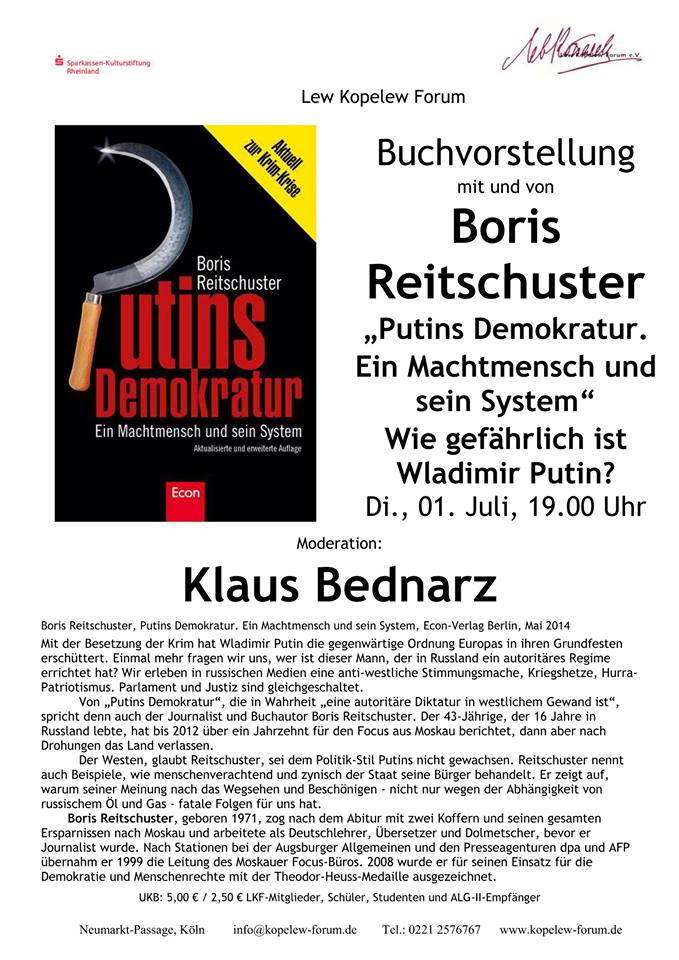
1.7. “Putins Demokratur” in Köln

10456019_744306575592336_1406402165548383783_n

Posted in Deutsch, Deutsch news, Diaspora, Languages, Maidan abroad, Maidan im Ausland, News | Tagged , , , | Leave a comment