Wie mache ich einen ukrainischen Atomunfall? Teil 1: Die Deutschen, die Kernenergie und die Situation in der Ukraine
von Dr. Anna Veronika Wendland
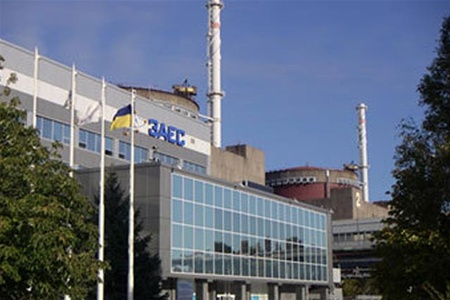
KKW Zaporižžja
SPIEGEL online und andere News-Portale meldeten heute mittag einen „möglichen“ „Atomunfall“ im südostukrainischen KKW Zaporižžja. Aus natürlichem Misstrauen, das ich bei solchen Meldungen immer hege – und zwar nicht der Kernenergie oder der Ukraine gegenüber, sondern hinsichtlich des Umgangs sowohl mit der Kernenergie als auch mit der Ukraine hierzulande – aus gesundem Misstrauen und Neugier machte ich also, was ich immer mache in solchen Fällen: ich fragte bei einigen ukrainischen Atomingenieuren vor Ort nach.
Ergebnis: Im KKW Zaporižžja sind derzeit zwei von sechs Blöcken außer Betrieb. Block 1 ist in Revision, Block 3 wurde am 29.11. wegen Ansprechens der elektrischen Sicherheitssysteme ungeplant vom Netz genommen. Für den 5.12. ist die Wiederinbetriebnahme geplant. Es war ein „Ereignis“ (Incident), nach INES-Stufe Null, d.h. noch nicht einmal ein sicherheitsrelevanter Vorgang. Was MP Jacenjuk zu der im Spiegel zitierten (angeblichen) Aussage auf einer Pressekonferenz bewegt haben mag, es handle sich um einen „Atomunfall“ – oder ob die deutschen Journos wieder Generator mit Reaktor verwechselt haben oder “Vorfall in einem Kernkraftwerk” mit “Atomunfall” – das weiß die nebesna trijcja Otto Hahn, Lise Meitner und Igor Kurčatov, die hoffentlich als Schutzengel über dem Dnjepr flatterten und sich auf den Schreck einen doppelten Vodka genehmigten.
Anmerkung des Blogbetreibers: Den Wortlaut von Jatsenjuks Aussage haben wir hier veröffentlicht. Auch wir halten die Schlussfolgerung auf einen Atomunfalls basierend auf dieser Aussage für hochspekulativ bis bewusst böswillig.
Der Chef des ukrainischen Atomkonzerns Jurij Nedaškovskij gab mir die Hinweise zur Faktenlage, die unten auch nochmal von einem Fachdienst zitiert werden, und ein befreundeter Atomingenieur klärte mich über die Hintergründe auf. Und spätestens hier wird es wieder ernst.
Denn derzeit kommt es in der Ukraine aufgrund der katastrophal niedrigen Kohlevorräte der konventionellen Kraftwerke – Grund ist der Krieg in den Kohleabbaugebieten und die Zerstörung der dortigen Infrastruktur – zu geplanten rollenden Netzabschaltungen. Das dient der Einsparung von Rohstoffen, aber auch der Ausbalancierung von Instabilitäten im Verbundnetz, das wegen des Wegfalls umfangreicher Kohle- und Gaskraftwerkskapazitäten gefährdet ist wie noch nie in der Geschichte der Nachkriegs-Ukraine. In diesem Winter hängt folglich in diesem Land sehr viel von den Kernkraftwerkskapazitäten ab – von den vier ukrainischen KKW Rivne, Chmel’nyc’kyj, Südukraine und Zaporižžja eben. Die Situation ist sehr ernst, denn Netzinstabilitäten können immer auch die Erstursachen dafür sein, dass elektrische Systeme in den Kraftwerken zu Schaden kommen, und Blöcke dann automatisch vom Netz getrennt werden. Das wiederum erhöht in Zeiten der Stromknappheit die Gefahr flächendeckender Netzzusammenbrüche. Der ökonomische Schaden ist immens, psychologische Kollateralschäden der Stromabschaltungen im kalten und dunklen ukrainischen Winter kommen hinzu. Frust und Gerüchte breiten sich unter solchen Bedingungen rasch aus.
Die ukrainische Regierung hat nach Worten des Energieexperten (und Energieministers a.D.) Ivan Plačkov nach wie vor keine Lösung für die katastrophale Vorratslage, die sicherlich auch auf die russische Strategie zurückzuführen sei, die Ukraine auf dem Energiesektor zu zermürben und zu schädigen [Interview Ivan Plačkov mit Kanteryna Peško, Glavkom, Politica-ua, 01.12.2014].
Die Ukraine, so Plačkov, bräuchte 3000 (!) Güterzugladungen Kraftwerkskohle, um auf die Winternorm für die Bevorratung konventioneller Kraftwerke zu kommen. Russland jedoch verweigert zugesagte Kohlelieferungen – bzw. die russische Staatsbahn verweigert den Transport. Russisches Gas fließt trotz angeblicher Einigung immer noch nicht. Um die Lieferung südafrikanischer Kohle gibt es Streit und Skandale. Nach wie vor wurden keine konzertierten und geplanten Maßnahmen ergriffen – dazu würden z.B. Aufrufe und Verordnungen zum Stromsparen gehören, oder Verlegung industrieller Lastspitzen auf die Nachtstunden qua Zwangserlass.
Um solche Maßnahmen durchzusetzen und die Vorräte durch Auslandskäufe aufzufüllen, braucht es nicht nur Geld, das die Ukraine nicht hat. Hier ist vor allem Koordination und know-how gefragt – z.B. ein energetisches Krisenreaktionszentrum oder ein Krisenstab mt exekutiven Befugnissen. Die Ukraine hat fähige Spezialisten mit den notwendigen Kenntnissen – aber die Regierung nutzt dieses Expertenwissen, so Plačkov, nicht.
Soweit der Blick von innen. Er gibt tatsächlich Anlass zu großer Sorge. Aber mit einem Atomunfall hat das alles nichts zu tun. Das scheint auch der “Spiegel” inzwischen einzusehen, und die Nachricht ist schon in den Wissenschaftsteil abgewandert.
Dr. Anna Veronika Wendland ist Osteuropa-Historikerin mit Schwerpunkt Stadt- und Technikgeschichte, zur Zeit Vertretung der wissenschaftlichen Leitung des Herder-Instituts für historische Ostmitteleuropaforschung in Marburg.
Jazenjuk bittet Energieminister um Bericht über Beendigung der Stromabschaltungen
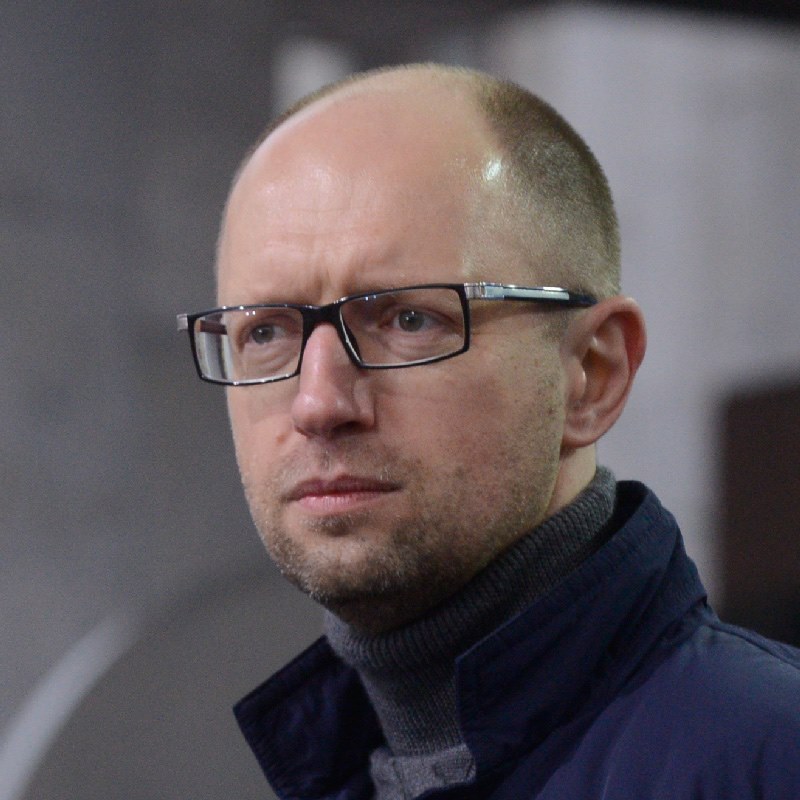
Arseni Jazenjuk
Der Premierminister der Ukraine Arseni Jazenjuk hat den Minister für Energiewirtschaft und Kohleindustire Wolodymyr Demtschyschyna angewiesen, über die Maßnahmen zur Wiederaufnahme einer normalen Energieversorgung der Ukraine zu berichten. Darüber sprach er am Mittwoch bei der Eröffnung der Sitzung des Ministerkabinetts.
„Ich bitte heute den Minister für Energiewirtschaft, uns über den Stand der Dinge auf einer gesonderten Pressekonferenz zu informieren … Ich weiß, dass es eine Störung im Atomkraftwerk von Saporischja gegeben hat … wann sie behoben werden wird, sowie Maßnahmen zur Wiederherstellung einer normalen Stromversorgung in der ganzen Ukraine“, sagte Jazenjuk.
Wie bekannt ist, kommt es in der Ukraine seit 2. Dezember zu Abschaltungen der Stromversorgung.
Im Energieministerium erläuterte man, dass der Mangel an Elektrizität dadurch hervorgerufen wird, dass im dritten Block des Atomkraftwerks Saproischja derzeit Reparaturarbeiten erfolgen und es in den Lagern der Kohlekraftwerke nicht genügend Kohle gibt.
By Dimitry Savvyn, for Petr&Mazepa
11.30.2014 Translated and edited by Voices of Ukraine
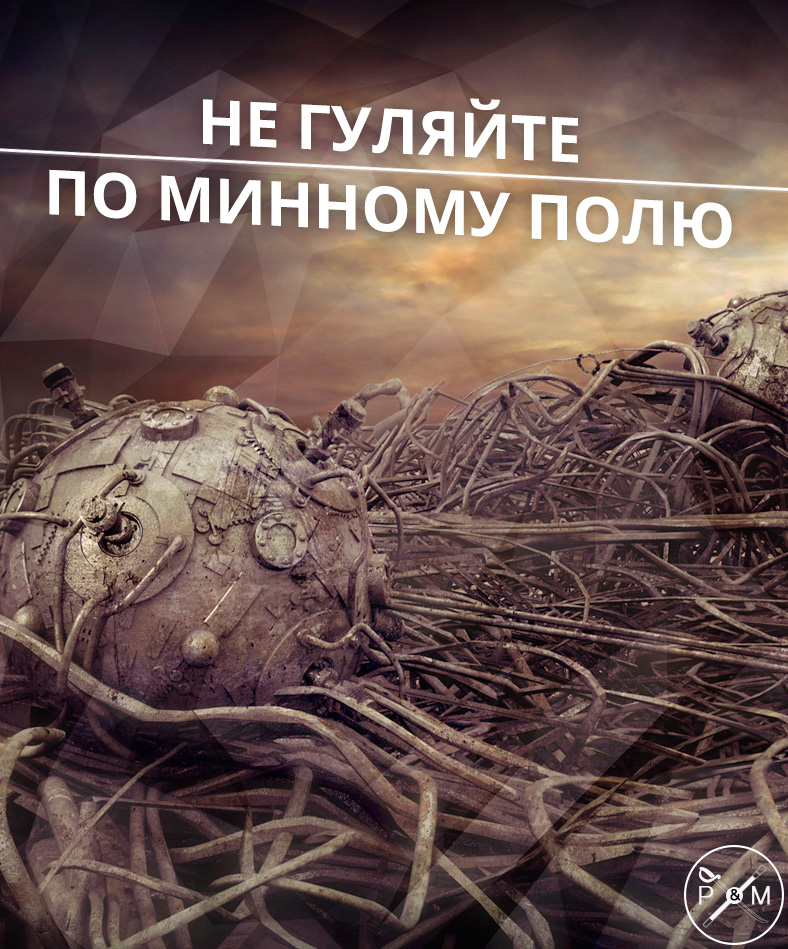
“Do not wander across the minefield!”
On the twenty-fourth of November of this year a very interesting bill was registered in the Verkhovna Rada of Ukraine, concerning criminal responsibility for the public denial of the Holodomor as genocide of the Ukrainian people and of the Holocaust as genocide of the Jewish people. Will this bill become law? Not necessarily. But the trend, as they say, is obvious, and if so, it makes sense to figure out in some detail where this trend can lead to.
Given the sensitivity of the topic, I will allow myself here to point out some facts from the history of my own family, which I try not to mention too often. Two of my great grandfathers were dispossessed during Stalin’s collectivization. One survived, the other died from hunger in Siberia (like my great grandmother). So I have no personal reasons to deny the reality of Holodomor – rather on the contrary. And I am not prepared to justify neither it nor other Bolshevik atrocities. And besides that, the fate of my ancestors gives me the moral right to talk about Holodomor and to be heard: no less of a right than, say, that of a member of the Communist Party of the Soviet Union (CPSU) Madame (or Comrade?) Irina Farion.
However, the talk in this case will not be about Stalin’s crimes of the 30s, but about that quagmire which Ukraine can end up in if they pass such an apparently correct and necessary law…
A thought expressed is… a crime?
Are there bad ideas? I would not want to upset the liberals, but – sadly, yes. It is enough to look at what was spawned by the communist ideology on the territory of the former Russian Empire, in Eastern Europe, in North Korea, China, Cambodia, and elsewhere around the globe, to admit: the bright ideas of communism turned out to be a virus, the spread of which resulted in the deaths of tens of millions of people. And in places which successfully fought it – for example, in South Korea, Spain, Finland or Chile – in the end, life turned out much better than in places where they took root.
So this idea that any and all ideologies are equal, and their spread should not be limited, I, unfortunately, cannot agree with. Some of them really should be limited.
The denial of the very fact of the mass and, actually, artificial hunger, borne out of “industrialization and collectivization” is not only amoral, it is also a political rehabilitation of the communist system. Is it worth combating this? Absolutely. More precisely, it is essential. The only question is: how?
Regarding educational and outreach work it is clear. How about legislative bans and criminal prosecution? In some cases such measures are very possible. For example, in Ukraine they very recently tried to ban the communist party. It would be very helpful to finally recognize this organization as criminal and to close it down once and for all. We can pass a law on “toponymic lustration,” on renaming all the streets, square and geographical objects named after Soviet leaders, making it forbidden to ever perpetuate their names through the years.
But the ban under threat of criminal prosecution to deny the reality of Holodomor gives the whole affair a completely new character.
What is the difference? Only in that in the legal field, all concepts, especially those linked with the definition of an offense and determining the presence of a crime, should be formulated as clearly and accurately as possible. For example, the fact of membership in the Communist Party is a fact that can be determined easily. And here the limits are quite clear. The same with the names of streets, etc. But how do you determine the fact of “public denial”?
Circumventing such a ban is easy. For example, you write an article, the main point of which is that there never was any Holodomor. But in the first paragraph, in the introduction, you make some reservations: “Of course, we are in no way denying the fact of Holodomor as the genocide of the Ukrainian people…” and that’s it! You can’t go against that!
So the law simply will not work. And what must be done for the law to start working? The same thing that now exists in the Russian Federation regarding Article 282: a broad interpretation. And here the festival begins.
A factory of criminal cases
Broad interpretation is a wonderful thing. The key word here is ‘interpretation.’ The possibility arises to interpret someone’s thoughts in this or that manner. For example, if someone might not even be denying it openly, but in a subtle way – he is denying it. This can be “broadly interpreted” as a criminal offense. But who will do this?
And here we come to the next, most interesting, stage. The fight against “denial” is a fight against thought crime. But a common cop will not work on this – it does not fit his profile. Therefore, we need a special body that will do this job. (Again, as in the Russian Federation, where there is the “General Directorate for Combating Extremism of the Ministry of Internal Affairs of the Russian Federation”). Here there are no simple cops any more, but special ones. The kind who can’t catch thieves and crooks, but who can monitor the Internet and the book market for the presence of any sedition. And of course they will have experts on call who will make the decisions: does this or that text or saying have the unfortunate “denial” or not.
After that, of course, the law will start working. But exactly at that moment the government and society cross a dangerous line: a special unit appears whose purpose is to fight sedition. And a unit, as Dmytro Korchinsky rightly noted, is defined by its function. So later on the “deniers” will be caught and jailed not because they are dangerous, but simply because this unit exists and must meet its quotas.
In Kyiv, this bureau will have work to do: close down some underground fan club of Starikov, or turn off a bad website. But what will this department do, for example, in Lviv? Are there many activists there who deny Holodomor? I suspect that there are hardly any. But the department will have a branch there. In the branch there will be a cop. The cop will have a wage, seniority and a need to deliver results. And he will deliver them. The horror stories from the Russian province, where they put a man away for two years in a high security jail for a re-post in VKontakte are caused to a large extent by precisely this. Some CPE guy is sitting there in a rundown provincial town, no fascists or Nazis to catch. But he has to fulfil the quota somehow. So he gathers up evidence in the corners of social networks until eventually he gathers enough for several years of a real imprisonment.
This is exactly what awaits Ukraine if the aforementioned law is passed. Because all the real “deniers” will quickly either go quiet or will end up beyond the reach of the Ukrainian government, working through the Internet (mostly, of course, the latter). And the specially trained cops will remain. And then you can look forward to criminal cases for re-posts in social networks, or even for arguments in comments. Or for a joke. Or for a newspaper with an article on Holodomor, which some Mykola will happen upon one time, and the conscious expert will see a “denial” in it. You think you won’t have it like this? In 2001 I also wouldn’t have believed that something like this is possible in Russia. And now we live in this.
Or maybe you are hoping that the cops will be controlled by some scientific experts? Alas, there are no clear criteria in a “broad interpretation”. So the professor from Lviv, a Svoboda party member, whose granddad and grandma died in Siberia, will very likely find “Holodomor denial” even in some incomprehensible mumbling of a Komsomol member from Donbas. Exactly in the same way as a Kharkiv professor, a veteran of KPSS and the Party of Regions, will not see anything wrong even if they put a newspaper under his nose with the name “We are denying Holodomor!” with a million copies in circulation.
There can’t really be a real scientific expertise on this. There can be only subjectivism, or in other words, despotism. And the cop put forth to combat sedition gets all the means to fabricate criminal cases.
But this is not even the end of the banquet.
Prohibit more, more, more…
The appearance of one law punishing for wrong thoughts and opinions creates a whole wave of similar ones. Because there are always influential social groups, religious or ethnic communities, who will want to get a hold of such an option. It is forbidden to deny genocide of Jews and Ukrainians? Crimean Tatars also consider themselves to have been the victims of genocide! And they will want the same law. Meanwhile the genocide of Armenians has been recognised already by many countries in Europe. And they will also demand that its denial be forbidden under threat of criminal prosecution.
Later on, logically, there will appear a law on the defense of rights of believers. Because if feelings and thoughts are now regulated by the articles of the penal code, why should the religious sphere be excluded? Afterwards, probably, the atheists will want to defend their feelings. And public officials will claim that they constitute the social group “public officials” and will demand a ban on the kindling of strife regarding them.
Is it funny? An exaggeration? But I did not invent any of this. Almost all of this is present today in Russia.
The MOI [Ministry of the Interior of the RF] and SBU [Security Service of Ukraine] will support these initiatives. For two reasons: firstly, if they have departments to fight “denial,” they need work. The more the better (there is a reason to increase funding, to overstaff, etc.). Secondly, such laws make anyone potentially guilty. A student will call a professor in the medical academy a “yid” for failing him, someone will have an argument with an Armenian and will post a picture of Enver Pasha on his Facebook, someone will simply say something out of place… with the right expertise the “denial” can even be found in instructions for an electric kettle. Almost anyone can be worked on in this way. The security forces have their hands untied. And there are no such law enforcement agencies that are fundamentally opposed to the expansion of their powers.
That, in fact, is roughly how freedom of speech ends.
* * *
By passing a law that punishes opinions and thoughts – even if they are the most unseemly – we are always opening a Pandora’s box. In the best case, the new legislation will simply be stillborn. In the worst case – we unleash a meat grinder, which at first maybe chops up some “bad guys,” but later on inevitably starts sucking in everyone.
What to do?
Does this mean that we shouldn’t combat neo-Bolshevik propaganda? No, it does not. If someone is interested in my opinion, here it is.
First of all, finally ban the Communist party and all Communist organizations. For good measure.
Secondly, carry out a lustration. A real lustration.
Thirdly, create memorials to the memories of the victims of communist terror, museums and ideally a powerful research institution, which studies the relevant issues.
Fourthly, conduct active educational activities, both online and offline.
Fifthly, make HIGH-quality movies and TV series with the right content, and equally release the right computer games.
And, of course, build a state of law, where life will be comfortable for EVERYONE. That will be more than enough.
But criminalizing bad thoughts is not necessary. It is a very dangerous thing. In introducing such laws, we are stepping on a minefield. We were there already. We didn’t like it. And we don’t recommend you go there either.
By Wings Phoenix, (Iurii Biriukov), army volunteer and Assistant Minister to the Minister of Defense
12.01.2014 Translated by Wings Phoenix Eng and edited by Voices of Ukraine, used with permission
The past few days were quite tough in the area of Donetsk Airport. There were severe attacks and shellings. 5 soldiers were killed in the last two days and at least 15-18 were wounded…
———————————————
Operational report about Donetsk Airport, Monday 20:56:
In general, the rumors about some special forces arriving from Russia – are not rumors at all. There were a few dozen special “cosmonauts” who arrived there and led a mass of locals in an assault [on the airport].
All in all, if, after this, Russians will still talk about us as an inhospitable nation – do not be surprised. According to an intercept of SeparRadio–27, the Special Forces commandos returned home this morning, in cozy coffins. Around 25-30 local organisms also ended their life cycles. 2 warlords, if you can call this rubbish that, were wounded.
Is this worth crawling onto our land for? No, it’s not worth it, it’s dangerous. We are a hospitable nation, but only to our friends.
This information is recommended for sharing – may as many vaty [vatniks, cotton- brained brainless] be warned of the futility of their attempts. Donetsk Airport is under the control of the Armed Forces of Ukraine.
Dmitry Tymchuk, Head of the Center for Military and Political Research, Coordinator of the Information Resistance group, Member of Parliament (People’s Front) 12.02.2014 Translated and edited by Voices of Ukraine
Operational data from Information Resistance:
For the past 24 hours there were more than 50 attacks by Russian-terrorist forces. In particular, in the following directions: • Donetsk – 26 attacks; • Luhansk – 15; • Debaltseve – 7; • Pervomaisk – 4.
Fierce fighting continues around the Donetsk airport and near Avdiivka. After regrouping and building up their forces, Russian-terrorist troops carried out a number of attacks, in a flank strike by several assault teams supported by armored vehicles, and provided cover by artillery fire. Ukrainian troops, in turn, performed artillery strikes on the gathering and attacking enemy formations, and successfully disrupted the assaults. Nevertheless, the enemy performed active mortar strikes in the area of the airport, near Pisky village, and to the south of Avdiivka.
Near Debaltseve, an unidentified unit fired upon and attacked a composite task group that is part of one of the Russian army’s motorized infantry divisions, while the task group was moving to its combat position area. There are casualties and wounded; two units of equipment were destroyed.
Also in the area of Debaltseve, the enemy is working to increase its contingent, deploying additional armaments and combat equipment to the area, through Krasnyi Luch. We have reports of a minimum of 2 supply convoys, which included towed artillery systems (up to a total of 12 units of artillery equipment).
The enemy is deploying “batches” of armored vehicles (including tanks, 3-4 units at a time) to the area of Stanytsia Luhanska. The armored vehicles are being deployed from the Russian border, by bounds and thoroughly camouflaged, provided cover by artillery fire on the positions of Ukrainian troops. At the same time, the enemy’s mobile groups in the area, reinforced by armored vehicles, are trying to force Ukrainian troops backwards, away from the Siverskyi Donets river, alternating shelling and attempted assaults. Enemy tanks are deployed occasionally, mainly to reinforce infantry groups (up to 1-2 units). Terrorist mortar details are highly active in this area.
Near Novoazovsk, one of the enemy’s sabotage and reconnaissance groups, while leaving the territory controlled by Ukrainian force, was discovered and fired upon by Ukrainian troops. Rushing to reach the insurgent-controlled territory, the group encountered its own mine obstacles. There are casualties and wounded.

 Dmitry Tymchuk, Head of the Center for Military and Political Research, Coordinator of the
 Voices of Ukraine