Liebe Leser, bitte unterstützt diesen Aufruf durch eure Stimme auf change.org!
Friedenssicherung statt Expansionsbelohnung
Aufruf von über 100 deutschsprachigen OsteuropaexpertInnen zu einer realitätsbasierten statt illusionsgeleiteten Russlandpolitik
Am 5. Dezember 2014 veröffentlichten 60 prominente deutsche Persönlichkeiten aus Politik, Wirtschaft und Kultur den Aufruf „Wieder Krieg in Europa? Nicht in unserem Namen!“ Obwohl es in diesem Text um die deutsche Russland- und Ukrainepolitik geht, nimmt kaum eine/r der UnterzeichnerInnen an der aktuellen Osteuropaforschung oder Ukraineberichterstattung teil. Vielmehr haben die meisten der Unterzeichnenden nur geringe Expertise zum postsowjetischen Raum, wenig relevante Rechercheerfahrung und offenbar keine Spezialkenntnisse zur Ukraine sowie den jüngsten Ereignissen dort. Dies ist kein Zufall.
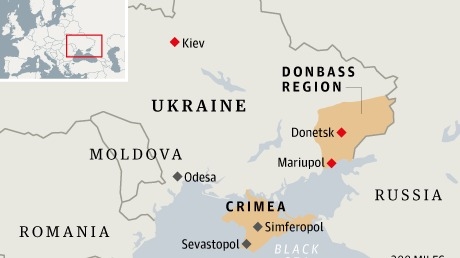
Die überwältigende Mehrheit der sich aus wissenschaftlicher, zivilgesellschaftlicher oder journalistischer Perspektive mit dem heutigen Ukrainekonflikt auseinandersetzenden deutschen Forscherinnen, Aktivisten und Reporterinnen sind sich in ihrem Urteil einig: es gibt in diesem Krieg einen eindeutigen Aggressor, und es gibt ein klar identifizierbares Opfer. So wie die Defekte anderer einst okkupierter Staaten nicht den verbrecherischen Charakter ihrer Besetzungen relativieren, können die Unzulänglichkeiten des ukrainischen politischen Systems nicht gegen die russische Annexion der Krim und notdürftig verschleierte Intervention in der Ostukraine aufgerechnet werden.
Wenn sich Moskau von der EU und/oder NATO bedroht fühlt, sollte es diesen Streit mit Brüssel austragen. Die Ukraine ist weder Mitglied dieser Organisationen, noch führt sie Beitrittsverhandlungen mit ihnen. Nichtsdestoweniger führt Russland mit Hinweis auf eine angebliche Gefahr aus dem Westen einen bereits tausende Todesopfer, Verstümmelte, Traumatisierte und Vertriebene fordernden „hybriden Krieg“ im Donezbecken.
In ihrem Aufruf raten die 60 Persönlichkeiten: „Die deutsche Regierung geht keinen Sonderweg, wenn sie in dieser verfahrenen Situation auch weiterhin zur Besonnenheit und zum Dialog mit Russland aufruft.“ Frühere Erfahrungen sollten Berlin vorsichtig machen: Im Sommer 2008 entstand im Kaukasus eine ähnlich „verfahrene Situation“ infolge Russlands faktischer Kündigung des EU-vermittelten russisch-georgischen Friedensabkommens. Obwohl Moskau dessen wichtigsten Punkt, die Rückführung seiner Truppen aus den georgischen Regionen Abchasien und Südossetien, nicht erfüllte, schlug die Bundesrepublik wenige Wochen darauf Russland eine „Modernisierungspartnerschaft“ vor. Später folgten die EU und meisten ihrer Mitgliedsstaaten dem deutschen Beispiel. Die russischen Truppen stehen bis heute in Georgien.
Das Verhalten des Kremls stellte 2008 bereits eine Wiederholungstat dar, wie auch die damalige deutsche Reaktion auf die russische Okkupation georgischer Gebiete ein Déjà-vu auslöste. 2001 lud Deutschland Wladimir Putin zu einer vielgefeierten Rede in den Bundestag ein. Damals war allerdings bereits absehbar, dass Russland seinen vertraglich zugesicherten Truppenrückzug aus der moldauischen Region Transnistrien nicht umsetzen würde. 2003 offerierte Brüssel dem Kreml Verhandlungen zu einem neuen Kooperationsvertrag mit der EU. Die russischen Truppen stehen bis heute in der Republik Moldau.
Die 60 Persönlichkeiten schreiben in ihrem Aufruf: „Jeder außenpolitisch versierte Journalist wird die Furcht der Russen verstehen, seit NATO-Mitglieder 2008 Georgien und die Ukraine einluden, Mitglieder im Bündnis zu werden.“ Außenpolitisch versierte Journalisten werden sich erinnern, dass damals circa 3% der Bevölkerung der Russischen Föderation, einen NATO-Beitritt der Ukraine und Georgiens als Hauptgefahr für ihr Land ansahen. Die NATO lehnte – auf Drängen vor allem Deutschlands und mit Blick auf Warnungen Russlands – auf ihrem 20. Bukarester Gipfel Anfang April 2008 die Mitgliedsanträge Georgiens und der Ukraine zunächst ab. Beiden Staaten ist seither von Moskau die territoriale Integrität aberkannt worden. Die ebenfalls von den Kremlmedien diffamierten ehemaligen Sowjetrepubliken Estland und Lettland haben ihre großen russischsprachigen Minderheiten restriktiver als die Ukraine behandelt. Die baltischen Staaten sind jedoch seit 2004 NATO-Mitglieder und haben daher ihre territoriale Integrität sowie friedliche Entwicklung bewahren können.
Halbwahrheiten, von denen einige kaum kaschierte Verleumdungen des ukrainischen Volkes darstellen, sind zuhauf in der deutschen Öffentlichkeit im Umlauf. Ob es um die Sprachensituation oder Minderheitenpolitik, den Rechtsextremismus oder politischen Umbruch in der Ukraine geht: Fehlinformationen und tendenziöse Interpretationen zur Ukraine haben sich infolge oberflächlicher Recherchen und häufiger Wortmeldungen von Kremlsprechern in Fernsehdiskussionen zur Ukraine in den Köpfen vieler festgesetzt.
Deutsche Osteuropapolitik sollte auf Erfahrungswerten, Faktenwissen und Analyseergebnissen und nicht auf Pathos, Geschichtsvergessenheit und Pauschalurteilen basieren. Niemand ist auf militärische Konfrontation mit Russland aus oder möchte den Dialog mit dem Kreml abbrechen. Die territoriale Integrität der Ukraine, Georgiens und Moldaus kann jedoch nicht der „Besonnenheit“ deutscher (und österreichischer) Russlandpolitik geopfert werden. Frieden sollte ohne Waffen und nicht durch die Legitimation ihres offensiven Einsatzes geschaffen werden. Dem Export der illiberalen Gesellschaftsvorstellungen des Kremls in die EU sollte in unserem eigenen Interesse entgegengewirkt werden. Eine wichtige Säule des weltweiten Nichtverbreitungsregimes für Atomwaffen, das Budapester Memorandum, sollte im Namen unserer Kinder und Kindeskinder aufrechterhalten werden.
Die Ukrainische Sowjetrepublik verlor zwischen 1941 und 1944 mindestens fünf Millionen Menschen. Über zwei Millionen Ukrainer wurden als Zwangsarbeiter nach Deutschland verschleppt. Etwa vier Millionen ukrainische Rotarmisten nahmen an der Niederschlagung des Dritten Reiches teil. Gerade wir Deutschen können nicht abermals die Augen verschließen, wenn es um die Souveränität einer postsowjetischen Republik, ja um das Überleben des ukrainischen Staates geht.
Sabine Adler, Deutschlandradio Warschau
Hannes Adomeit, ehemals Stiftung Wissenschaft und Politik, Berlin
Vera Ammer, Memorial Deutschland, Berlin
Martin Aust, Ludwig-Maximilians-Universität München
Klaus Bachmann, Sozial- und Geisteswissenschaftliche Universität Warschau
Mariano Barbato, Universität Passau
Marieluise Beck, Deutscher Bundestag, Berlin
Klaus Bednarz, ehemals ARD-Büro Moskau
Jan-Claas Behrends, Zentrum für Zeithistorische Forschung, Potsdam
Timm Beichelt, Europa-Universität Viadrina, Frankfurt/Oder
Tilman Berger, Eberhard-Karls-Universität Tübingen
Dietrich Beyrau, Eberhard-Karls-Universität Tübingen
Florian Bieber, Karl-Franzens-Universität Graz
Katrin Boeckh, Institut für Ost- und Südosteuropaforschung, Regensburg
Tim Bohse, Deutsch-Russischer Austausch, Berlin
Falk Bomsdorf, ehemals Friedrich-Naumann-Stiftung, Moskau
Hans-Jürgen Bömelburg, Justus-Liebig-Universität Gießen
Thomas Bremer, Westfälische Wilhelms-Universität Münster
Ulf Brunnbauer, Universität Regensburg
Karsten Brüggemann, Universität Tallinn
Timm Büchner, Integrate Climate UG, Berlin
Lars Bünger, Libereco – Partnership for Human Rights, Zürich
Viola von Cramon-Taubadel, Grüne Osteuropa-Plattform, Göttingen
Claudia Dathe, Eberhard-Karls-Universität Tübingen
Andreas Decker, Memorial Deutschland, München
Klaus-Helge Donath, „Die Tageszeitung“, Moskau
Heike Dörrenbächer, ehemals Deutsche Gesellschaft für Osteuropakunde, Berlin
Gesine Drews-Sylla, Eberhard-Karls-Universität Tübingen
Wolfgang Eichwede, ehemals Universität Bremen
Tobias Ernst, Fachübersetzer Russisch / Ukrainisch, Stuttgart
Liana Fix, Deutsche Gesellschaft für Auswärtige Politik, Berlin
Tobias Flessenkemper, Südosteuropa-Gesellschaft, Nizza
Jörg Forbrig, German Marshall Fund of the United States, Berlin
Annette Freyberg-Inan, Technische Universität Darmstadt
Helmut Frick, ehemals Auswärtiges Amt, Berlin
Juliane Fürst, Universität Bristol
Mischa Gabowitsch, Einstein Forum, Potsdam
Caroline von Gall, Universität zu Köln
Klaus Gestwa, Eberhard-Karls-Universität Tübingen
Christoph Giesel, Friedrich-Schiller-Universität Jena
Luciano Gloor, Kulturprogramm der „Östlichen Partnerschaft“, Kiew
Witold Gnauck, Deutsch-Polnische Wissenschaftsstiftung, Frankfurt/Oder
Frank Golczewski, Universität Hamburg
Tobias Grill, Ludwig-Maximilians-Universität München
Hanno Gundert, n-Ost Netzwerk für Osteuropa-Berichterstattung, Berlin
Michael Hagemeister, Ruhr-Universität Bochum
Steffen Halling, Stiftung Wissenschaft und Politik, Berlin
Lars Handrich, DIW econ GmbH, Berlin
Rebecca Harms, Europäisches Parlament, Brüssel/Strasbourg
Anne Hartmann, Ruhr-Universität Bochum
Guido Hausmann, Ludwig-Maximilians-Universität München
Nicolas Hayoz, Universität Fribourg
Andre Härtel, Friedrich-Schiller-Universität Jena
Andreas Heinemann-Grüder, Georg-Eckert-Institut, Braunschweig
Felix Heinert, Herder-Institut für historische Ostmitteleuropaforschung, Marburg
Marlene P. Hiller, ehemals Geschichtsmagazin „Damals“, Badenweiler
Mieste Hotopp-Riecke, Institut für Caucasica-, Tatarica- und Turkestan-Studien, Berlin
Hubertus Jahn, Universität Cambridge
Sabine Jenni, Eidgenössische Technische Hochschule Zürich
Jürgen Jerger, Institut für Ost- und Südosteuropaforschung, Regensburg
Wilfried Jilge, Universität Leipzig
Andreas Kappeler, Universität Wien
Walter Kaufmann, Heinrich-Böll-Stiftung, Berlin
Peter Koller, Grüne Osteuropa-Plattform Berlin
Miriam Kosmehl, Friedrich-Naumann-Stiftung, Kiew
Irma Kreiten, ehemals Eberhard-Karls-Universität Tübingen
Katharina Kucher, Eberhard-Karls-Universität Tübingen
Sergey Lagodinsky, Heinrich-Böll-Stiftung, Berlin
Nico Lange, Konrad-Adenauer-Stiftung, Berlin
Manuel Leppert, Stiftung Ettersberg, Weimar
Markus Löning, Liberal International, Berlin
Heinz-Dietrich Löwe, ehemals Ruprecht-Karls-Universität Heidelberg
Otto Luchterhandt, ehemals Universität Hamburg
Marian Luschnat, Universität Hamburg
Markus Lux, Robert Bosch Stiftung, Stuttgart
Martin Malek, Landesverteidigungsakademie Wien
Markus Mathyl, Institut für Ost- und Südosteuropaforschung, Regensburg
Markus Meckel, Stiftung zur Aufarbeitung der SED-Diktatur, Berlin
Stefan Melle, Deutsch-Russischer Austausch, Berlin
Jakob Mischke, Westfälische Wilhelms-Universität Münster
Michael Moser, Universität Wien
Uwe Neumärker, Stiftung Denkmal für die ermordeten Juden Europas, Berlin
Dietmar Neutatz, Albert-Ludwigs-Universität Freiburg im Breisgau
Andrej Novak, Grüne Osteuropa-Plattform, Nürnberg
Ferdinand Pavel, DIW econ GmbH, Berlin
Christian Pletzing, Academia Baltica, Sankelmark
Nikolaj Plotnikov, Ruhr-Universität Bochum
Susanne Pocai, Humboldt-Universität zu Berlin
Gerd Poppe, ehemals Deutscher Bundestag, Berlin
Jakob Preuss, Dokumentarfilmer, Berlin
Detlev Preuße, ehemals Konrad-Adenauer-Stiftung, Sankt Augustin
Edgar von Radetzky, Memorial Deutschland, Berlin
Boris Reitschuster, „Focus“, Moskau
Felix Riefer, Lew Kopelew Forum, Köln
David Rinnert, Grüne Osteuropa-Plattform, Glasgow
Stefan Rohdewald, Justus-Liebig-Universität Gießen
Maren Rohe, Junge Europäische Föderalisten, Bonn
Heike Roll, Universität Duisburg-Essen
Erich Röper, Westfälische Wilhelms-Universität Münster
Claudia Sabic, Johann Wolfgang Goethe-Universität Frankfurt/Main
Manuel Sarrazin, Deutscher Bundestag, Berlin
Karol Sauerland, Pommersche Akademie Stolpe
Schamma Schahadat, Eberhard-Karls-Universität Tuebingen
Stefanie Schiffer, „Kiewer Gespräche“, Berlin
Judith Schifferle, Philosophicum Basel
Felix Schimansky-Geyer, Kiewer Mohyla-Akademie
Frank Schimmelfennig, Eidgenössische Technische Hochschule Zürich
Karl Schlögel, ehemals Europa-Universität Viadrina, Frankfurt/Oder
Carmen Schmidt, Universität zu Köln
Henrike Schmidt, Freie Universität Berlin
Winfried Schneider-Deters, ehemals Friedrich-Ebert-Stiftung, Kiew
Anna Schor-Tschudnowskaja, Sigmund Freud Privat Universität Wien
Gunda Schumann, Zentrum für Internationale Friedenseinsätze, Berlin
Christoph Schulz, MitOst Verein für Sprach- und Kulturaustausch in Osteuropa, Berlin
Werner Schulz, ehemals Europäisches Parlament, Brüssel/Strasbourg
Diana Siebert, Initiative Demokratische Ukraine, Köln
Jens Siegert, Heinrich-Böll-Stiftung, Moskau
Gerhard Simon, ehemals Universität zu Köln
Susanne Spahn, freie Journalistin, Berlin
Stephan Stach, Universität Leipzig
Martin Stein, Freie Universität Berlin
Kai Struve, Martin-Luther-Universität Halle-Wittenberg
Susan Stewart, Stiftung Wissenschaft und Politik, Berlin
Wolfgang Templin, ehemals Heinrich-Böll-Stiftung, Warschau
Hartmute Trepper, ehemals Forschungsstelle Osteuropa Bremen
Stefan Troebst, Universität Leipzig
Andreas Umland, Institut für Euroatlantische Kooperation, Kiew (Redakteur des Aufrufs)
Ricarda Vulpius, Ludwig-Maximilians-Universität München
Bodo Weber, Democratization Policy Council, Berlin
Elisabeth Weber, Lew Kopelew Forum, Köln
Tobias Weihmann, Deutsch-Belarusische Gesellschaft, Berlin
Reinhard Weißhuhn, Robert-Havemann-Gesellschaft, Berlin
Anna Veronika Wendland, Herder-Institut für historische Ostmitteleuropaforschung, Marburg
Martin Schulze Wessel, Ludwig-Maximilians-Universität München
Jan-Henrik Wiebe, „Thüringische Landeszeitung“, Jena
Hans-Georg Wieck, ehemals Auswärtiges Amt, Bonn
Irina Wutsdorff, Eberhard-Karls-Universität Tübingen
Bernd Wieser, Karl-Franzens-Universität Graz
Susann Worschech, Europa-Universität Viadrina, Frankfurt/Oder
Johann Zajaczkowski, Kiewer Mohyla-Akademie
Kerstin Zimmer, Philipps-Universität Marburg
Josephine von Zitzewitz, Universität Cambridge
POST SCRIPTUM: Etliche weitere derzeitige und ehemalige Parlamentarierinnen sowie Künstler, Aktivistinnen, Journalisten, Wissenschaftlerinnen und interessierte Bürger haben während der Unterschriftensammlung ihre Unterstützung für diesen Aufruf deutschsprachiger OsteuropaexpertInnen zum Ausdruck gebracht. Einige der wichtigsten deutschen Russland- und UkrainekorrespondentInnen sympathisieren mit dem Aufruf, haben jedoch aus spezifisch professionellen Gründen nicht unterschrieben. Die Petition erscheint demnächst auch auf “Zeit Online” sowie im “Tagesspiegel”.
Siehe auch: 1939 – 2014. Sterben für Danzig – Leben für Donezk: Ein Appell polnischer Schriftsteller an die Regierungen und Bürger Europas. 1. September 2014. http://www.euractiv.de/sections/eu-aussenpolitik/1939-2014-sterben-fuer-danzig-leben-fuer-donezk-308119 und “No more business as usual with Moscow!” – Public Statement of Researchers of Post-Soviet Politics. 1. März 2014. https://www.change.org/p/petition-to-eu-countries-no-more-business-as-usual-with-moscow-public-statement-of-researchers.
Quelle und Möglichkeit zur Unterstützung dieses Aufrufs für jeden: change.org.
 Dmitry Tymchuk, Head of the Center for Military and Political Research, Coordinator of the



 Voices of Ukraine