CARGO 200

Headshot_MariaTurchenkovaBy Maria Turchenkova, photojournalist
06.02.2014 8:37
Translated and edited by Voices of Ukraine

At the border in Uspenka [Luhansk Oblast] it is quiet.

There is no traffic in the direction of Russia, and now the border guards, who were bored only five minutes ago, are inspecting a semi-trailer truck with great surprise, a truck with red crosses and the number “200” on the sides. They slowly walk around it from different directions, photographing it on their phones, while the customs official checks the paperwork for the cargo. The procedure is proceeding formally, but there is a feeling of tension from not understanding where this cargo came from and who exactly sent it. The driver, Slava, cannot explain anything–this morning “people whom he could not refuse” asked him to drive the truck to Russia and said only that it was important.

I glance over an officer’s shoulder, “Donetsk Regional Bureau of Forensic and Medical Expertise. 05.29.2014. This paper certifies that neither the corpse of Mr. Zhdanovich, Sergei Borisovich, DOB 1966, nor the coffin contain any items whose movement across the state border of Ukraine is prohibited.”

Photo 1

There are thirty-one such certificates, one for each of the coffins that were sent inside this refrigerated truck from Donetsk two hours ago.

A column of three vehicles (a car with police officers, the truck itself and another car–driven by us journalists) departed from the city just before evening, and by the time we reached the border, it was already dark. The faces of the border guards flicker in the torch lights, and no one wants to talk, everyone is simply waiting for the inspection to finish, while not taking their eyes off the semi.
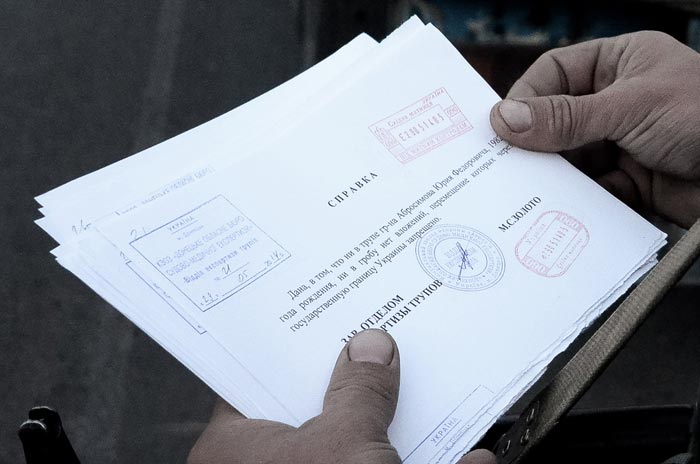
PHOTO 2

Cargo 200.

Inside the truck there are 31 coffins, marked with Donetsk People’s Republic [DPR] stickers, with Russian citizens who had died in Donetsk during the battle at the airport on May 26. Rumors about Russians participating in the battles in Donetsk Oblast had been circulating from the very beginning of the hostilities in April, but no one ever saw them live.

The battle at the Donetsk airport (the airport is still controlled by the Ukrainian side, despite the fact that the city is the center of the self-proclaimed DPR) has become the most tragic in the whole period of the ATO in Donbas–the exact death toll is still unknown, but according to various sources it is at least 50 people.

The next day, a pile of dead bodies in camouflage were shown to reporters. They were lying on the blood-stained floor in the basement of the morgue of the Kalinin hospital in the center of Donetsk. Many were mutilated, some were decapitated, limbs were missing. They were the bodies of those who were in the KAMAZ with the wounded that came under fire in the vicinity of the airport on the day of the battle. The morgue staff worked continuously, chain-smoking right in the building. Breathing inside and within a 50 meter radius of the entrance was simply impossible due to the caustic putrid smell.

The morgue ran out of room, so at some point activists of the DPR drove up two refrigerated trucks for transporting produce, into which some of the victims were loaded. The drivers of the trucks stayed there at the morgue smoking one cigarette after another. According to them, armed insurgents stopped them on the road and said only, “We need the vehicle.” And now, with their refrigerators loaded with corpses, they were simply waiting for the vehicles to be released.

PHOTO 3

On Tuesday locals started coming by to identify the dead. Someone was looking for missing relatives; others came to look at the lists which were not there. Searching for the right body inside the truck, where corpses were piled one on top of another, was impossible. So, to those who wanted to recognise their relatives, the morgue staff offered photographs which were taken by the criminologists. On Wednesday it became known that in this way only two bodies had been identified–the dead turned out to be Donetsk residents Mark Zverev and Edward Tyuryutikov.

Who the other bodies belonged to was not known until Wednesday evening. The mystery was solved in the most unpredictable way.

At the end of the day, while we met with colleagues in a hotel café for supper, we were approached by a man close to Alexander Borodai, the prime minister of the self-proclaimed Donetsk People’s Republic. He said that the next day a column of two trucks with bodies would depart from Donetsk to Russia, and asked the journalists for a favor: to accompany them to the border. He promised to report in half an hour where exactly they would be driven to and who would accompany the cargo, and he asked us to give him an answer at that time whether or not we would agree to go. We were stunned by what we heard.

This was the first admission that Russian citizens are dying in the battles in Donbass. Only two weeks ago in the social networks, rumors were being spread that the bodies of Russians killed in battles in the East were secretly being transported across the border to Russia. But nobody in the DPR confirmed it, and they definitely did not advertise it.

PHOTO 4

Now the leadership of the DPR was asking correspondents to both cover this event and to accompany the convoy, probably expecting an attack from the Ukrainian security forces and hoping that they would not touch the column in the presence of journalists.

It was completely unclear how this move by the leadership of the Donetsk People’s Republic could be correlated with statements from Moscow, where they were insisting on a “people’s struggle” in Donbass and denied the participation of Russian citizens in the conflict, and what reaction could be expected to this from the Kremlin.

In the end we decided to go, and rumors about the upcoming event quickly spread through the hotel.

The next morning, about a hundred journalists from the international media had gathered at the morgue. Among them were cameras from Perviy Kanal and Russia 24, which would later not report a single news story regarding this event.

Along came Alexander Borodai and Denis Pushilin, the self-proclaimed speaker of the Supreme Council of the DPR. They stood apart from each other, each with their own ring of armed guards, each separately talking to the journalists. They said the same thing: that they were sending “Cargo 200,” with Russian volunteers who had come to support the struggle of the DPR insurgency, back to Russia and that they did not want any provocations. So, the truck would travel without an armed escort.

Multi-colored coffins which, as reported by activists of the DPR, had been gathered from around all of Donetsk, were set out at the morgue entrance, and the journalists wondered whether or not the bodies were already inside. The departure of the column was originally planned for one in the afternoon, and for about four hours the journalists simply waited while the coffins were loaded into the truck. However, the more time passed, the less realistic it seemed that the departure would actually go ahead. Morgue staff went round with lists of names of the dead and for a couple of moments even showed them to the journalists, they but did not allow [anyone] to look carefully or take photographs.
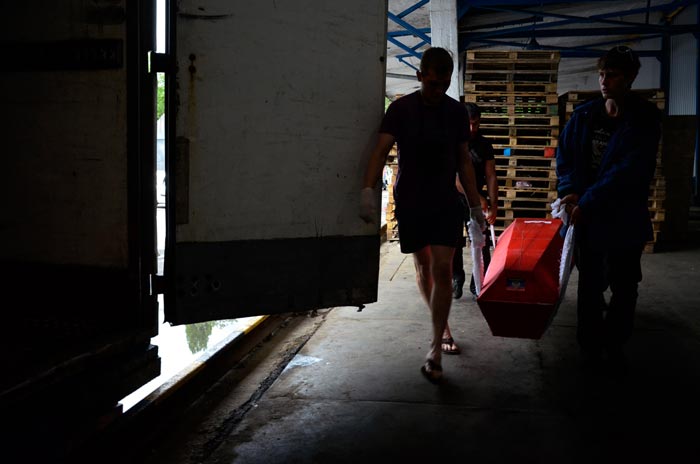
PHOTO 5

Besides the press, there were also employees of the Kalinin hospital, on the territory of which the morgue was located, who were watching the scene with curiosity along with the relatives of the identified local Mark Zverev, who came to say their farewells. None of the activists from the DPR or residents of Donetsk came. Nobody took this final opportunity to say farewell to the “volunteers who came to the defence of the Russian people.” Despite the large gathering of the press, the event still seemed like a secret, a tragedy, which would be mourned only across the border.

The loading of the coffins into the truck began. Immediately reports started coming in that the Vostok Battalion (one of the units of the insurgents, which had become the main power in Donbas) was clearing the city administration building of DPR activists. Pushilin and Borodai left in a hurry, many journalists, as soon as the coffins were loaded, also rushed to the city center. Later they released reports that the bodies of dead Russians were loaded up by the morgue and sent across the border.
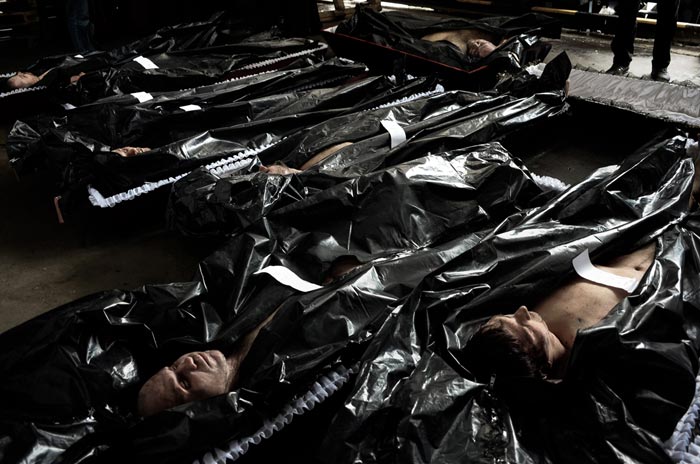
PHOTO 6

But the coffins that left the morgue were empty.

It seemed that each new twist in this story was transforming it into a script for a surreal movie.

As it turned out, the bodies of the dead had been transferred the day before from the morgue to refrigerators at an ice cream factory. That was where they were supposed to be put into coffins and prepared for transport to Russia. The truck with the coffins drove to the factory grounds, and the gates were shut. In a secluded corner, fenced-off by wooden pallets from the prying eyes of the factory workers, the activists hastily carried the bodies out from the refrigerated chamber, gathered body parts, put the remains into black bags, then into the colorful coffins, smoked, looked around, and loaded the coffins into the semi. At the same time, other activists painted the sides and roof of the truck with red crosses and the digits “200.”
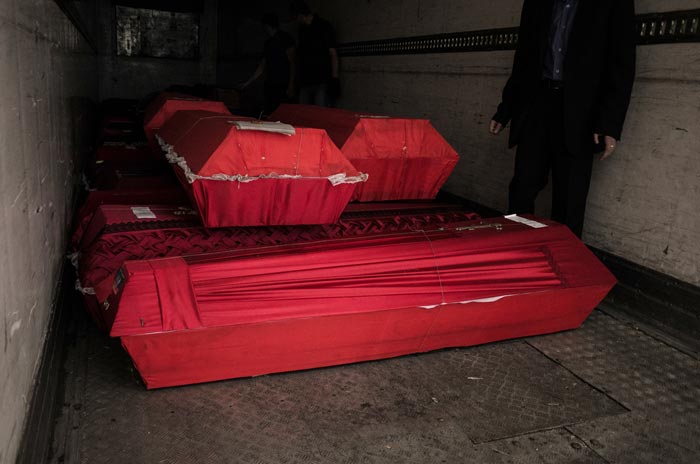
PHOTO 7

Three colleagues and I followed the truck with the coffins from the morgue, and we turned out to be the only ones for whom this story was interesting and important. Our interest aroused respect among the DPR activists. They allowed us to be present while they loaded the bodies and let us photograph the bodies of the dead.

One woman said to me that she hoped the Ukrainian soldiers and “Right Sector” would show humanity and let the truck pass by safely, that “they were fascists, but they must have something human in them.” I asked if she would go along with the convoy. She looked me in the eye, “What, do you want me to be killed?”
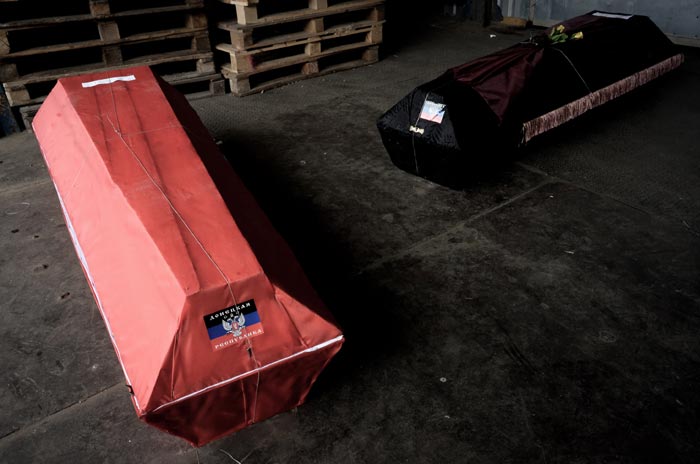
PHOTO 8

We still did not know how we would go and could not imagine what would happen on the road. It was already evening. We started to worry how we were going to return to Donetsk. There was a curfew in the city, and after 10:00 PM the streets were virtually empty. It becomes unsafe at checkpoints and on the roads at night, especially for journalists, who are constantly suspected there of disloyalty or espionage. And then, you never know in which areas shooting might begin. We decided to follow the truck until it started to get dark.

I mentioned this to one of those responsible for the truck’s departure. And suddenly he offered to leave the vehicle there overnight and postpone the departure until morning, when we could definitely make it to the border. It became clear that for some reason they did not want to set off without us journalists.

This added to our alarm, but we decided to simply hope that we would make it before dark and act according to the situation.

Around seven in the evening, all bodies had been loaded into the semi, and the coffins were sealed. The activists washed their hands and lit cigarettes. Nameless Russian volunteers who came to “protect Russians” in the East of Ukraine, were accompanied by silence on their last journey home in a refrigerated truck from an ice cream factory. In the self-proclaimed Donetsk People’s Republic, they did everything that they considered proper for the Russians who were killed there. A DPR sticker on the coffin was supposed to tell relatives about their exploits in the Donbas. The war continues, and the activists diverge to their checkpoints.

We drove along the streets of Donetsk, people indifferently glanced at the sides of the truck, rushing about their business. All activists had been expelled from the regional administration building in the centre of Donetsk, and the barricades had been dismantled. It was getting dark.

On the open road, the truck gained speed, without stopping at insurgent checkpoints or slowing down in populated areas. We drove towards Uspenka. Four kilometers away from the border the truck stopped at a Ukrainian military checkpoint. The soldier routinely approached the cabin, and the driver handed him the documents for the cargo…
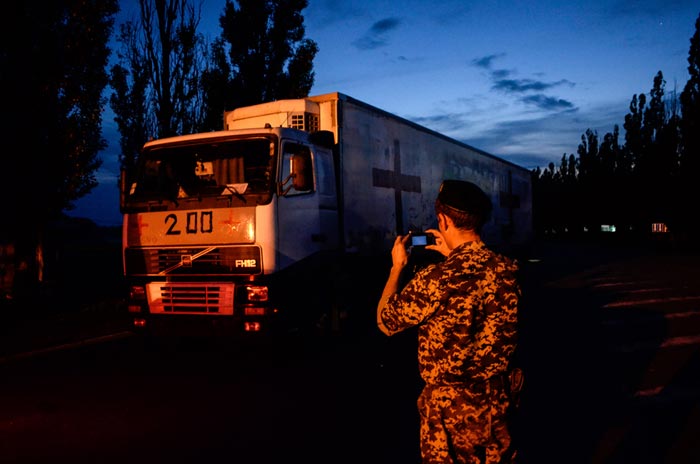
PHOTO 9

As soon as the soldier realised what was inside, his movements instantly became sharp, his voice loud. He called other soldiers; they surrounded the car, pointed their assault rifles with safety off at the doors of the semi, and ordered the driver to open them. For a long time, the soldier did not believe his eyes, staring first at the papers for the cargo, then at the coffins inside the truck. He did not know what to do with this. The soldiers noticed our car, we suspiciously stood some distance away from the truck, observing. Now they pointed their guns at us, but after being satisfied that we were journalists, they returned to the truck.

“Where are the coffins from?” the soldier asked the driver.

“From Donetsk.”

“Who sent them?”

“I don’t know, I only got the loaded vehicle and am driving it to the border.”

Everything was clear anyway. The soldier did not ask any more questions, checked the documents, and ordered the driver to stand on the side of the road beyond the checkpoint. The police officers, who were in the first car, came out and said something to the soldier, and the truck passed without any additional checks.

PHOTO 10

We ended up at the border when it was already dark.

Nobody was warned that a special cargo would pass through border control. The border guards mechanically checked the documents and the vehicle according to their instructions. They waved the truck through without emotion, as they would wave through a truck with sacks of potatoes.

Nobody agreed to show us lists of the dead in the end, but we did see some names on the certificates for the corpses.

Mr. Zhdanov, Sergei Borisovich, born in 1966. Information about him had already appeared on the social networks. In the VKontakte group “Afghanistan. Nothing is forgotten, no one is forgotten,” it was written that he was a retired instructor from the Russian FSB Special Forces Center, a veteran of Afghanistan and Chechnya. It is also reported that on May 19 he arrived in Rostov-on-Don for military drills and was killed on May 26 in Donetsk.

We could not find anything on Yuri Abrosimov, born 1982, whose certificate we also saw on a corpse.

Some Internet resources mention some Alexander Vlasov and Alexander Morozov, also citizens of Russia, killed at the airport in Donetsk. In the comments they are ranked as heros, called fighters against fascism, and readers are urged to take up their cause, to “forsake the comfortable life and unite to fight the Nazis.”

In the social networks a letter is also being distributed called the last entry of Alexander Vlasovon his VKontakte page, which is impossible to verify, because later re-posts indicate that the original page has been deleted.

The letter reads as follows, “I had to leave the other day for Sloviansk, me and two of my friends. I told my mother, explained it all to my wife, wrote my will, just did not have time to pay all my debts…prepared the family for a month. In that time, I found corridors through the border, and people who were not indifferent to me. At the crossing we were to receive assault rifles, a machine gun for me because of my size and strength, equipment, and so on.” Later it is written that, “…the channel through Rostov was closed, one MP helped out, but it just happened that way…the second was shut by the SBU of Ukraine.” Regarding the reason for his decision to go to Donbas Alexander writes, “Odesa broke me, and this whole situation. I am a big guy. I cannot sit behind a woman’s back and hide behind work and children.”

When you are in Donetsk, you realise that the information war being waged by the Ukrainian and Russian media has completely erased the line between reality and understanding from both sides of what is actually happening in the East of Ukraine. Only the victims of this war remain real. Not a single one of the domestic federal TV channels, which for months pushed the idea of genocide of Russians in the East of Ukraine and domination of Nazis in the West, reported the fact that 31 Russian citizens died in Donetsk on May 26. They did not explain for what feat they died, how they ended up in this war, who opens the “channel through Rostov,” who distributes firearms, and who meets the coffins with the DPR stickers. In the Ukrainian media the dead were named mercenaries and terrorists.

The story of the first “Cargo 200,” sent from Donbas to Russia, ended for us and for our colleagues on the border in Uspenka. And we were the only ones who accompanied the Russians, killed in the battle for the Donetsk airport, home from Ukraine.

Source: echo.msk.ru

Posted in English, English News, Eyewitness stories, Pictures, South&Eastern Ukraine | Tagged , , , , , , , , , , , , , | 8 Comments

Russia Shoots Itself in the Foot by Concluding Gas Deal With China

chornajuravka's avatarEuromaidan PR

Yulia Latynina

China didn’t have such an urgent need to sign the [gas supply] contract [signed on May 21]; but by signing it the Chinese got, as a bonus, access into those spheres of the Russian economy where previously they were denied such access.

View original post 1,889 more words

Posted in Reblogged | 1 Comment

China Gas Contract Backs Russia Into Corner, Russian Journalist Says

Posted in Reblogged | Leave a comment

Upon request of Ukrainian President, OSCE-Chairperson-in-Office appoints Swiss diplomat to accompany talks between Ukraine and Russia

06.08.2014 BERN

Image

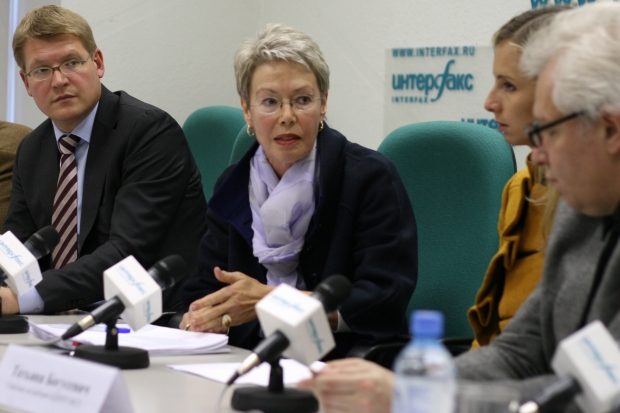
Ambassador Heidi Tagliavini (c), seen here at a press conference as head of the OSCE/ODIHR Election Observation Mission to the 2012 presidential election in the Russian Federation, Moscow, 26 January 2012. (OSCE/Egor Tilpunov)

Didier Burkhalter, OSCE-Chairperson-in-Office and Swiss Foreign Minister, today confirmed his agreement to send seasoned Swiss diplomat and Ambassador Heidi Tagliavini to accompany talks between Ukraine and the Russian Federation aiming at ending violence in Ukraine. Tagliavini has arrived in Kyiv.

Burkhalter welcomed Ukrainian President Petro Poroshenko’s initiative to launch talks on stopping violence rapidly. He underlined that the silencing of weapons would significantly improve conditions for meaningful dialogue, which is key for stabilizing the situation in Ukraine and resolving the crisis.

Source: OSCE

Posted in English, English News, Others, South&Eastern Ukraine | Tagged , , , , , | Leave a comment

Donbas Battalion Commander: Now, separatists will take as much as we allow them to take (video)

By Pavel Sheremet, Oksana Kovalenko
05.30. 2014,  20:53  Ukrainska Pravda
Translated by Olena Semenyaka of the Ukrainian Volunteer Defense Force “Donbas” and edited by Voices of Ukraine

bd9deb3-625-semen

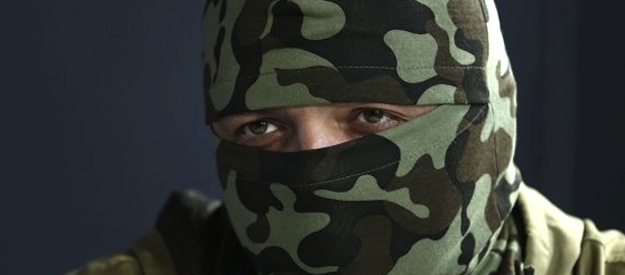
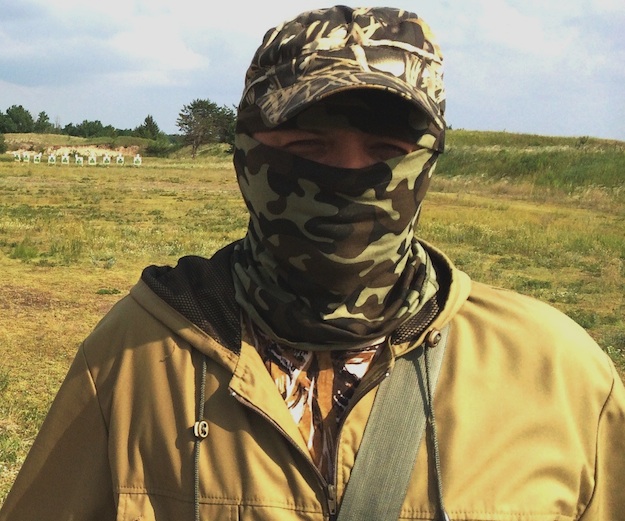
The Commander of Defense Force “Donbas” (DFD) [colloquially known as the Donbas Battalion] never takes his balaclava off while talking to journalists. Nobody really knows if Semyon Semyonchenko is his real name or an alias. He does not need additional fame, although he’s constantly reporting about all of the main activities of the unit in the social networks.

Right now, he is in Kyiv to form a new battalion of the National Guard. Every day, 100–150 people call. Volunteers are selected, and then they pass a medical examination and are sent off to military training camps for Internal Troops.

Semyon is a fairly young man, the father of four children. He was born and raised in Donbas, and moreover, never prepared himself for political activity, and never anticipated that someday it would come to taking up arms and defending Ukraine’s territorial integrity from Russians, like himself.

However, the commander of the DFD emphasizes that he is fighting not against Russians, but against Russian fascism and criminals who literally crawl out from all corners.

Ukrayinska Pravda (UP): Why are you masked all the time, why are you unwilling to show your real face?

Semyon Semyonchenko (Semyonchenko): The commander of the Luhansk Battalion of the MVD (Ministry of Internal Affairs) was seized, and up until now, he was detained in the SBU building (Security Service of Ukraine) in Luhansk. (The SBU building was seized by insurgents. Now the terrorists take all their captured prisoners to the basement there for holding–UP).

Vasil Budik, who was supposed to form the still non-existent Yarosh’s battalion, is being held in the basement in Horlivka by “Bes,” the terrorist’s alias that translates as “Demon” (Igor Bezler, one of the terrorist commanders–UP). He was seen in a handful of photos hugging Yarosh, and got captured the next day.

Other battalions of the Interior Ministry were not able to enroll enough people to form a platoon. They were combined together. Nobody really wants to join them. As for us, we are actually forming three battalions—one is based in the National Guard; the second one is in the Luhansk Oblast [region], a territorial defense unit whose task will be securing the national border; and the third is a volunteer unit.

I believe I have a right to such a whim as walking around in a mask. I have a reason for it.

UP: Semyon–is that your real name or a call sign?

Semyonchenko: I’ll leave that without comment.

UP: Where were you born?

Semyonchenko: I was born in Donetsk. And I’m Russian. Before the war I was a small-scale businessman. I dealt with security systems, video surveillance systems, and other things like that. But after Maidan, my business went under because I did not pay attention to it for two months.

UP: Did you participate in Maidan?

Semyonchenko: Yes. We started Euromaidan in Donetsk.

UP: How did you come up with the idea to create a territorial defense unit?

Semyonchenko: I was surprised that nobody else came up with that. I just wanted to stop all this criminal lawlessness. Even more so because we were a part of the Donetsk Oblast [region] “Self-defense” [Maidan-related self-defense militia] and saw what was happening in our region and amongst pro-Russian groups.

In reality there is no true separatism in Donbas. There is the local branch of the Party of Regions, the criminals, and Russia got involved at the second stage.

I saw the police step aside and pro-Ukrainians at United Ukraine rallies killed, and I understood that we should really conduct enrollment searches when it all started blossoming rapidly.

The creation of a territorial self-defense battalion was blocked in our region. The General Staff of the Armed Forces were wary of arming what they called, almost a contending foreign army, and local authorities did not need them. And later those local authorities started toying with separatism and it started an uncontrolled chain reaction.

Thus, as soon as I saw that this whole process was messed up, we decided to do it ourselves. We went to Dnipropetrovsk. I realized that we had to start the formation of self-defense there because it was not possible to do it in Donetsk by then. Recruits being drafted there were already being beaten. I arrived and posted a call on Facebook to meet right in front of the Administration building [for those willing to enroll], and I did not discuss it with anybody beforehand. People started to show up and gradually the dialogue took off.

UP: Is ”Donbas” comprised only of people from Donetsk region?

Semyonchenko: At about 70 to 80 percent.

UP: Does Kolomoyskyi have anything to do with your unit?

Semyonchenko: Kolomoyskyi is related as Chairman of the Dnipropetrovsk Oblast Administration. He allocated a former [USSR, children’s] “summer pioneer camp” facility to us. Actually, not him personally. The decision was approved by the Oblast Council on his recommendation. That’s all he did. Nobody helped us with anything else back then. Moreover, we do not want any special relationships in general.

We now rely more on regular people, we now have sufficient finances, thank god. It’s because ordinary people believe us. Actually, we are able to cover all our needs, except for weapons, [relying] only on donations.

UP: What kind of attitude towards you does Donetsk Oblast Governor [Serhiy] Taruta have?

Semyonchenko: Russian propaganda pictures us as local fascists, that Semyon Semyonchenko is the “right hand” of Yarosh. Unfortunately, even some patriotic forces sing along with the Russian mass media.

When it comes down to Taruta and company, yes, they acknowledged us already. Not too long ago, we visited the “governemnt in exile of the Donetsk Region Administration”–they are in Kyiv now–and they promised to help us. In the future, they promised to buy us exclusive arms, thermal imaging, etc. For now, we have received an old bus. In other words, they accepted us, but unfortunately too late, only after they themselves got banished.

UP: When do you think there was a turning point? When did the central government lose control over the Donetsk region? And the same in relevance to Taruta, Akhmetov, the Kyiv government?

Semyonchenko: The turning point was with the active entry of Chechens, Crimean “Berkut” [special riot police, now disbanded], and “Alpha” [special security unit]–they are professional scoundrels. It was roughly right after the May holidays. I met with Taruta several times. It seemed to me that he sincerely believed he could handle it and reach an agreement with everyone.

But at that time, terrorists were being freely trained in the summer camp facilities of Donetsk and Luhansk oblasts. And right now they are scurrying out. When we got ambushed near Karlivka several days ago, we accidentally saw the Chechens, and saw a great number of them. Before that we did not meet them somehow, they hid in the bases.

UP: And before that, in March when thugs in Donetsk beat up Euromaidan activists  and Dmitriy Chernyavskiy was killed…

Semyonchenko: We just guarded the rally…

UP: In your opinion, were local authorities flirting with the separatists back then?

Semyonchenko: They created this separatism. Local authorities undoubtedly were the creators of all this separatist movement from the very beginning.

Criminals, the Party of Regions, local businessmen and entrepreneurs all used city mayors, used human resources for bringing people from all around the region to create crowds for pro-Russian rallies. Until a chain reaction started. In other words, this problem was really generated within the region itself. And Russia joined in afterwards …

UP: What about Akhmetov?

Semyonchenko: I did not hold a candle with Akhmetov [i.e.: Akhmetov does not confide in me], so I don’t know. But if I were in his place, I would not have allowed this to happen. Since he allowed it, it means, probably, he took part in this. But I know for sure that many besides Akhmetov have participated in this. You don’t have to go far. When they recently stormed the offices of the Party of Regions, in some of the regions, they found many packs of St. George ribbons [symbols of the separatist movement].

UP: You say that you guarded the pro-Ukrainian rally in Donetsk.

Semyonchenko: Yes. And in fact, police just stepped aside, and allowed in a large number of people with bats, axes, chains, and weapons. They were several times more numerous than us. They simply mowed us down. That was all those resources that were brought in specifically to suppress the will of the people to resist. After that, people became fearful to express their beliefs and attitudes.

The last rally, as best I can recall, took place in May. It ended with the beating of pro-Ukrainian activists as well. After it, nobody dares to come out anymore.

Now we have a so-called insurgent war. In it’s first stage, it’s a war against the people and infrastructure. In other words, they hit the population in the brain, creating an image of a “liberator.” Once the percentage of support becomes acceptable, the second phase of the operation starts, as it is right now—troops and insurgents are introduced.

During the first phase, an information war was waged by this  criminal structure of the Party of Regions, local thugs, and some industrialists. Why do I know this? Because we cleaned out such people from the four districts we took under our control…nobody died by the way. But after people spend some time in the basements, their separatist enthusiasm tends to go to zero.

And Russian support of all this violence is about 15 to 20 percent. All the rest is only an artificially created TV picture. But the creators of this entire puzzle lost control of it later on. And this is what we see now.

UP: Is your family from Donetsk?

Semyonchenko: Yes.

UP: Are they still there or did you evacuate them?

Semyonchenko: I evacuated them two months ago. I could see where all this was heading.

I put my first balaclava on four months ago. If people can predict their actions and the actions of their opponents, it’s obvious which way it’s all going. On top of this, I realize that our government system is getting too old and inefficient to really suppress it. We must change this system. When we change the system, we will win. But before that, there will be many months of useless tramping, sacrifice, blood, and so on. It is a disappointing forecast, but it’s realistic.

UP: Why do you fight so selflessly for Ukraine?

Semyonchenko: I will say the commonplace. Because my grandfathers fought for it as part of the Soviet army. As the separatists like to sing: their “granddad’s fought.” I have the impression that their granddads fought in Hitler‘s police and as collaborators. Because heroes cannot give birth to grandchildren who torture, murder, and abduct.

I was brought up on Soviet patriotism. I believe that if you took the oath, where it’s written that to the last drop of blood you will defend your country, then you’re supposed to live up to it. It’s understood, that there are not too many people like that. But thank god, we accumulated enough for a battalion. In our battalion, more than half are Russians. And I love Russia very much, I have a good attitude towards the Soviet Union.

But what they are building in Russia right now has no relation to the Slavic world, to a “Russian Spring,” or to the USSR, absolutely none. It’s some mix of fascism and orthodoxy…all this is wrong. We have many ethnic Russians and Belarusians, even ordinary citizens of Russia and Belarus, and Georgians. “Many” means up to 20 percent. The majority is either local residents or no farther than from Zaporizhzhya. It’s obvious that separatists do not represent the “Russian world.” The population is temporarily zombified, but that will not last long.

UP: What about your children? How many do you have?

Semyonchenko: Four. But I’m not ready to talk about children. These can be used as identifying characteristics.

UP: But you’re responsible for your four children. Maybe it is better to guard your own children rather than to protect the country?

Semyonchenko: First of all, it’s too late. Secondly, I don’t see any great danger that hangs over them. Everything is decided by professionalism. I took enough precautions. I made it clear to the people on the other side what would happen if, God forbid, something happens to my family. Clearly, I’m worried. But I think I took adequate measures.

UP: And what will happen?

Semyonchenko: The same thing will happen to their families. But that’s a separate dialogue.

UP: Your wife does not reproach you or call you to come home?

Semyonchenko: At first she did. Then when she saw where it was all going she realized I was right. At first, she said: “What is the difference which country we live in, Russia or Ukraine?” I explained to her that it’s not about Russia or Ukraine, but about the fact that what is happening is called fascism. Lies, and the most vile “tailoring” [of the truth] which flows from the screens of Russian TV channels, the terror that is being used…

And now even entire families are being killed. I constantly receive recordings on my phone of tortured people. These sounds, this terror, and after the same actions that are very reminiscent of fascism.

Here, look, a typical SMS [text] message: “Prepare yourself, we’ll cut up your entire family. Death to fascists. Allah Akbar.” That’s the kind of people that have come to our home[land].

I constantly see these supporters of separatism in social networks. For example, Gubarev [a leader of the New Russia Party] has a fascistic swastika tattoo. In the past, he was a member of the Russian National Unity. That’s real fascism. And it is not like fascism in Spain, Italy, not classic. It’s a cinematic fascism, exactly how we are imagining it: a suppression of the people’s will, an aggressive attack on fundamental freedoms, etc. I don’t want our country to be a fascist country.

I don’t exactly like the way Ukraine is right now, but after Maidan, I somehow imagine what it can become. And for this I’m ready to fight.

UP: In your opinion, where is the situation more difficult: in Donetsk Oblast or in Luhansk Oblast?

Semyonchenko: Difficult from what perspective? From the military?

UP: From the military, but in general, from a perspective of the possibility to restore order?

Semyonchenko: In Donetsk, of course. This is a city of over a million people. There may be many victims. Imagine how many snipers can be spread on all these levels [high-rise apartment buildings]. And with our army, which knows very little about planning, it is very dangerous.

UP: The impression is that in Luhansk now there is no Ukrainian government.

Semyonchenko: Luhansk– this is the most depressive region of Ukraine. There’s a large number of drug addicts; a high rate of suicides. Now people were given the ephemeral hope to become new Che Guevaras, new city mayors, presidents, etc. And they will really fight till the end.

But pay attention to the mood of the local residents. Most of them favor a united Ukraine; they are the majority. They rejoice pointing at photos of morgues full of bodies and say: “Kill more of them.” And the other side has the same voices. That is, we are approaching now a pretty large brutality.

UP: Does it scare you, this brutalization of people?

Semyonchenko: Not any more. We also crossed a certain line psychologically. But it doesn’t delight me, that’s for sure, I absolutely don’t like it. Because later on, after the war, it is going to be very difficult to socialize these people. And us, too. We have all seen movies about Afghan syndromes, Vietnam syndromes.

Even if we now suppress the armed resistance of terrorists (and the local residents really are a small proportion of these groups), the conflict will drag on for many months, many years. Because there will be revenge, and a son will pursue the career of his terrorist-father.

That is, Yanukovich and Putin have produced a very great evil. They have planted in the hearts of so many people the seeds of hatred that will take a very long time to uprootl. In the end, we will win, of course, but…

UP: What should be done then?

Semyonchenko: We should fully understand that we must win, no matter what the sacrifice. And victory will be possible only if the Ukrainian government re-creates the army, police, and SBU [Security Service of Ukraine]. And we should not stop there, we need to rebuild the state. Then, the victims somehow will be justified. Because without these changes, we may be rotting for a long time.

UP: Do you have confidece in a victory?

Semyonchenko: Well, yes. If I was not certain, I would not be here for sure.

UP: Yesterday a very strange event took place in Donetsk. “Vostok” Batallion [mercenaries from Russia] came to the regional administration building and kicked out all the people who started this separatist movement. In your opinion, what is this about?

Semyonchenko:  The next phase. Look, they are now taking everything under the control of one group. Firstly, strategic facilities were taken under strict control. Secondly, the fighting is to take control of mobilization resources. According to them, the local terrorist group DPR [Donetsk People’s Republic] administration is spineless. Therefore, right now we should expect some serious actions.

UP: You say “they.” Who is that?

Semyonchenko:  People from the Caucasus. From now on, it is strictly a Russian operation.

UP: Do you think that Russia is now in charge of everything there?

Semyonchenko: I think that maybe it’s not the Russian state, but immigrants from Russia, specific clans so to speak. Because I have firsthand information, we ourselves are involved in these operations. It used to be skewed in favor of local criminals, now it’s purely Russian.

Photo: Paul Sheremeta

Photo: Paul Sheremeta

UP: You said that they thought that the administration of the DPR has been spineless. What do you think they will do now?

Semyonchenko: From now on, they will announce a mass draft to the terrorist army of the Donetsk Peoples’ Republic, quickly bring the troops from the level of the “Red National Guard” to the level of the “Red Army,” and will use everything, just like in Dagestan—they will shove an automatic gun into a person’s hands and if he resists, he will be executed. And then full-scale terror and sabotage will start.

UP: How do you assess the state of the Ukrainian military forces?

Semyonchenko: I cannot evaluate them. I think that everybody can make their own conclusions. But since I’m a part of one of those forces, I can’t evaluate. (Recently it was announced that Semyonchenko’s detachment has become part of the National Guard – UP)

UP: Are you working in conjunction with the Ministry of Internal Affairs, Ministry of Defense, and the Security Service of Ukraine, or are you separate national teams?

Semyonchenko: In Ukraine, now, there is no state, there is only a network of patriots and a network of villains. What is a network of patriots? Here, there are some high officials at the Security Service of Ukraine, at the Ministry of Internal Affairs, some journalists, physicians, volunteers. People get together, or meet through social networks, try to hang on to each other, try to drag Ukraine out of this quagmire into which she is falling. And there is a network of villains, some of them are allegedly on our side, but in fact their actions only hurt our cause.

Now in fact, we cooperate with this network of patriots. As for cooperating with official authorities, we have organized one battalion as part of the National Guard of Ukraine. We do this because I am already in the state structure.

Our volunteers remained in the region. They were, and will be, there. The second battalion based on our second volunteer company in Luhansk Oblast, is being formed at the Ministry of Defense base. I clearly explained to all of them: that if they engage in bureaucracy again and keep us on the bases without giving us the freedom to act, then we will simply finish training and go back into the woods. I think they understood and heard us.

UP: You confront well-armed and trained insurgents from the Caucasus and Russia. And you were forced to pick up weapons only recently. Do you think you are equal opponents?

Semyonchenko: The results of our first firefight near Karlivka are: we have 5 killed and 6 wounded; they have 11 killed, and 5 wounded. And we were the ones ambushed. They had 2 APCs (armored personnel carriers), fully automatic weapons with 100-series grenade launcher, heavy weapons, RPGs [rocket-propelled grenade], snipers were in well-chosen positions. We had one sniper rifle and light arms. Our dead are a 62-year-old, 58-year-old, 36-year-old.

Here, immediately most important is not professionalism. Professionalism comes [with time/experience]. Here, will is important, how ready a person is to die when something happens. As we have witnessed, our people are ready. So, I don’t think that they’re superior to us. In level of atrocities–yes. But believe me, they scream in pain exactly the same way as the people they torture.

UP: It seems that Donetsk is not fully controlled by the authorities.

Semyonchenko: It’s not controlled.

UP: And at the same time, it seems that the airport is now controlled, not by DPR, but by our forces. Is it like a patchwork out there right now? How did you manage to take over the airport?

Semyonchenko: Well, they concentrated available forces into one fist, that’s all. Plus they used the element of surprise. And they began attacking different positions…I can’t talk about it. The main point is that without transforming the army, SBU, and the police force, it will drag for a long time.

UP: And this process is going on?

Semyonchenko: Well, we’re here, so it is going on.

UP: You, your Donbas Battalion, coordinated forces with the ATO [anti-terrorist operation] earlier?

Semyonchenko: We coordinated. And this once again shows the level of collapse [of our state]. We arrived–a group of adventurers (spoken with irony–UP), totally unofficial, drove onto the base and coordinated our actions. We were in Mariupol, Donetsk, Krasnoarmiysk. We were perceived as a force, not as a formal structure.

At first we were not given any assignments. We began to capture checkpoints ourselves. They tried to hinder our actions…

UP: Our ATO forces?

Semyonchenko: Yes. Dnipropetrovsk “Berkut” were blocking us, for example.

Many believe that if we give away Donetsk, everything will be wonderful. But, my friends, believe me, both in Kyiv Oblast and Dnipropetrovsk, when some new DPR rises here so many traitors will be discovered that many will be surprised at the numbers.

And this is a problem for all of Ukraine. Now, they will take as much as we allow them to take!

At first they said that if we give up Crimea, everything will be fine. Now it is Donetsk, Luhansk. Next it will be Kharkiv, Dnipropetrovsk.

I already know the attitude of separatists. And, by the way, many I even frankly respect. Because they risk a lot at the moment. They caught courage and they went. They are a worthy enemy, but they need to be destroyed. That is the way it is.

UP: What do you think about such fighters against separatists as Oleh Lyashko and his band?

Semyonchenko: In connection with the fact that Oleh Lyashko really helps us arm, I want to say I evaluate the activity positively. And let’s dwell on that.

UP: You are from Donetsk. Are there any of your friends who ended up on the other side of the barricades?

Semyonchenko: There are, but I haven’t seen them.

UP: What do you think, why has this propaganda taken over Donetsk and Luhansk? Why do people pick up arms and say that Ukraine does not want to hear Donetsk, even though for the last four years, Ukraine was ruled strictly by Donetsk politics?

Semyonchenko: You are now taking information more from the TV picture. In reality, it’s not entirely true. Let’s take the “Vostok,” Battalion and look at its social composition. 80% of its members are not locals, and half of the remaining 20%are serving for money; the other half are revolutionary romantics.

Lately more ad more people are being forced to join them.

About the fact that they do not listen to Donetsk, sorry, but before the fall of Yanukovich, nobody there stepped out in favor of Russia. It’s just that they straight up planned and executed the work competently. At first it was a cult of a tall man in a black jacket–Yanukovich–and now it is Putin’s cult. One idea was removed, another was put in its place.

Modern warfare is a war of the educated versus the uneducated. Uneducated people are very easy to manipulate. And Russia has trained itself very well. When I look at all the announcers on Russian TV channels, hatred towards them simply starts to rise in me. Such well-groomed, beautiful women, but they are actually worse than murderers, because after their speeches and after their images, people here pick up weapons and start to kill each other.

UP: Who really controls the situation in the DPR?

Semyonchenko: Field commanders. As it was in Dagestan, and Chechnya.

UP: It is not Russian PR person Aleksey Boroday, who is now their self-proclaimed prime minister?

Semyonchenko: No. Strelkov is in control, Abwehr is in control, “Bes” is in control. I mean, field commanders. “Political power grows out of the barrel of the gun,” Mao Tse-tung said. I understood that when we freed four districts ourselves. I saw how weak the authorities are and how easy this is to do.

I was even tempted to organize the “Ukrainian People’s Republic.” But it’s not our specialty.

Source: Ukrainska Pravda

Posted in "Voices" in English, English, English News, Eyewitness stories, Pictures, South&Eastern Ukraine, Video, Voices of Revolution | Tagged , , , , , , , , , , , , , , , , , , , , , | 6 Comments