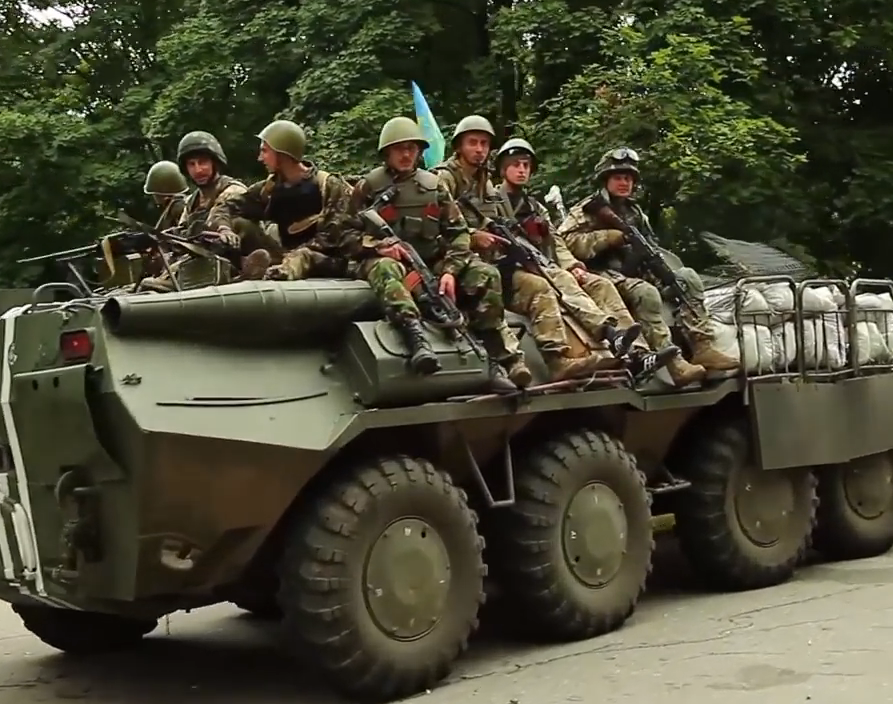
If the convoy with humanitarian aid from Russia did cross the border (analysis)

By Garmata
08.12.2014
Translated and edited by Voices of Ukraine
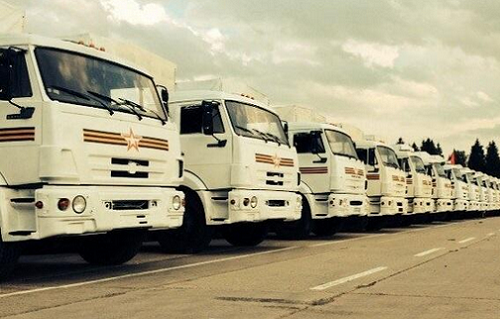
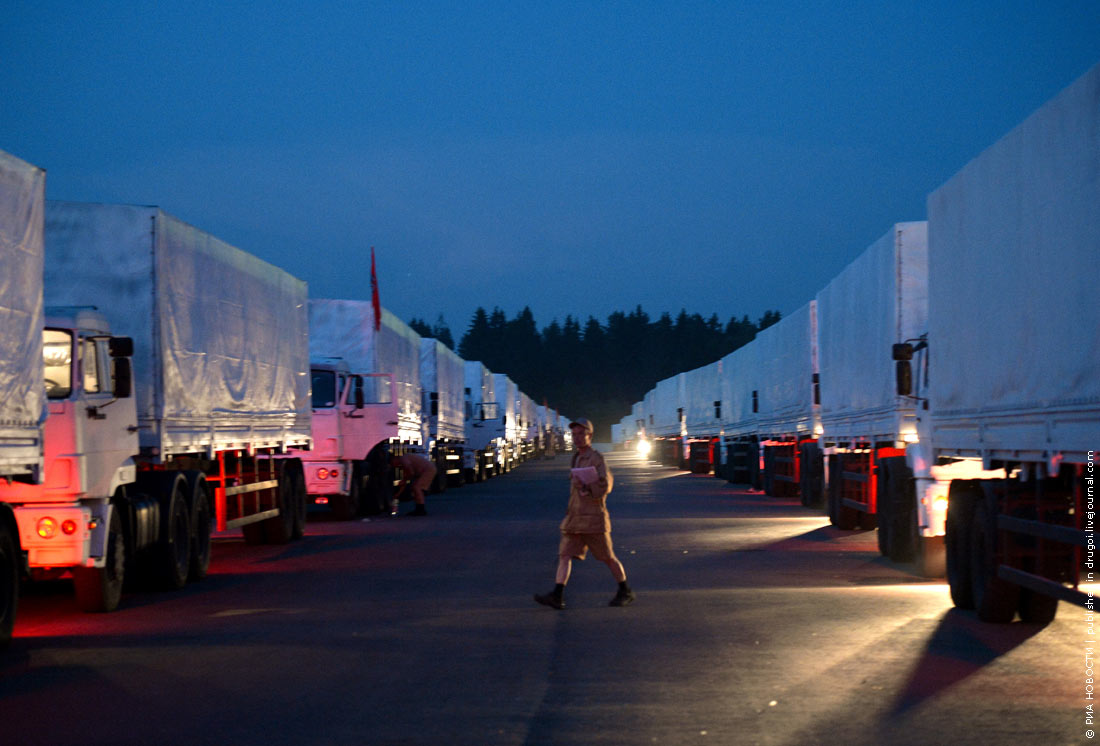
A few days ago, almost at midnight, a message came from the presidential administration of Ukraine that Russia planned an invasion disguised as “a convoy of humanitarian aid.” Such information sounded just crazy, it was difficult to comprehend it completely. But just yesterday the Internet was filled with photos of white KAMAZ trucks, and Putin announced that the convoy had already left.

Let us imagine for a moment that Moscow was able to send this convoy across the border.
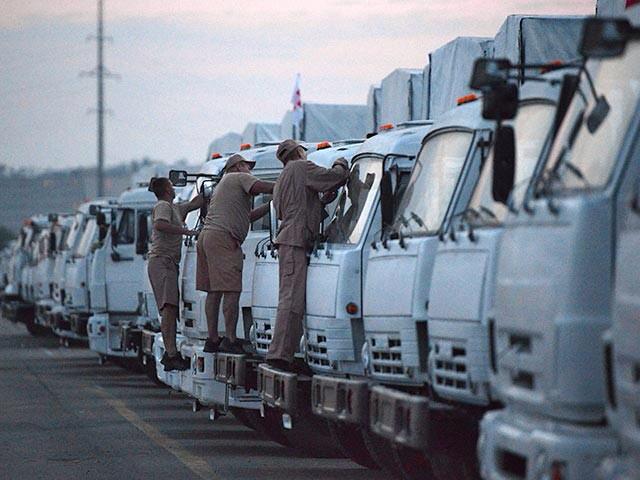
What has been loaded onto the white KAMAZes?

You’d be surprised, but for the most part–it’s just humanitarian aid, not weapons or ammunition. The very first cars are loaded with “humanitarian aid,” their task is to organize the cover.

There’s only one caveat–the generators, tents, sleeping bags, food, water filters, medications, are all products of “dual use.” A mechanized infantry battalion needs these things no less than a hospital or maternity home. Just look at what our volunteers have collected for the army.

But clearly “peaceful” loads are present here as well, and these are baby food and toys and other things that are so necessary for those people of Donbas, who have not left their homes, even despite the war. Do not rush to become indignant and outraged, you need to finish reading the article to the end to understand all of Putin’s treachery.

Secret cargo in white KAMAZ trucks

Weapons and ammunition, even some military equipment–are all loaded onto the second wave of KAMAZes. They will cross the border and go to the unloading locales only if the Army of Ukraine doesn’t meet them en route.

In many vehicles, there is another secret cargo, which even the drivers don’t know about. These are explosives with a remote detonator. If the RF [Russian Federation] wants to make a provocation, then to do this they don’t even need to call their pocket terrorists. Simply, someone invites camera crews from LifeNews, a photographer from RIA news, and presses the button.

“Hurry to see, exclusive video–Ukrainian punishers are shooting missiles at humanitarian aid, volunteers, and civilians that were lined up [to receive aid]”–such titles could appear in the media.

How did they manage to load all this? Yes, it was a very simple [task], just look at the place of loading:

Navalny [Head of the Russian Progress Party]: The humanitarian convoy left Alabino in Naro-Fominsk Raion [district]. And what is Alabino? It is the Taman Motorized Rifle Division. So much for the “MES” [Ministry of Emergency Situations].

But don’t think that the convoy with humanitarian aid from Russia is completely defenseless and harmless. To understand where the weapons are hidden, you need to look at


The composition of the humanitarian convoy

So, the humanitarian aid is driven by 300 KAMAZes, 40 vans and 40 cars, including the Russian police cars accompanying the convoy. What do you think, will the police leave the cargo at the customs office or proceed with the convoy to the point of unloading?

Let’s count the drivers

So, 380 vehicles, 2 persons per vehicle. This is–the minimum, the road is far, it’s dangerous to go alone. 380 + 380 = 760. The full staff of a motorized infantry battalion. 4 companies of 150 people + headquarters + the provisions unit, will make about 700 people.

Pay attention to the military plates

But who said that a car should only have 2 people? And where are the volunteers who will help unload and distribute the “humanitarian aid”? According to our estimates, there must be about close to 1,500 people in the convoy. The balance is roughly:

  • 2 companies of the Army Special Forces, 120 people in each.
  • 4 reinforced infantry companies of the Taman Division, at 150 people in each. These are all the drivers and volunteers.
  • 2 consolidated companies formed from the special units of the Interior Ministry, 120 people. This is the police that is accompanying the cargo. Not to be confused with OMON [the riot police], gathered here are practically the army commandos, these subdivisions are staffed with fighters of different units performing major combat operations in Dagestan.
  • 2 consolidated companies of the FSB Spetsnaz, 120 people in each. Where can you go without the FSB? All of the “doctors,” “members of the public,” even “the press accompanying the convoy”–that’s [who] all of them [are]. Division into “companies” here is purely conventional, involving experts from various departments of the FSB.
  • 1 consolidated company of MES [Ministry of Emergency Services], 150 people. The Russian Ministry for Emergency Situations is a paramilitary structure, which has its own APCs and tanks. In the convoy, they should carry out the tasks of engineers and repairmen.
  • 1 consolidated company of internal troops, 150 people. And these have to work with the crowds, when the local population starts to receive “free grub”as it is called in Donbas, there might be a stampede.
    These, of course, are approximate data, but they reflect the overall picture.
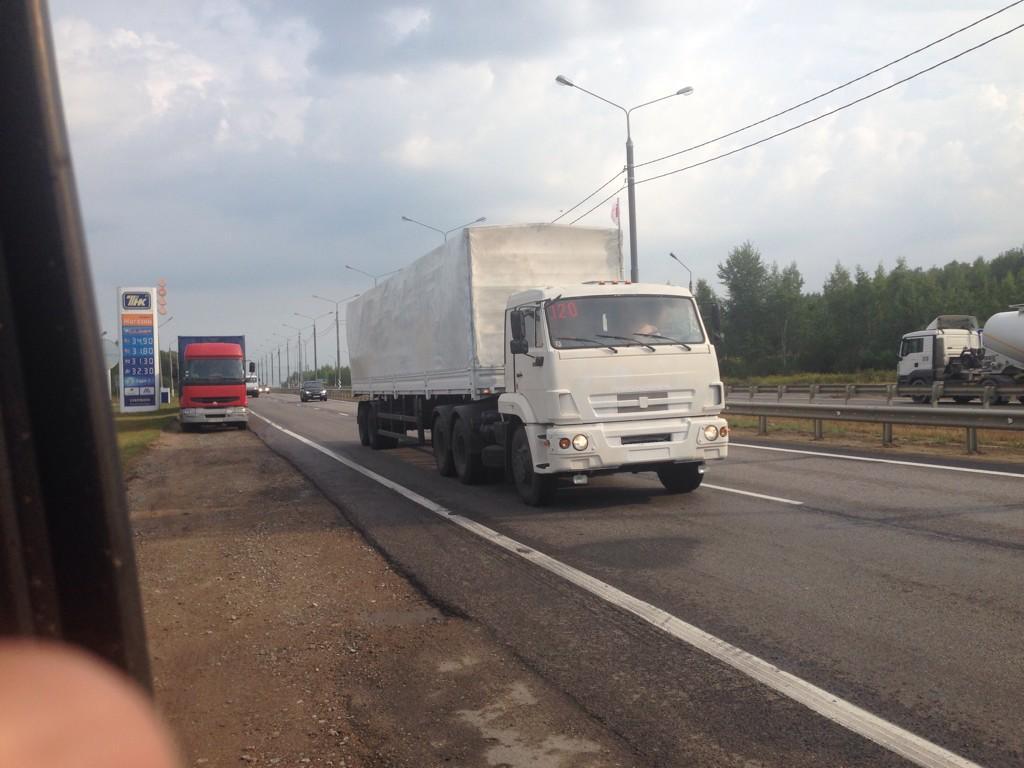
And you should try to drive through the Russian Federation without the plates

Vans and cars from the humanitarian convoy

This is where the weapons are being transported. It is clear that the police officers who are accompanying this convoy, which is transporting such an abundance of material assets, cannot travel without weapons. Only in some U.S. states, policemen manage to do this with a simple handgun, or, in extreme cases, a shotgun.

The valiant police (all guys–as at selection, are 185 cm [6.1′] tall, not a single “traffic cop” with a potbelly) are armed with automatic and machine guns, there is even a grenade launcher in the trunk.

Military plates again. Do you even have civilian vehicles?

Military plates again. Do they have a single civilian vehicle?


The weapons have already been delivered

There is no need to bring a large amount of weapons, since the tanks, IFVs, APCs, self-propelled artillery, etc. is already on the territory of Ukraine. As well as light weapons. Recall what armories the “militia” left in Sloviansk. And how much equipment and weapons got left behind in Lysychansk! The Donbas Battalion that seized these warehouses, turned into the best-equipped volunteer unit in the world.

Screen Shot 2014-08-12 at 12.30.34 PM


KAMAZ [trucks] can be loaded on the fly

There is one more nuance. A convoy that consists of 380 vehicles will at minimum spread out to 10 kilometers [6.2 miles]. This is if they drive closely [to each other]. And what if they keep the distance of 50 meters [164 feet]? Then they will end up with 22 [13.6 miles] or even 25 kilometer-long [15.5 mile-long] convoy.

"Мама, мы чисто красные крестоносцы". Толи гуманитарии, толи гуманоиды.

“Mom, we are the bearers of Red Cross”. Either humanitarians, or humanoids.


The head vehicle has long been on Ukrainian territory already, and the tail of the convoy is in the Russian Federation. In Rostov Oblast [region]. Right in the location, where more than 20,000 soldiers and officers, not counting equipment and weapons, are deployed. Who prevents [them] from loading a battalion or two into the last vehicles?

And who prevents [them] from make another pass, at delivering a little more humanitarian aid in an hour, two hours or in a day?

The place of border crossing

Screen Shot 2014-08-12 at 12.33.35 PM


The location of the convoy entry into Ukraine is the checkpoint “Dolzhansky.” Then it [the convoy] moves on M03 / E50 [highway] to Krasnyi Luch, then turns in the direction of Torez, and then–on to Khartsyzsk and Donetsk, moving on the N21 [highway].

A few days later, the second convoy is introduced, only in the direction of Luhansk, through Izvaryne, Krasnodon and Molodogvardijsk.

Screen Shot 2014-08-12 at 12.34.38 PM

Convoy met by [pro-Russian] “militia”

Immediately after crossing the border, the “militia” meet the convoy in their cars, as expected–with guns and Russian flags. Now Russian soldiers can breathe easy–if anything, they can always disguise themselves as the “militias.”

Terrorists seemingly take the humanitarian aid under their protection, they immediately claim that the Ukrainian military are going to destroy it from the air. To resist such attacks, they [terrorists] not only have “Igla” MANPADS, but also the mobile complex “Strela-10.”

Screen Shot 2014-08-12 at 12.35.36 PM


And right at the checkpoint on the Russian side, of course, an S-300 is deployed, part of which can be seen in the video of the convoy formation. The range of this piece is so wide that it isn’t necessary to bring it to Ukraine, it can fire from the territory of Russia. And as for the downed aircraft–it can be written off on the “frog.”

Screen Shot 2014-08-12 at 12.36.46 PM

Unloading sites

All unloading sites exactly coincide with the locations of the most intense armed fights. The task of the Ukrainian army is to cut highways M03 and N21, on which provisions for the main terrorist formations get delivered from the Russian Federation. The task of the “humanitarians” is to prevent them [from doing this].

Screen Shot 2014-08-12 at 12.37.30 PM

Islands of safety

The first few KAMAZ [trucks] stop in Krasnyi Luch, by an absurd coincidence, just between the terrorists and the Ukrainian army. They constitute something that will be later called the “islands of security” or “humanitarian zones,” Rospropaganda [Russian propaganda] is notorious for vivid definitions.

The bottom line is simple–the vehicles get into the circle, the locals are convened “volunteers” begin to give out “humanitarian aid” to them. This is done very, very slowly. At first, lists are compiled, then there is a roll call, then they start to give out [the aid]. [You] stood in line for a few hours–[you] get a kilo of buckwheat. Now you can get in line for the baby food.
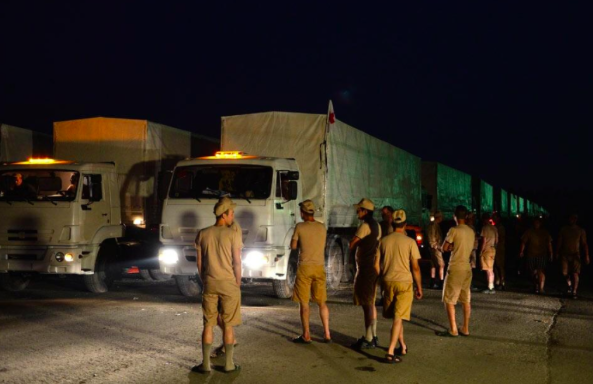
Screen Shot 2014-08-12 at 12.38.09 PM


The task is to create a constant accumulation of peaceful civilians around the vehicles. How did Putin say this? “We will put women and children in front of us, and let them [Ukrainian servicemen] attempt to shoot.”

Provocation will take place, it simply cannot but take place

How does Putin work? At first, he legalizes one tank (seized from the Ukrainian servicemen, found at an abandoned [military] base), and then he brings in 10, 20, even 100 tanks.

Разгрузка гуманитарной помощи в Донецке. Еще в конце апреля.

Unloading humanitarian aid in Donestk. End of April.

And so it’s the same situation here–he needs a reason to legalize his “peacekeepers.” How should [he] do it? Yes, it is a very simple [solution]–to blow up several of KAMAZ tucks so that civilians get killed. This would give [him] an excuse to introduce a small number, just one platoon of soldiers with a blue stripe on their helmets. And under this brand, the Russian Federation will transfer across the border those same 20,000 [servicemen] from Rostov Oblast.

And here’s the article in the Russian media about the humanitarian aid to Donbas [in Russian]:

http://top.rbc.ru/politics/12/08/2014/942270.shtml

Source: Garmata.ru


Posted in "Voices" in English, Analytics, English, English News, Pictures, War in Donbas | Tagged , , , , , , | 2 Comments

15.8. Berlin: Einladung zum Austausch mit jungen Menschen aus der Region Donezk

Deutsche Jugend in Europa e.V. und die ukrainische Initiative Foundations for freedom laden Sie/euch herzlich ein zum informellen Austausch mit jungen Menschen aus der Region Donezk. Die Jugendlichen nehmen vom 13. bis 18. August an dem Projekt Building trust in Europe teil, bei dem sie sich mit Jugendlichen aus Polen und Deutschland zur aktuellen politischen und gesellschaftlichen Situation in der Ukraine austauschen.

– am 15.08.2014 ab 20 Uhr in der Neuen Heimat in Berlin Moabit – 

Link zur Facebook-Veranstaltung

Continue reading

Posted in Deutsch, Deutsch news, Languages, News, Reblogged | 1 Comment

Dmitry Tymchuk’s Military Blog: Summary – August 12, 2014

Dmitry Tymchuk, Coordinator, Information Resistance
08.12.2014
Translated and edited by Voices of Ukraine

Brothers and sisters!

information_resistance_logo_engHere’s the Summary for August 12, 2014 (for previous summary, please see Summary for August 11).

The bad news:

1. The Verkhovna Rada [Ukrainian Parliament] approved, in the first reading, a draft law introducing the institution of sanctions, by the decision of the President and the NSDC [National Security and Defense Council of Ukraine]. That’s all. At this [effort], the Verkhovna Rada was exhausted, and the law was not conclusively adopted.

As is known, the sanctions (there are 29 types of them) are expected to be applicable to virtually all aspects of both the domestic and foreign policy of Ukraine. They stipulate suspension of mail service, switching off TV channels, closure of all media types, including Internet-based media, prohibition of radio frequencies use, etc.

Were they smart, that kind of law should have been adopted in March, together with the military state of emergency. That might have prevented the situation in Donbas from drifting into the current bloodbath.

But now, we nevertheless have to put the horse in front of the cart. The mechanism of sanctions prescribed by the draft law would work ideally in wartime or a state of emergency. Whereas, in peacetime, to give authorities such powers, I think [we] should be extremely cautious.

Here it is necessary to look at the text of the bill–paragraph 1 of Article 3: “Grounds and principles for the application of sanctions.” There are too many of these grounds. If they were limited to anti-Ukrainian “acts of a foreign power, a foreign legal entity or individual,” there would be no problem. Otherwise one may apply this provision in an arbitrary manner under the pretext of “fighting against terrorism.”

That is, on the one hand, this law is vital. On the other, it clearly should contain more understandable and specific enforcement mechanisms to prevent it from becoming an instrument of oppression against the dissenters. If we want to be a democratic state, let’s respect the rules then.

2. The Head of the Military–Medical Department of the Ministry of Defense, Colonel Vitaly Andronatiy, claimed that terrorists in the ATO zone are deliberately shooting at medical vehicles. “Of all the problems, what we lack most is armored medical vehicles,” he noted.

What a shame: a country, which used to have the most powerful tank-building industry in the USSR (as a reminder, the now-famous Uralvagonzavod facilities in Russia, producing T-72 and T-90 tanks, were established on the basis of Kharkiv factory capacities evacuated to the Urals during World War II), is unable after half a year of hostilities to arrange the production of common gun trucks, i.e. armored cargo trucks!

In addition to Kharkiv, we have plenty of both tank-repair plants in different Oblasts [regions] of Ukraine, and civil [repair] enterprises. The Ministry of Defense has enough funds for armoring [the vehicles]. There is also a [repair/production] base, too; for example, the domestic Kremenchuk Automotive Plant (KrAZ) [Poltava Oblast] (there are thousands of army vehicles as well that can also be armored). I don’t get where the problem is.

3. The problem “of refugees from Donbas” urgently needs to be addressed. Throughout the other regions of Ukraine which hospitably sheltered them, a rising tide of discontent is growing. The calling card of a large part of the refugees–is a pathological reluctance to work, alcohol and drug abuse, ostentatious hate and profanation of Ukrainian symbols.

By the way, about the latter. Local law enforcement officers often turn a blind eye to these egregious incidents, especially when it comes to children of refugees who are doing what they want–from tearing down Ukrainian flags to the vandalism of Ukrainian monuments. As if you cannot punish them. It’s right, it’s not the children who should be punished. Punish their parents in the only way which works on these creatures–with fines. They often do not understand (or rather, are pretending they do not understand) the Ukrainian language, but they understand the language of money very well.

Moreover, it is worth providing such Ukrainophobic parasites an opportunity (or even strongly recommend [for them]) to head for Russia, it is understood, at their own expense. And there’s no need to fear some kind of loss of reputation for Ukraine–we will outlive them, and Ukrainian land will become the cleaner for it.

We must understand that indulgence in this case could be extremely dangerous. Moreover, that in this way confidence in the Ukrainian government and the ATO are being undermined (local people can legitimately ask why do these sturdy blokes from Donbas get drunk at the expense of other regions, while the guys from these other regions are losing their blood [fighting] for Donbas?). The inaction of law enforcement staff is pushing locals to apply mob law. And, let’s be honest, from a moral point of view to condemn such lynchings would be impossible.

The good news:

1. The forces of the anti-terrorist operation freed four settlements. The grouping of terrorists near Horlivka ended up encircled. In addition, [ATO forces] prevented attempts to strengthen their insurgent groupings in Shakhtarsk–Torez–Snizhne district where the DNR’s [Donetsk People’s Republic] fate will be sealed. The ATO headquarters also reported that “Kadyrov’s” [Chechen] mercenaries approached them, asking to be given an opportunity to flee to Russia.

Unfortunately, we cannot talk about any strategic victories yet, but we observe how [our forces] are preparing for them. And this is encouraging.

2. The NSDC [National Security and Defense Council] informed that during the fighting in Donbas, our units had “accidentally” destroyed what proved to be a Spetsnaz unit of the Armed Forces of Russia.

I don’t see anything bad in the fact that the Russian servicemen are, along with mercenaries and terrorists, actively joining the ranks of the “Donbas Satan Company.” But the very fact that lately too many Russians have been caught in Donbas is embarrassing–soon, the only locals remaining in the DNR and LNR [Luhansk People’s Republic] will be their press-secretaries. And the Russian fighters no longer hide their citizenship, fighting for the terrorists in Donbas.

It obviously does not prevent public trials over those of them who were taken prisoner (and there are such cases). Given that Putin denies their existence in Donbas, it is impossible to even consider Russian servicemen (let alone mercenaries) as prisoners of war–these are perpetrators, common criminals. Prison sentences for mercenary activities, conspiracy to commit murders and premeditated murders are visible on their foreheads from miles away. This would be enough for a life sentence–a good example for others.

3. And the fun news.
[Vladimir] Zhirinovsky promised carpet bombings in Eastern Europe, destruction of the Baltic states and Poland, blaming it all on Putin, who “had already made a major decision on these issues.”

It is clear that, no one takes this clown Zhirinovsky seriously. But the more that such idiotic and misanthropic threats come from Russia, the more support Ukraine will get in the world. Oddly enough, some [people] are still shocked [to see] Moscow’s true face.

Source: Dmitry Tymchuk FB

Posted in Dmitry Tymchuk, English, English News, South&Eastern Ukraine, War in Donbas | Tagged , , , , | 9 Comments

Humanitäre Hilfe für die Ukraine: Der Konvoi hat sich auf den Weg gemacht

Screen Shot 2014-08-12 at 12.38.09 PM

Foto: © RIA Novosti / Maxim Blinov

Eine Kolonne von 280 Kamas-LKWs mit humanitären Hilfsgütern für die Bewohner der östlichen Ukraine hat Moskau in Richtung Narofominsk verlassen, berichtet die Onlineausgabe von RIA Novosti. Der Konvoi wird für die Bewohner der östlichen Ukraine über 2.000 Tonnen humanitäre Hilfe liefern, die von Moskowitern und Bewohnern der Region Moskau gesammelt wurden. Continue reading

Posted in "Voice" auf Deutsch, Deutsch, Deutsch news, News DE, News deutsch, Ost und Süd Ukraine | Tagged , , | 2 Comments

Humanitarian aid to Ukraine: the column has hit the road

By Drugoi, Russian blogger
08.12.2014, Russia
Translated and edited by Voices of Ukraine

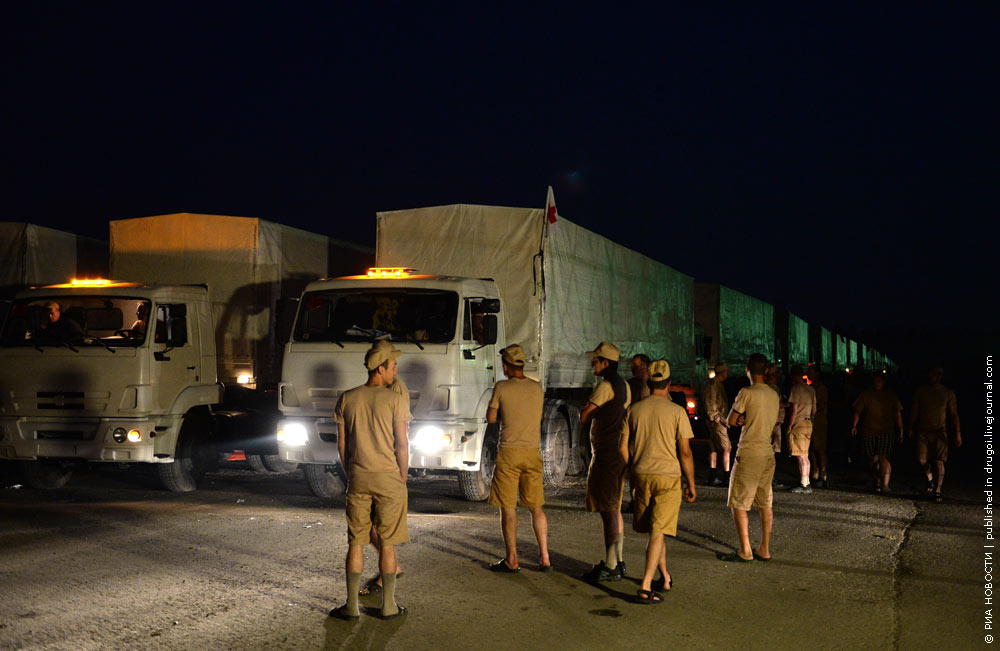
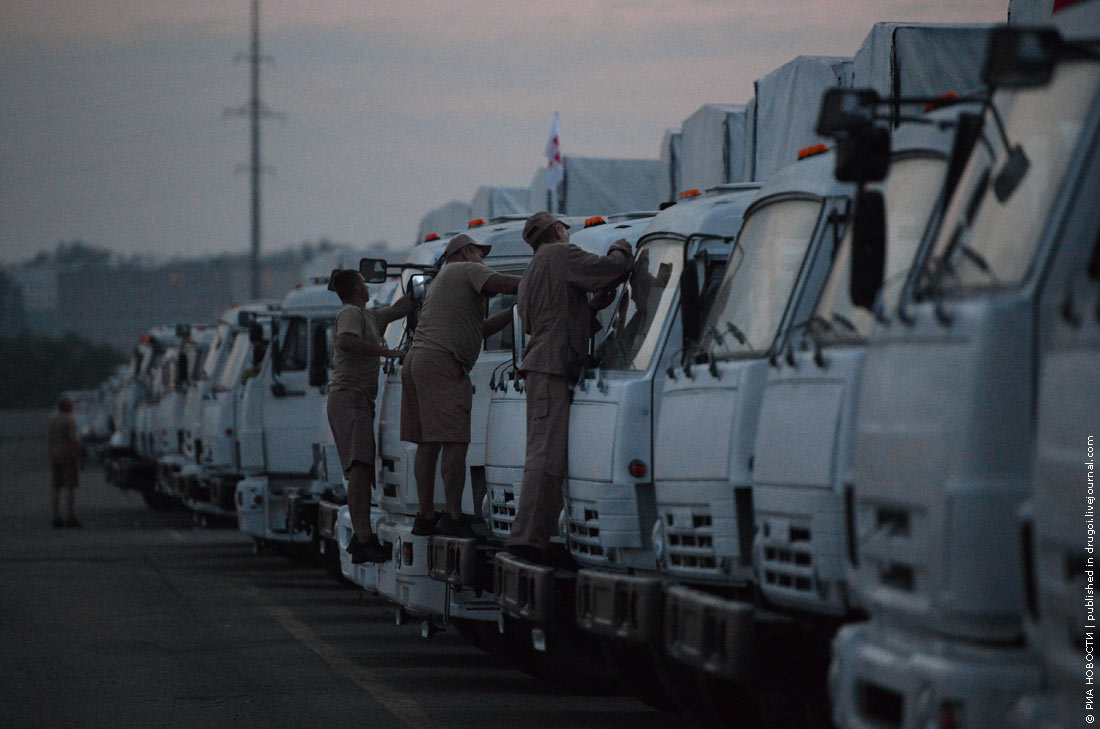
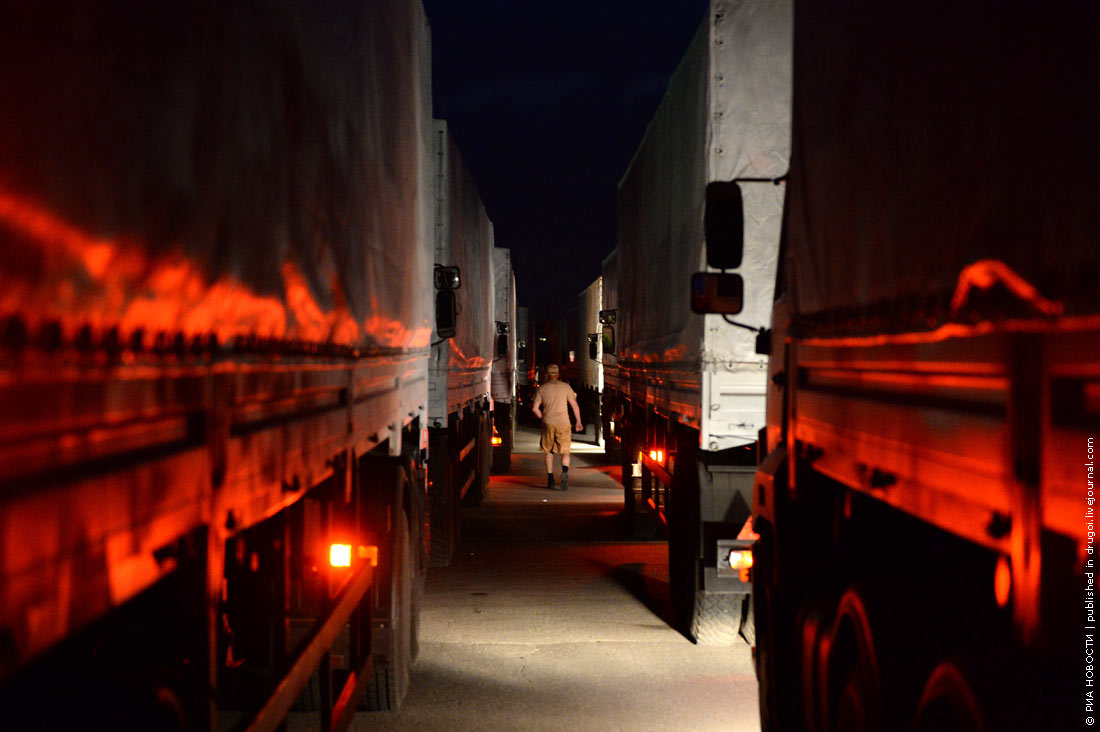
Photo: © RIA Novosti / Maxim Blinov

Photo: © RIA Novosti / Maxim Blinov

A column of 280 KAMAZ trucks of humanitarian aid for the residents of eastern Ukraine from Moscow left Narofominsk, states the website of RIA Novosti. The motorcade will deliver to the inhabitants of eastern Ukraine about 2 thousand tons of humanitarian aid collected by Muscovites and residents of the Moscow region.

This is probably the most unusual convoy with humanitarian aid, which I have seen. There are no markings, registration numbers on cars–nothing. In the media on this occasion, also, there is a lack of coordination. RIAN writes just about the convoy, with the TV channel Zvezda it suddenly becomes an MES [Ministry of Emergency Situations] motorcade, although all the MES equipment has numbers and proper coloring (on the online television site there is only an archival photo). Website Vesti 24 also writes about the MES and even shows footage from loading the trucks, which it does not have in its photographs. However, car ownership becomes quite clear from this video. One can see that next to the column are military and on the KAMAZ trucks you still cannot find numbers. I am far from thinking that the convoy carries “humanitarian aid” in the form of weapons–this does not need such a garden fence. Rather, it is another demonstration of force–you forbid us to deliver humanitarian aid, and we will do what we think is necessary. Thus, it’s most likely that MES is not participating in this matter, which would seem logical in any other case, and the army is behind the scenes, albeit tacitly. At MES, under its operational information by the way, there is not a word about this convoy, and [the town of] Alabino, from which the column left, is the location of the 2nd Guards Motorized Rifle Taman Division.

    Source: Журнал Другого
All photos: © RIA Novosti / Maxim Blinov

Posted in English, English News, Others, Pictures, South&Eastern Ukraine, War in Donbas | Tagged , , , , , , | 3 Comments