Krieg in der Ukraine – Kapituliert die EU-Politik im Angesicht der Realität?

Ruine des Donetsker Flughafens / Foto «Правда ДНР / Pravda DPR» information portal official Youtube channel

Ruine des Donetsker Flughafens / Foto «Правда ДНР / Pravda DPR» information portal official Youtube channel

Eine wertegeleitete EU-Außenpolitik benötigt einen mächtigen Hebel … nicht die Sanktiönchen, die bisher beschlossen wurden, sondern ernsthafte Sanktionen, die Russlands Führung mehr schmerzen als bisher. Zwar hat es die russische Propagandamaschinerie geschafft, ihrer Bevölkerung Sanktionen gegen einzelne Personen, Banken und Unternehmen als Angriff gegen alle Russen zu verkaufen, doch in diesen sauren Apfel muss Europa nun beißen. Die Geschichte wird die Toten dieses Krieges nicht wiederaufstehen lassen können, doch sie wird diese Verfälschungen gerade rücken. Schuld daran, dass die russische Bevölkerung leidet, trägt nicht Europa, sondern die russische Führung.

Vollständiger Artikel unter: Krieg in der Ukraine – Kapituliert die EU-Politik im Angesicht der Realität?.

Posted in Deutsch, Opinion deutsch, Reblogged | Tagged , , , , , , | 1 Comment

Dmitry Tymchuk: Military update 2.28 #FreeSavchenko

information_resistance_logo_engDmitry Tymchuk, Head of the Center for Military and Political Research, Coordinator of the Information Resistance group, Member of Parliament (People’s Front)
02.28.2015
Translated and edited by Voices of Ukraine

Operational data from Information Resistance:

In the conflict zone in the Donbas, Russian-terrorist forces continue to grossly violate the ceasefire, firing at the positions of Ukrainian troops in the area ​​of the ATO and attempting offensive actions. In particular, during the past 24 hours (02.27), two tactical units of insurgents and Russian mercenaries attempted to attack the positions of the ATO forces with the support of armored vehicles in the vicinity of Opytne. The attack was repulsed by the concentrated fire of Ukrainian units occupying defensive positions in this section. Also, 4 instances of the use of MLRS against the positions of Ukrainian troops by terrorists have been observed during the past 24 hours in the direction of Donetsk.

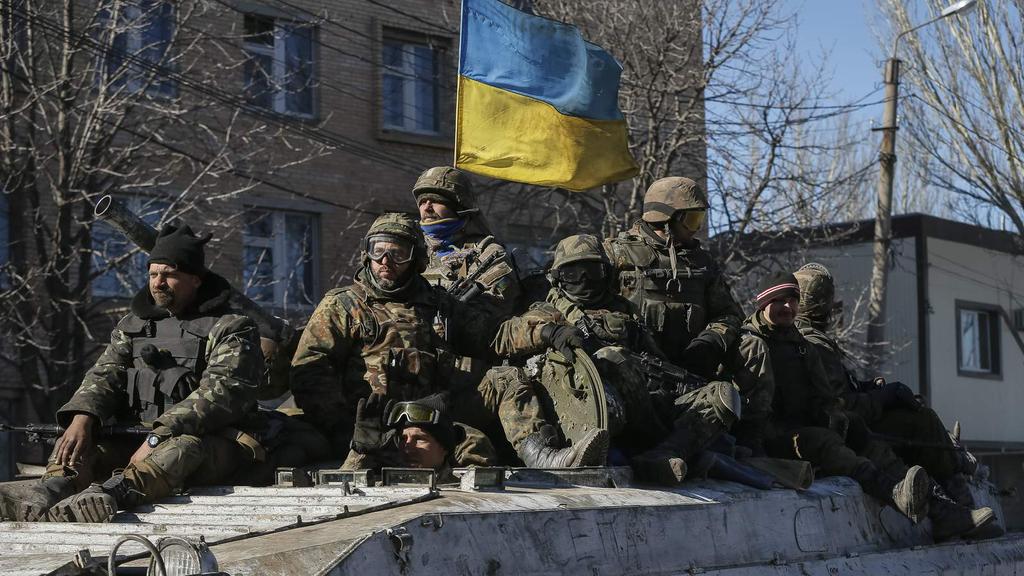
Ukrainian soldiers guard a road atop their military vehicle near Artemivsk, eastern Ukraine, Monday, Feb. 23, 2015.

Ukrainian soldiers guard a road atop their military vehicle near Artemivsk, eastern Ukraine, Monday, Feb. 23, 2015. Source

At the same time, Russian-terrorist troops continue to regroup their manpower and equipment, meanwhile actively restoring combat capability of a number of groups that have suffered significant casualties in previous confrontations. Particularly active is the regrouping of terrorist forces conducted in the AlchevskStakhanov stretch, in the Donetsk and seaside (Mariupol) directions.

In particular, movement of 28 vehicles with personnel and ammunition, accompanied by 6 armored vehicles, has been observed towards the line of contact in the vicinity of ​​Alchevsk (the settlement of Perevalsk).

In Donetsk, the transfer of reinforcements for gangs operating in the Petrovskyi and Kuibyshev city districts is observed (up to 20 cars with personnel came from the direction of Snizhne). Also, the movement of several mortar units has been noted towards the Pisky-Avdiivka stretch (a total of 18 mortars). In the Donetsk direction, an increase in the activity of enemy sabotage and reconnaissance groups has been observed.

Terrorists are actively disguising the movement of armored vehicles and artillery. In the vicinity of OlenivkaStepne, the maneuvers of armored vehicle groups have been recorded (8 vehicles, including 4 tanks). In particular, the insurgents are conducting a demonstrative pullback of this equipment from their positions to the rear during daytime, and then return [the equipment] to the positions in the dark.

In the area southeast of Dokuchajevsk, formations of Russian-terrorist forces have actively attacked the advanced positions of Ukrainian troops with mortars and cannon artillery during the last three days. Throughout yesterday, firestrikes intensified, prompting retaliation by the Ukrainian artillery. Ukrainian artillery struck the firing positions of two terrorist firing units (one of them – a mortar battery with 4 mortars).

In the area of Mayorsk, armed confrontations between terorrists and the ATO forces with small arms and grenade launchers continued throughout the day. Despite the ceasefire, insurgents persistently try to oust Ukrainian troops from their current positions.

In the vicinity of Torez, a cargo truck from the ‘DNR’ supply convoy hit a land mine. There are wounded among the individuals who ‘accompanied’ [the convoy] (all –citizens of the Russian Federation).

Wounded insurgents from the ‘LNR’ and ‘DNR,’ who are evacuated from the territory of Donbas, only get admitted to hospitals in Rostov-on-Don (Russia) during after hours, at nighttime.

A tightening of access control by the Russian border units and customs agencies of the Russian Federation has been observed on a stretch on the border with Russia in Luhansk region that is currently not under Ukraine’s control. During inspection and border control, Russian security forces began to demand documents issued by Ukraine, rejecting documents issued by ‘LNR,’ ‘DNR,’ and ‘Novorossiya.’ Vehicle owners are forced to take down ‘Novorossiya’ license plate stickers while crossing the border.

Photo by Gleb Garanich for Reuters

Ukrainian soldier takes a smooth moment for a smoke and reflection. Photo by Gleb Garanich for Reuters. Source

Source: Dmitry Tymchuk FB

Posted in Dmitry Tymchuk, English, English News, Pictures, South&Eastern Ukraine, War in Donbas | Tagged , , , , , , , | 1 Comment

Dmitry Tymchuk: Military update 2.27 #FreeSavchenko

information_resistance_logo_engDmitry Tymchuk, Head of the Center for Military and Political Research, Coordinator of the Information Resistance group, Member of Parliament (People’s Front)
02.27.2015
Translated and edited by Voices of Ukraine

Operational data from Information Resistance:

Statements have been made by terrorist chieftains of the ‘LNR’ [Luhansk People’s Republic] and ‘DNR’ [Donetsk People’s Republic] that a significant portion of heavy armaments has been withdrawn from the line of demarcation in Donbas (as of 02.24, that allegedly includes 156 pieces of cannon artillery and 40 MRLS; as of 02.25, 180 units of cannon artillery and 18 MRLS; and as of yesterday, 02.26, “LNR” declared that 80% of heavy armaments have been withdrawn). These statements are false because, based on the data of the IR group, only 10-15% of the above armament numbers have been withdrawn as of 02.26. Moreover, the  terrorists withdraw the weapons to distances that do not correspond to those established by the Minsk Agreements, but rather, allow for returning the weapons to their original positions within 30-40 minutes.

A hardworking tractor driver brought his tractor T-72b3 directly from Russia to plow in Debaltseve (Source

A hardworking tractor driver brought his tractor T-72b3 directly from Russia to plow in Debaltseve (Source)

Over the last 24 hours, terrorists and Russian troops violated the ceasefire multiple times – we have reports of approximately 30 fire strikes. The enemy is primarily using small arms. Cannon artillery was used against the positions of Ukrainian troops in the vicinity of Opytne, Vodyane, and Pisky.

At the same time, Russian-terrorist troops are restoring their own combat capacity and regrouping them, along the entire line of contact with the Ukrainian forces. In some sections, the enemy is deploying its units closer to the positions of Ukrainian troops.

In particular, ‘LNR’ gangs that had earlier participated in combat on the Debaltseve springboard, have been deployed closer to Shchastya and Stanytsia Luhanska. At least 22 armored vehicles (half of them tanks) are stationed in the area between Vesela Hora and Stanytsia Luhanska.

A new tactical group is being formed in the area of Novoazovsk. It consists of up to 350 insurgents, 8 tanks, 20 armored vehicles, and 15 other vehicles. The other tactical group concentrated in this sector has been recently reinforced with 8 cannon artillery units.

The so-called ‘Ministry of State Security’ of the ‘DNR’ continues clean-ups among gang commanders. Namely, two unit commanders from the ‘Oplot’ and ‘Vostok’ gangs were arrested on charges of organizing mass robberies and looting. The command of illegal armed formations are unable to control the actions of their subordinates; in fact, terrorist commanders participated in ‘trophy hunting and collection’ on multiple occasions themselves. Also, in order to establish a so-called ‘rule of law,’ eight insurgents from the ‘Altai’ gang were detained for looting and robberies in the Debaltseve area.

In Luhansk, two “employees” of the so-called ‘LNR prosecutor’s office’ were eliminated as a result of a conflict between insurgents. The city itself is in a state of infrastructural crisis; all public electrical transport has been stopped.

"Grad-Aid," or Another Russian Humanitarian Convoy

“Grad-Aid,” or Another Russian Humanitarian Convoy

A scandal is sparking up in Slovyanoserbsk, caused by the looting of a humanitarian shipment from Russia by the insurgents. Representatives of the so-called ‘Cossack forces’ are under reasonable and justified suspicion for this crime.

In Kirovsk, the local commandant’s office carried out door-to-door visits to local residents, collecting money for insurgent funerals.

Source: Dmitry Tymchuk FB


Posted in Dmitry Tymchuk, English, English News, Pictures, South&Eastern Ukraine, War in Donbas | Tagged , , , , , , , | Leave a comment

Ein Feldkaplan spricht über seine Kriegserfahrungen: Meine Brüder sind dort geblieben

http://pravyysektor.info/articles/ya-zalyshyv-tam-brativ-kapelan-pravoho-sektora-otets-fidelis-volnistov/

Eine auszugsweise Übersetzung

Etwa drei Wochen lang hat Pater Fidelis Volnistov als Kaplan beim Rechten Sektor im Dorf Pisky verbracht.

Der Priester spricht über seine Erfahrungen mit Militärangehörigen.

„Ich bat einen griechisch-katholischen Priester, Seelsorger beim Rechten Sektor, darum, dass ich mit ihm fahren darf. Da er sich einen Beinbruch zugezogen hat und in Dnipropetrowsk zurückbleiben musste, ging ich an seiner Stelle für drei Wochen dahin. Ich verrichtete meinen Dienst im Dorf Pisky, 1 km vom Flughafen Donezk entfernt, beim 5. Bataillon des ukrainischen Freiwilligenkorps “Rechter Sektor”, 1. und 2. Sturmkompanien.

Als der Flughafen Donezk fiel, rückten wir ganz vorne, in die vorderste Linie.

Dort ist es schrecklicher als in den Filmen über den Zweiten Weltkrieg. Auf dem Weg nach Pisky stehen verbrannte Panzer und Fahrzeuge in Gräbern. Das Land wurde durch die Panzer drum herum gepflügt. Das Dorf wurde vollständig zerstört. … Die Häuser der Oligarchen haben kleinere Schäden davontragen, weil sie sehr robust sind, aus Beton. Und genau dort haben unsere Jungs ihre Stützpunkte eingerichtet. Es gab auch ein Paar Dorfbewohner, die nicht in der Lage waren, weg zu gehen. Einen solchen Mann hatten wir als Nachbar. Sein Häuschen ist heile geblieben, weil es sehr winzig war. Unsere Jungs geben ihm dort immer was zum Essen. Viele Dorfbewohner flohen so eilig, dass ihre Hunde an der Kette geblieben sind. So ließen unsere Jungs Hunde frei und fütterten sie. Das Dorf Pisky gibt es nicht mehr. Es vollständig ruiniert worden.

Die ganze erste Woche haben wir im Keller verbracht. Denn es tagein tagaus geschossen wurde: Panzer und Raketenwerfer, Panzerfäuste und Scharfschützen. Alle fünf Minuten liefen wir durch den Flur, weil die Soldaten nicht wussten, wann und wohin sie sich verstecken sollen.

Mehrmals war mein Leben wirklich in Gefahr. Ich musste auf den Boden fallen, um mich vor Granaten zu verstecken, Kugel schwirrten um meine Nase herum, GRAD-Geschossen fielen. Gefährlich war sogar der Weg zum Klo, eigentlich etwa 20 Meter lang. Obwohl im Kugelhagel sogar ein solcher Weg zu lang ist.

Dienst als Kaplan ist keine gewöhnliche Diözese. Man muss sich dazu berufen fühlen. Man muss in der Lage sein, Soldaten zu verstehen, sich in ihre Lage versetzen können. Man darf ihnen nicht zu nahe treten, denn beim nächsten Mal werden sie weder dich, noch einen anderen Priester an sich heranlassen wollen. Hier ist ganz anders, nicht wie in der Pfarrei: Du erscheinst und deine Predigt zum Thema Liebe wird aufmerksam gehört, danach deine Hand geküsst. Nein, im Krieg ist es anders. Du musst von Gott reden können und von Liebe zur Heimat. Und das musst du auch so vereinen können, dass man die Logik darin sieht. Denn viele missverstehen Christentum in dem, dass sie denken: Man soll die andere Wange seinem Feind hinhalten, wenn er dich auf eine Wange schlägt. Und du musst unterschiedliche Fragen beantworten können. Die Glaubwürdigkeit muss erst verdient werden. Als allererstes wird es festgestellt, was für einen Mensch du bist, und später – was für einen Priester. Ein echter Kaplan kennt seine Soldaten. Er kennt Charakter jeden einzelnen, er weiß, was jeder durchmacht, was er denkt, zu jedem muss er einen ganz eigenen Zugang finden.

Ich habe sowohl den Orthodoxen als auch den Katholiken die Beichte abgenommen. Es gab auch Heiden in unserer Brigade. Ich bin mit allen gut ausgekommen. Ich wusste, dass sie bereit waren, das Leben für ihre Blutsbruder hinzugeben.

Es gibt viele Protestanten unter Freiwilligen. Sie haben eine sehr positive Lebenseinstellung. Wir beteten zusammen. Kugeln schwirren und wir halten die Hände und beten, preisen Gott, beten um Frieden.

Jeden Tag um 14.00 feierte ich den Gottesdienst, zu dem Freiwilligen kamen. Natürlich nicht alle, aber mehrere Personen gab es schon immer. Oft wollte man auch eine Beichte abzulegen oder bat ums Gespräch. Außerdem arbeitete ich wie jeder andere auch, … Jeder weiß, was er zu tun hat. Und alle arbeiten. Es herrscht Ordnung. Hätten alle ukrainischen Streitkräfte die gleiche Disziplin wie beim Rechten Sektor, wäre dann alles anders.

Menschen im freiwilligen Bataillon sind ausgesprochen pflichtbewusst. Es gibt keinen Alkohol hier. Es ist ja allgemein bekannt, dass die ukrainischen Streitkräfte ein Problem damit haben. Aber der Rechte Sektor trinkt kein Alkohol, es herrscht Disziplin, Befehle werden genau und effizient ausgeführt. Im Allgemeinen dauert der Einsatz hier einen Monat lang. Falls jemand sich daneben benimmt, wird er beim nächsten Mal einfach nicht aufgenommen.

Hier kommt man, um den freiwilligen Dienst zu leisten. Und das ist sehr wichtig. Hier dienen Menschen unterschiedlichen Alters, unterschiedlichen sozialen Status, Jungen und Mädchen. Mädels und Jungen mit 20+ Jahren kämpfen wie jeder andere. Sie haben ihre Häuser, Familien zurückgelassen, um ihre Heimat zu verteidigen. Und sie werden dafür nicht bezahlt. Versorgt sie nur durch die Freiwilligen. Lebensmittel, Kleidung und Ausrüstungen – all das wird durch die Volontärs geleistet.

Alle nennen sich untereinander „mein Freund“, ungeachtet dessen alt oder jung, Männlein oder Weiblein. Alle verhalten sich untereinander wie Brüder. Ich wurde auch als „mein Freund“ angesprochen. … Und in der Tat, all diese Menschen wurden zu meinen Brüdern. Ich ging und meine Brüder sind dort geblieben.

Ich wurde dazu angehalten, um unseren Sieg zu beten. Nicht für den Frieden. Die Soldaten sagten mir: „Bitte nicht darum beten, dass wir heile nach Hause zurückkehren. Wir wollen als Sieger nach Hause kommen“. Sie wollen auch keinen Frieden um jeden Preis. Wegen der sogenannten Waffenruhe haben wir mehr Menschen verloren, als während der Kampfhandlungen. Jetzt wollen sie das Wort „Frieden“ nicht mehr hören“.

Militärangehörige haben mich danach gefragt, ob Rache eine Sünde ist. Ich erklärte, dass die christliche Moral die Rache als etwas verwerfliches betrachtet. Sie erwiderten jedoch:“Bei allem gebührenden Respekt, Ihnen und Christentum gegenüber, werde ich jetzt meine Rache doch nehmen“. Ich kann sie verstehen, denn viele von ihnen in diesem Krieg ihre Blutsbruder verloren haben.

Beim Rechten Sektor spielt dein Nationalität oder Religion keine Rolle. … In unserer Brigade gab es auch Freiwillige aus Georgien und Kanada. Jeder hatte seinen Kampfname. Der Brüder aus Georgien erzählte, dass er für die Ukraine kämpft, weil er so all denen Ukrainern bedanken möchte, die damals für Georgien gegen Russland kämpften.

Einmal wurden wir eingekesselt. Die Jungs erwiderten das Feuer. Dann kommt zu mir ein Blutsbruder, Kampfname Dobermann, gibt mir eine Handgranate und sagt: „Falls sie hierher kommen sollen, ist es besser, sich in die Luft zu sprengen, als zu denen in Gefangenschaft zu geraten“. Und weg ist er. Ich halte diese Handgranate in den Händen und denke: Ja, ist es auch, denn in Gefangenschaft werden die Freiwilligen bestialisch behandelt …

Weiter so zu leben, als ob wir keinen Krieg haben, ist die Sünde der Indolenz …

Jeder muss Militärangehörigen helfen, so wie er kann. … Sie kämpfen für uns. Falls sie die Aggressoren nicht aufhalten, kommen jene zu uns nachhause. Es gibt auch das Vierte Gebot, das Vater und Mutter zu ehren vorschreibt.

Heimat ist unsere Mutter, ihr gegenüber sind wir verpflichtet. Wir haben zwei Heimaten: Himmelsreich und unsere Heimat hier auf der Erde. Wir dürfen doch nicht schweigen, wenn unsere Mutter verhöhnt wird. …

Manche Frauen sagen: “Mein Kind würde ich in den Krieg nie lassen.” Dies ist auch eine schwere Sünde. Sind andere Mütter etwa dümmer dumm, oder sie haben schlechtere Kinder? … Oder denkt ihr, dass diejenigen die kämpfen, sterben und nach Hause mit Verletzungen zurückkehren, keine Angst haben? Sie sind allerdings nicht zuhause sitzen geblieben.

Wir müssen die Rehabilitation von Soldaten, die nach dem Krieg nach Hause kommen, vorbereiten. … Obwohl ich sagen muss, dass die Menschen bei den freiwilligen Bataillonen psychisch stabiler sind, sie wissen, was sie tun, sie trinken keinen Alkohol im Dienst. Sie werden psychisch nicht so traumatisiert, wie diejenigen, die einberufen wurden und zwar gegen ihren Willen. … Aber im Großen und Ganzen werden wir alle nach diesem Krieg eine Rehabilitation brauchen. Aber was können wir tun? Nicht wir sind in ein fremdes Land eingefallen. Wir verteidigen unser Land.
Posted in Deutsch | Tagged , , | Leave a comment

Dmitry Tymchuk: Military update 2.25 #FreeSavchenko

information_resistance_logo_engDmitry Tymchuk, Head of the Center for Military and Political Research, Coordinator of the Information Resistance group, Member of Parliament (People’s Front)
02.25.2015
Translated and edited by Voices of Ukraine

Operational data from Information Resistance:

Russian-terrorist forces in the conflict zone in Donbas are [currently] regrouping along virtually the entire line of confrontation. The most active regrouping of enemy forces and weapons is observed in two areas: BryankaStakhanov and the “seaside [sector]” (Mariupol). Although the intensity and the number of fire attacks by insurgents and Russian military units have relatively decreased, Russian-terrorist forces continue to grossly violate ceasefire agreements by firing on the positions of Ukrainian troops and civilian targets in certain areas. Additionally, terrorists continue an active offensive in several locations (we have reports of small insurgent groups attacking the foremost positions of Ukrainian troops).

In particular, the build-up of Russian-terrorist personnel and equipment continues in the Mariupol sector, near the ​​settlements of Oktyabr, Zaichenko, and Bezimenne. Some of the manpower and equipment are transferred here from areas north of Telmanove, while some are arriving from Russia. In total, the enemy forces concentrated here amount to a reinforced battalion tactical group (BTG) (including up to 550-600 personnel, 15 tanks, about 25 ACVs, and up to 20 vehicles). This BTG is supported by an artillery group operating over 15 units of cannon artillery and 8 roving multiple rocket launcher systems. The main direction of the enemy attacks is the settlement of Shyrokyne; enemy activity is also observed in the direction of Pavlopil.

B-p7LkUXAAA7sLe.jpg-large

After recent unsuccessful attempts to force Ukrainian units out from their positions near Shyrokyne, the command of Russian-terrorist forces is regrouping their tactical strike group in the area. Several disparate tactical groups of local insurgents and Russian mercenaries operate north of this area (each numbering 120-150 people, with 2-3 tanks and several AFVs).

The remaining members of the so-called insurgent “mechanized brigade” dubbed “Prizrak” [“Ghost”] were observed moving from the area of Debaltseve towards Stakhanov and Pervomaisk. After firefights on the Debaltseve springboard, all the “brigade” has been reduced to a reinforced battalion, at most. A significant part of the “brigade’s” military equipment (24 tanks and approximately 15 AFVs) has been put out of action on the Troitske – Chornukhyne stretch (some [vehicles] were destroyed completely; those that can be repaired are currently being evacuated to Perevalsk and Alchevsk).

In the PervomaiskAlchevsk sector, the enemy concentrated their forces on the stretch adjacent to the Bakhmut highway. Russian-terrorist formations in this area are actively using mortars and small arms; occasionally, cannon artillery is used to fire on the positions of Ukrainian troops. Insurgents are trying to arrange a “carousel” of sorts: they move several armored vehicles demonstratively to the south, while at the same time discreetly moving large amounts of manpower and equipment (including artillery) to the same area. The enemy artillery group (4 firing units, up to 20 pieces of cannon artillery, 12 self-propelled guns, and 12 MLRS units) that previously fired on Debaltseve from positions in Alchevsk and Stakhanov has currently “changed its course” towards Trokhizbenka, Krymske, and Novotoshkivske.

Battalion commander. Photo: Serhiy Takhmazov

Battalion commander. Photo: Serhiy Takhmazov

On the MariinkaAvdiivka stretch, the enemy continues shelling and attack attempts in the vicinity of Mariinka, Pisky, Opytne, and Avdiivka. [The enemy] action follows a certain pattern: fire strikes from mortars, anti-aircraft units and large-caliber machine guns (sometimes joined by cannon artillery and MLRS), followed by the advance of several mobile infantry groups (usually 2-3 [groups], each up to a platoon in size, supported by several armored vehicles – 2-3 tanks, 3-4 BBMs) that attempt to “drive a wedge” in the joints and weak points in the defense lines of Ukrainian troops. Ukrainian artillery creates barrage fire to stop these terrorist attacks.

Insurgents are trying to dramatically increase the mobility level of their firepower, by mounting a large portion of their fire resources on vehicles. These include mortars, heavy machine guns, recoilless guns, automatic grenade launchers, and anti-tank missile systems. These adjustments are carried out on the facilities of several plants in Donetsk, Alchevsk, Horlivka, Snizhne, and Rovenky.

Source: Dmitry Tymchuk FB

Posted in Dmitry Tymchuk, English, English News, Pictures, South&Eastern Ukraine, War in Donbas | Tagged , , , , , , , | 1 Comment