Petr&Mazepa: Good morning, Vietnam! The beginning of April

By Petr i Mazepa
04.08.2015
Translated and edited by Voices of Ukraine

"The beginning of April: Good morning, Viet Nam!"

“The beginning of April: Good morning, Viet Nam!”

The air smells of spring, the mud is slowly drying, the “greenery” is on the way – soon the amount of work will significantly increase. Regardless of whether there will be an insurgent offensive after Easter or not, the local war in the East will continue.

First you fight for abstract ideas, then “for yourself and for that guy there,” then to avenge your friend Jenya, and after a month you already cannot wait for the end of rotation so that you can go to the front again. In these circumstances, no Minsk agreements or OSCE can stop the sides from pulling the automatic grenade launchers out forward a bit in the evening and firing a few “slugs” at the enemy position; or planting a landmine – or organizing an ambush. It means that after a week there will be more such episodes, and after another month the command will have to drag the fighters apart by their ears in the biggest hotspots. This is in ideal conditions, when the ceasefire is really necessary for both sides. Because what is a ceasefire, by its nature? The inability of both sides to solve the tasks they set for themselves. No more than that. If you cannot kill everyone – you have to negotiate. But when the participants of a conflict continue to carry out a complex of goals, while covering it up with politics, the result is as now – an imitation of the withdrawal of heavy weapons, daily losses, and an accumulation of force, against the backdrop of empty rhetoric.

The only thing that our people need to know on the information side – if it goes down again – every fact needs to be checked and re-checked. Your brains will become a target for hundreds of propagandists from both sides and for simple vampires who believe that they (oh so devious) are waging information warfare. They will tell you about encirclements, about kessels, about Ilovaisk, about how everyone here has been betrayed, and how tomorrow tanks will roll on Kyiv.

Here it is all quite simple, even if you do not have military education. “The stallion who will re-draw the world,” whose regular army isn’t here, has created a structure which in 8 months of delivery of hundreds of tanks, tonnes of ammunition, logistics, the direct intervention of troops and solid work of instructors from the side of RF, has walked the road of 23 kilometres from Novoazovsk to positions under Mariupol. Our checkpoints near Stanitsya still retain the configuration of the summer offensive of the Ukrainian Armed Forces. From Metalist and the suburbs of Luhansk the militants have walked 16 kilometres and have hit a river and a line of defensive fortifications.

The awful and terrible Debaltseve, the place where Motorola personally surrounded the whole Ukrainian army and has inflicted an epic defeat which the social networks are shaking from – the distance from the checkpoints in Chornukhyne to the line in the settlement of Mironivskyi. 21 kilometres. So that you understand this number correctly – 30 minutes of driving by car, the rate of the advance in the region of 3–4 days during a combined arms battle.

The distance from the ruins of Donetsk Airport, the hotel “Polet” and the destroyed air defense unit to the village of Pisky – you can judge for yourself, even without a map. It is a distance of visual contact. In the end, apart from empty words, hundreds of stolen barrels of oil to pay for the information warfare and gigabytes of lies on the net from people who write their surname incorrectly, what do we have left?

What objectives have the separatists solved together with the Russian regular army? They took Debaltseve, easing the logistics. Made it impossible to destroy the new entities in the foreseeable future. Well, the delivery of tanks, ammunition, fuel, consumables by the billions, plus a constant stream of “volunteers” makes it possible to advance on a narrow front and to hold the perimeter around Donetsk. That’s it. Full stop. A large-scale confrontation sucks money out of the Russian economy like a vacuum cleaner. They cannot wait under sanctions and are not yet ready to jump. Were they to begin an offensive on Mariupol tomorrow, instead of 230 “Humvees,” 75 “Saxons,” around a hundred armoured vehicles for the border guards and National Guard, including the latest delivery of “Fords,” completely different help will arrive here. By the way, quietly, with jokes, rhymes and concern, we are guaranteed to receive 400 units of transport, and that is exactly the straw that broke the back of the heavily armed Libya in the “Toyota War.” How quickly can we equip them with ATGMs [antitank guided missiles] in the case of an escalation? Faster than Gubarev can say “genocide of the people of Donbas.” From our own production, from storage, from the stores of Eastern Europe or deliveries through third countries. Why wouldn’t Pakistan sell us a “TOW”? Ukraine is not under sanctions, is not in the “axis of evil,” collaborates with the PACs in the tank sphere, it is an ideal country for the sale of weapons. They don’t even need to deliver anything here for free – 1000 ATGMs is 30-40 million. Dollars from the, for example, 1.8 billion of the last European credit.

That’s how it is, gentlemen. The great commander Zakharchenko together with car washers and Buryats, who promised to walk straight to Warsaw via Borispil, in the real world have taken a territory 15-20 kilometres inside the country. And, like eight months ago, the hybrid units are incapable of pushing Ukrainian Army positions away from Luhansk and Donetsk. The regular army is getting stronger, receiving foreign military aid and building up internal production – it is not yet enough for a large-scale rearmament, but the process is going ahead. In the country, despite the war and problems with finances, a government energy-saving programme continues, beginning with meters, ending with insulation for houses. People who were threatening us with gas cut-offs and with freezing apartments, are offering discounts for hydrocarbons.

What am I saying? Don’t listen to the panickers.

We won’t fall, we won’t collapse, we won’t march on Kyiv, we won’t freeze and we won’t jump, like on Maidan. We won’t do any of what the trolls from RF predicted for us. They need to stay in their own pen – in a world where they throw flares at footballers in the once-friendly Montenegro, where in Moscow the parade gets attended by tribes from Africa, and the OSCE delegation denies the right to vote. And you, instead of communicating with the rabid television, had better go play with your child, spend some time with your close and loved ones, help the army to get stronger and to rehabilitate the wounded. Because this whole situation in the East is for the long term, prepare for a long marathon, despite all of the positive tendencies.

The war continues to rage across the board. In sector “A” there are skirmishes with groups of militants who are trying to feel positions for the fording of the river in the region. On April 4 there was a series of clashes near Krymske. The separatists in the region do not use artillery, but they have more than enough heavy infantry weapons – they worked the Ukrainian Army positions with automatic grenade launchers and RPGs [rocket-propelled grenades].

On the 5th Sokolniki came under fire – the enemy there has a convenient dislocation for developing an attack, and here there have already been 120 mm mortars at full height for the past three weeks. The mine war in the sector does not end, the supply columns of the Ukrainian Army into Stanitsya are suffering – this is a rough triangle advanced deep into the enemy positions, its supply is not a simple task.

On the 5th a recon-sabotage group of the enemy near Shchastya struck with an ATGM, as a result there was a detonation of a mine barrier at a fortified position. Four fighters died on the spot and in the hospital, including a deputy of the National General Staff of the brigade. Sniper shoot-outs do not abate for even a day, using the silence of heavy systems, the sides continue to get nearer each other. Shchastya, Trokhizbenka and Stanitsya are three places where the militants could potentially deploy heavy equipment through the river defile, and everywhere is now restless.

Moving on: a chain of checkpoints in an arc to the direction of Artemivsk. Here it is traditionally quiet, there are days when there’s not even any shooting. Although the DNR/LNR are rearming their forces, bringing them into the format of combined arms brigades, they have the same problem as the Ukrainians – the length of the front. Many positions from both sides have gaps in the line up to five kilometres and during the ceasefire small platoon-size groups based there prefer not to shoot.

The next point of tension is Luhanske, that which is near the “throat” in the reservoir. There is a battle there for positions around a populated area. The militants are trying to dig in and fortify closer to the city, the Ukrainian Army is conducting raids aiming to bring down the frontal enemy units and not to let them organize fortifications. Shelling from mortars, which was interrupted last week, resumed. In the sector there is contact with separatist infantry almost every day. There were three episodes recorded of the use of 120 mm mortars, which contradicts Minsk – these moments are now getting recorded more often by the suddenly clear-sighted OSCE.

In the region of Horlivka there is an already traditional confrontation in Mayorsk. The town is practically deserted, it has become a front-line fortification of the Ukrainian army in the sector, only a kilometre away are the forces of the DNR and the “hybrid army.” Here it is surprisingly quiet – in terms of heavy weaponry – the artillery and reactive systems are silent, sometimes mortars are at work, supporting their infantry groups. But fire from 300-400 metres from small arms is not uncommon. Separatists are groping for approaches for an easy massive attack in case of a failure of the agreements.

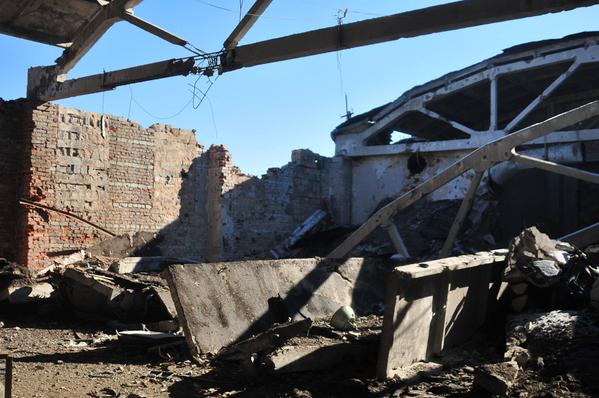
The main hell is in the region of Donetsk – in the past week more than 40-50% of all cases of attacks on the front were here. Avdiivka, on April 4-5, was under the fire of 122 mm artillery, direct fire from tanks; all week there were recorded attacks from ATGM, grenade launchers and mortars. In the scattering of towns and suburban settlements around the city – Opytne, Pisky, Vodyane – the monotonous combat work of the infantry and subversive groups continues.

Gradually, the intensity of the confrontation moves from north to south; if in the winter, the so-called “upper” sectors sometimes showed up in the reports, now the “champion” has become the sector “M.” Right now, just like all of last week, there are battles in Shirokyne.

We will not describe the disposition around the settlement in the midst of the confrontation – even fragmentary scraps about detachments and accurate data about checkpoints are not necessary now. There is fighting for high grounds, shelling has become more frequent in Hranitne, subversives have worked a Ukrainian Army checkpoint with small arms in Berdyanske, there were two tank duels, a detonation of a supply vehicle. This section of the front continues to be strengthened by all participants – both in terms of personnel and in terms of engineering barriers.

The losses for the week to all security services of Ukraine are up to ten people killed (about that, because there are conflicting reports regarding volunteers), in the region of fifteen people have received wounds requiring hospitalisation.

What I want to say in conclusion regarding losses. If we look at the situation strategically, Ukraine has lost in the course of almost a year of conflict, irrevocably, around a brigade’s worth of personnel. By that I mean dead, missing in action, invalids, those unfit for service. Also some people remain in captivity, it is unknown whether they will serve or not. I am not a cynic, I do not think that “the women will push more out” and I hurt from every drop of blood spilled by my comrades in arms.

But we are talking about strategy. In 2015, Ukraine plans to build up the Army to 250 thousand men. There are also around 40 thousand border guards. The National Guard – 50 thousand men. There are combined detachments of the MOI [Ministry of Interior] – as much as people joke about the police in the social networks, it was specifically former “Berkut” who stood to the death in Vuhlehirsk.

Plus new units are being formed. We won’t even talk about the DUK PS, the Emergencies Ministry services which can be given grenade launchers and sent to problematic checkpoints, we won’t talk about the perspectives of mobilization. There are still not enough people for such a front, but the trends are encouraging. If something serious goes down, these tens of thousands of soldiers will not run, like they didn’t run in the airports of the East, in Debaltseve and in Mariupol – they would have to kill us. In response the RF will start receiving batches of coffins and a stream of invalids, and will gain only ruins and hatred. If the Putin regime wants to continue while raising the stakes, everyone will swallow plenty of blood. But the fighters are mentally ready for this and have long ago crossed that line.

We want to come home and see streets with pretty girls in miniskirts and children with balloons, and not ruins, beggars and Motorola. The army will do everything for this. We have held the front, we have survived the hardest winter in the history of the country and we have lived to the spring. Eternal memory to the fallen. Glory to Ukraine.

Source: Petr&Mazepa

Posted in Analytics, English, English News, South&Eastern Ukraine, Video, War in Donbas | Tagged , , , , , , , | Leave a comment

Information Resistance: List of Russian army units concentrating by the state border and transferring to Donbas #FreeSavchenko

information_resistance_logo_engDmitry Tymchuk, Head of the Center for Military and Political Research, Coordinator of the Information Resistance group, Member of Parliament (People’s Front)
04.10.2015
Translated and edited by Voices of Ukraine

According to the operational data of the Information Resistance group, divisions of the Russian Armed Forces continue redeploying in the borderland areas [of Russia], in direct proximity to the state border with Ukraine; as well as transferring to the territory of Donbas.

Namely, at the Dolotinka base camp (Millerovskiy district, Rostov oblast, Russia), we have been able to identify units of the 28th anti-aircraft missile brigade (place of their permanent deployment is Chebarkul, Chelyabinsk Oblast, Russia).

In the vicinity of the Kuzminskiy firing field (Rostov oblast, Russia) units of the 35th separate motorized rifle brigade (Aleysk) have been identified. According to the IR group data, their transfer to Ukraine is scheduled for April 20, 2015.

In addition, the following units have been identified in the borderland areas of Rostov Oblast (Russia):
16th separate specialized brigade of the GRU [Main Intelligence Directorate] of the General Staff of the Russian Armed Forces – in the vicinity of the Dolotinka camp;
74th separate specialized radio engineering regiment (Vladikavkaz). Security for this unit is provided by the 100th separate reconnaissance brigade (Mozdok);
– units of the 100th separate reconnaissance brigade have been identified in the Tarasovskiy district of Rostov Oblast;
200th separate motorized rifle brigade (Pechenga) – in the vicinity of Millerovo (according to IR group data, troop rotation is planned in the near future);
79th reactive artillery brigade (Tver).

The main concentration of Russian troops in Rostov Oblast is observed near the settlement of Millerovo, where several field camps are operating. This is the deployment site for battalion tactical groups from military units of the Western and Central Military Districts of Russia, as well as for “land” units from the Northern and Baltic fleets. Battalion tactical groups from the Southern Military District are mainly based near the Kadamovskiy firing field (Rostov Oblast), which is also the place of deployment for Spetsnaz units of the GRU [Main Intelligence Directorate] and MIA [Ministry of Internal Affairs].

Additionally, a reinforced battalion tactical group of the 247th regiment of the Russian Airborne Troops was deployed near the Ukrainian border.

According to IR group data, additional units of the 56th separate combat brigade (Kamyshin; some of the brigade’s units are currently operating in the Donetsk Oblast of Ukraine) and units of the 200th artillery brigade (Gorniy) are planned for deployment in Rostov Oblast before the end of April.

Units of the 6th separate tank brigade have been identified near the Kuzminskiy firing field (some of this brigade’s units are operating in the Donest Oblast of Ukraine). Plus, units of the 138th separate motorized rifle brigade (Kamenka; some units in the Donetsk Oblast of Ukraine) have been identified in Rostov Oblast.

On the territory of Ukraine, units of the 74th separate motorized rifle brigade (Yurga) were identified near Starobesheve, and units of the 8th separate motorized rifle brigade (Borzoy, Chechnya), in Makiivka. Individual units of the latter brigade are currently undergoing training at the Sernovodskoye firing field (Stavropol Krai, Russia), to be deployed to Rostov Oblast afterwards.

Additionally, in cooperation with Irakli Komaxidze, we were able to identify:

– deployment of a battalion tactical group of the 19th motorized rifle brigade (military unit N20634, 58th army, Vladikavkaz, North Ossetia) to the Kuibyshev district (Rostov Oblast, Russia). Earlier, this BTG was deployed near the Kadamovskiy firing field, where several more BTG from the military units of the Russian South Military District are based.

– redeployment of units of the 23rd separate motorized rifle brigade (Samara) to the vicinity of Rostov-on-Don. Previously, these units were spotted in Belgorod Oblast of Russia, on the Kharkiv [Ukraine] direction. (According to the preliminary data, one BTG from the above brigade remains on the Kharkiv direction.)

– redeployment of artillery reconnaissance units of the 7th military base (Guauta, Abkhazia) in close proximity to the border, in the Novoazovsk sector.

Source: Sprotyv.info

Posted in Dmitry Tymchuk, English, English News, Pictures, South&Eastern Ukraine, War in Donbas | Tagged , , , , , , , , , | Leave a comment

Verkehrszeichen DONEZK

Original: https://www.facebook.com/permalink.php?story_fbid=1577862582503146&id=1434842496805156&__mref=message_bubble

Bataillon OUN
10.04.15

Nach seiner Auftragsdurchführung im Feindesland kam ein Aufklärungstrupp des Freiwilligen-Bataillons OUN mit einem „Beutestück“ zurück – kriegsbeschädigte Verkehrszeichen DONEZK.

Die kampferprobten Krieger haben ihren Ausfall auf Video aufgenommen.

Jetzt schmückt ein der beiden Verkehrszeichen den Checkpoint „18. Punkt“ in Pisky, das Andere wird versteigert.

Die Kriegsbeute, die unseren Helden aus Mordor gebracht haben, wird zur Zierde einer jeden patriotischen Innenausstattung.

Der Geldwert eines solchen Artfaktes ist schwierig zu ermitteln, jedoch unternehmen wir ein Versuch. Jeder Groschen kann das Leben des Vaterlandsverteidigers retten.

Die Versteigerung dauert eine Woche lang. Der Startpreis beträgt 990,00 Hryvnia.

Viel Spaß beim Bieten!

Zum Stand am Samstag, 21:06. Der Höchstbieter Denys Kasansky: 3.500,00 Hryvnia.
Zur Erinnerung: Die Versteigerung dauert vom 10.04. bis zum 17.04.15

Posted in Deutsch | Tagged , , | 1 Comment

Dmitry Tymchuk: Military update 4.10 #FreeSavchenko

information_resistance_logo_engDmitry Tymchuk, Head of the Center for Military and Political Research, Coordinator of the Information Resistance group, Member of Parliament (People’s Front)
04.10.2015
Translated and edited by Voices of Ukraine

Operational data from Information Resistance:

During the last 24 hours, Russian-terrorist troops shelled the positions of Ukrainian troops more than 20 times. The majority of these instances occurred in Donetsk Oblast [region].

Pisky - Photo by Dmitry Verbych. RadioSvoboda,  April 10

Pisky – Photo by Dmitry Verbych. RadioSvoboda, April 10

Specifically, the positions of Ukrainian troops in the vicinity of Pisky, Opytne, Vodyane and Avdiivka were subjected to heavy fire, including from the so-called “withdrawn” armaments (in 2/3 of cases, insurgents are using 120-mm mortars).

During the last 24 hours, the terrorist fire teams were also active on the Pisky – Avdiivka stretch. Near Avdiivka, several insurgent “infantry” groups, armed with small arms and acting under cover of artillery fire (122-mm D-30 howitzers) fired on Ukrainian units. In the late afternoon and evening of yesterday (04.09), the insurgents used mounted grenade launchers and heavy machine guns in the same area, and employed several tanks and anti-aircraft guns, achieving a high density of fire.

Pisky - Photo by Dmitry Verbych. RadioSvoboda,  April 10

Pisky – Photo by Dmitry Verbych. RadioSvoboda, April 10

In the vicinity of Shyrokyne, a mobile insurgent fire team made a concealed approach to the advanced positions of Ukrainian troops  and opened fire from small arms. The retaliatory fire of the Ukrainian defense units, combined with flank fire from the neighboring stronghold, successfully stopped the enemy group, pushing it back to a distance outside the effective range of small arms.

In Luhansk Oblast, Russian-terrorist troops were particularly active on the Pervomaisk – Slovyanoserbsk stretch, and in several areas of the Artemivsk and Stanytsia Luhanska sectors.

In the vicinity of Krymske, an hour-long firefight took place between the soldiers of one of the mechanized brigades of the Ukrainian armed forces, and a group of enemy infantry who tried to bypass our positions. After the end of the firefight, the Ukrainian Army unit retained their positions.

In the same area, we observed two flights of insurgents’ drones (“Forpost” type), during the last 24 hours.

A concentration of armored vehicles is observed in the vicinity of Mayorske (the equipment was transferred here during night-time, under cover of fire). At this time, 15-16 tanks are concentrated in this area, plus approximately 20 AFVs in the rear echelon.

An armored group was spotted moving through the eastern outskirts of Luhansk in the direction of Stanytsia Luhanska. It included four armored fighting vehicles (two BMP-1, one BMP-1, and one BTR-80 armored personnel carrier) and two Ural trucks (one with mounted ZU-23-2 anti-aircraft gun, and one with ammunition and SPTA).

The last 24 hours saw a significant increase of traffic in the ATO zone, with deliveries of reinforcements and supplies to Russian-terrorist troops. 51 vehicles were spotted (while the usual daily number is 22-23). A reinforced (“assault”) company (65-70) of Russian Armed Forces (disguised as local insurgents) was transported along the “northern” route and proceeded to the vicinity of Bryanka.

Three transport convoys, at least 10 tented army trucks in each, were spotted on the Oleksandrivske – Alchevsk – Debaltseve stretch.

In addition to this, heavy cargo traffic was observed from Starobesheve and Komsomolske towards Telmanove and Dokuchajevsk. According to the IR group’s data, its purpose is transportation of resources, supplies, and property of the company tactical group that had deployed to this sector earlier (as reported by the IR group). We also observed a concentration of fresh units north of the Pavlopil – Shyrokyne line (in the vicinity of Chermalyk).

Deliveries of ammunition and fuel continue through Makiivka and Yenakijeve to Yasynuvata and Donetsk (Kuibyshivskiy and Kyivskyi districts). We spotted 22 vehicles moving in several convoys.

Pisky - Photo by Dmitry Verbych. RadioSvoboda,  April 10

Pisky – Photo by Dmitry Verbych. RadioSvoboda, April 10

Source: Dmitry Tymchuk FB

Posted in Dmitry Tymchuk, English, English News, Pictures, South&Eastern Ukraine, War in Donbas | Tagged , , , , , , , , , | Leave a comment

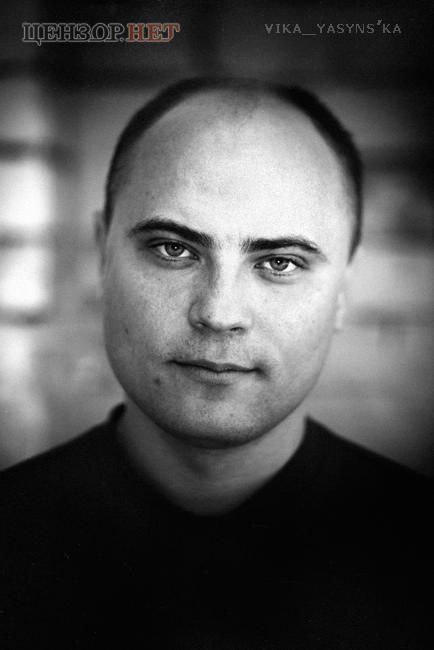
Cyborg Yevgeniy Kovtun: “I knew that I’d die with a gun in my hands and that they won’t take me prisoner.”


By Vika Yasinskaya, text and photos, for Tsenzor.NET
04.05.2015
Translated and edited by Voices of Ukraine

Soldier Yevgeniy Kovtun: “To walk along the runway – 99 times out of 100 it is certain death, but I knew that I would die with a gun in my hands, and that they won’t take me prisoner.”

Among the lads, no one was side-lined, even the wounded guys who were conscious, tried to help – loaded ammunition, passed magazines, cleaned the weapons, everyone was involved, like on a conveyor belt. Virtually every single one of us thought that we would die and no one will probably know of our feat. But we knew our price, knew what we stand for, and generally, we just reached such a stage where, understanding what awaits us, only one thing was left – to fight to the end.

I am a soldier in the first battalion of the 93rd Brigade, which is based in Pisky. Our guys held the airport until the end.

I live in Kyiv, before the war I worked as an engineer in IT. I was mobilized in August, and before that I had not served in the army. After a two-week training centre I ended up in the 93rd Brigade.

My speciality is a mortar assistant, then I received another role, but I won’t mention it here, it was in that capacity that I went to the airport. And I also went there because of my friend Denis, he was sent there as a fire corrector. As it turned out, my friend ended up at the control tower. There he became famous for his bravery. And was filed for awards, but hasn’t received anything yet. But, we didn’t go there for awards anyway, we simply did our job. And I ended up at the new terminal.

I already had a shrapnel wound in my arm that I had received in Pisky, but even with a half-working arm I was drawn to the front. While I was being treated in Kyiv, I could not fully get on with some affairs, knowing that out there the lads are waiting for me. All jobs must be completed to the end – that is my principle. And the war is not over, so, the job is not done.

Psychologically, I was prepared for the airport because I saw the death of my guys, knew what shelling is, what close combat is when you see the enemy directly.

We arrived in the new terminal on January 6, it was the last day of the green corridor.

We called it the “corridor of shame” because we had to stop and get off our “Urals,” then they lined us up, searched us, looked at what we were carrying, how many of us are going and so on. We came with our allocated weapons, but the enemy had their own rules: the magazines must be unfastened and empty. There was to be only one loaded magazine, but that must not be fastened. It was an absurd situation, but that was the decision of the command, and we could not discuss it.

In the terminal 2-3 days after arrival, so around the 7-8th, we understood that by and large the ceasefire was over, because the enemy became active and started attacking from all sides. But we held the defence completely normally. I was helped by my contact with Denis, I knew that he is covering me from the right on the tower, and while he is there – the enemy cannot get through from that side. Once this was confirmed, around the 10th or 11th, I was resting after a change of guard at a post, he called me and said: “You are sleeping, and meanwhile a group of rebels has come up to you, a fairly significant one, around 50 people, and a second one is beginning to approach.” But he asked us not to do anything and that even the officers not use their walkie-talkies on our side. He said only to strengthen the positions, we immediately organized this. He himself very nicely corrected fire and the groups were completely broken.

When the enemy realized that they cannot approach us from that side – they started using tanks, so that they have the ability to come in from the side of Donetsk, and also to methodically destroy the terminal and the control tower, which were our eyes and ears. In the end, the tower collapsed. It was not destroyed completely, but it tilted and fell. I know that many guys were wounded there, but still they did not leave there. After a brutal assault of the terminal we had a very long battle. But because of the help of our artillery we repulsed the attack. And in the evening, the separatists again called for a ceasefire, but not from us, from our command. So that they could take their wounded and dead, I asked the commandant what has happened, why has our artillery stopped working. I was informed that we got the green light for a ceasefire. I thought that, maybe, in some sense it was even right, because we also needed to take our “200s” and “300s” [Russian military terms for dead and wounded]. But when our artillery stopped working, the enemy used the rubble of the tower like steps, and came up to the terminal, from the side of Donetsk, so our defensive line was a bit broken, because we could not control that territory.

All in all there were not so many of us, around 50 people from different brigades: 81st, the 90th and the 74th separate recon battalions, and my 93rd. Each had their own zone of responsibility, we weld the enemy, who was coming from the old terminal, it was the checkpoint “gate” in the first hall. That post, like the first one, held our back practically until the end. On the floors there was heavy fighting, and from above they threw grenades at us. On the ladder the line was held by fearless machine gunners. One of them was wounded, several bullets went into him, later the medics took him, and the fate of the other I don’t know, but they held out until the last.

Because they pressed us strongly, we decided to pull back and hold one hall, it was no longer possible to hold a larger area. We started building up a barricade around it and wanted to blow up the stairwell. I ran down to find the sappers and on one of the floors, behind a door, heard the voices of separatists. The door was shot through, they tried to break in, breaking it down, but one of the gunners held them until we had made our barricade from whatever was around us, which, in all honesty, protected only visually and could be easily shot through. Our sapper had time to mine the stairwell, but didn’t have time to detonate it, him and the gunner were injured. But we managed to pull back the wounded and to retreat into the hall.

Despite the fact that we lost territory, no one was thinking of surrendering. I never even heard hints of this from the boys. Everyone was angry, because we realized that there were no rules of war for the separatists and mercenaries. We gave them the opportunity to evacuate their own, and they did not give us the same.

Then, day by day, they slowly clinched us. For us the concept of “day-night” disappeared, because some battles went on for almost 24 hours. New guys broke through, but often they did not make it. And those who came for the wounded, for me, were heroes, because they knew where they were going, that it could be a “one-way ticket.” And though often they couldn’t take anyone, because their vehicles were burned down, they still went again. Among such guys are Rakhman and Andrei Sever. And also they came to help out, because those who were there from the 6th were already exhausted.

When we ended up in one hall, they started gassing us, first with tear gas, then with pepper spray. But we found ways to fight it: took wet tissues and put them under our balaclavas, even though it was very cold then, the tissues froze, but everyone tried to carry them under the bulletproof vest, to melt them. It was worse for those buys who at that moment were at the checkpoints, because after gas they always waited for the enemy to go on a brutal offensive. But that did not happen often, because they also did not really want to go at us. They saw that, even though we are cornered and have nowhere to go, we will not surrender, they understood that they can’t take us easily and that we will hold out until the end, and they already had quite heavy losses without us.

But this could not last indefinitely. I understood that the terminal was finished when the separatists went onto the upper floors and took the basement. Tactically they ended up in a good situation. We did not receive orders to retreat, and didn’t have the opportunity anyway, because we were almost surrounded. After the frosts, which reached down to minus 28 degrees [Celsius], it was impossible to sleep properly, or to eat because of constant shelling. I got a high fever, probably because of tiredness, and had a broken rib because of bullets that hit my bulletproof vest. But everyone felt that, if you can’t stand, you could fire while lying down. Among the guys, no one was side-lined, even the wounded guys, those who were conscious, tried to help – loading ammunition, passing magazines, cleaning the weapons, everyone was involved as on a conveyor belt. Virtually every single one of us thought that we would die and no one will probably know of our feat. But we knew our price, knew what we stand for, and generally we just reached such a stage where, understanding what awaits us, only one thing was left – to fight to the end. The only thing that was scary was being taken prisoner. For myself I made the decision not to get captured and in the last days even slept with a grenade. I knew that this would all end soon, that help was not arriving, and that the help that was arriving often ended up in the same situation as us. But the fact that they remembered about us gave us strength, plus many people called us, found out about our situation; all of Ukraine worried about us, prayed for us. You turn on the phone and there are 110 messages: “We are praying for you, hold on!!” – and stuff like that. From my boys, of the 93rd, in the last days only three men remained out of ten.

And they decided to detonate us, probably, because they gave up on trying to capture us. We survived, but everyone was covered in rubble and concussed. We somehow dug in, found weapons and held on. We tried to make 3 lines of defense, even though they weren’t very high, just below knee height. Those who were tougher lay behind the first and second line, while the wounded were pulled behind the third one. That is how we spent the night, and by noon on the second day they detonated the floor below us. Virtually everyone fell through into the basement. Then we lost the most guys, because almost three floors fell on our heads. The overlapping blocks buried the people quite heavily, it was hard getting them out. But even in this situation I did not hear panic.

I was buried by a wall, coming to my senses, I felt that my legs worked, but that I couldn’t get out on my own, and the enemy had just gone on the offensive. I had one comrade run up to me, saw my hand which was protruded from the wall – I had tried to dig myself out. He wanted to pull me out, and I said: “Don’t, for now just shoot back, I’m OK, I’m alive.” He said that he was running out of ammunition. Then I felt for my ammo by my hands and gave it to him. He did fend off the attack, though at that moment a grenade flew in and cut us up a little.

They dug me out, and we got out the other guys while we had the strength. And two of my guys were buried and they never found them. Many were unconscious and couldn’t call for help. But the saddest and most unbearable thing was when guys were calling for help and we could not help them. We needed heavy equipment to get them out.

After we fell we had enough ammo and weapons for maybe 20 minutes of fighting, and even that only if we fought very weakly. At some moment I just switched off, I got woken up by one comrade, Vova, and said that we are pulling out. I replied to him that I can’t get up, and he says that it’s also hard for him, because his legs are shot through. But we gathered our strength, I helped him up and we started coming out. To walk along the runway – 99 times out of 100 it is death, but at least I knew that I will die with a gun in my hands and that I won’t be taken prisoner. Many were walking away, and some stayed to guard the heavily wounded, it was not possible to carry them out. Many of them died in front of our eyes. We decided that from those who make it out, at least someone can get to their own, to tell what happened and from which side one needs to drive up to take the rest.

We got lucky because it was dark, and I think the enemy took us for separatists. Then something happened, and there was no mobile reception and the radios were jammed too. Maybe this had an effect on the fact that we managed to come out, because we were simply walking straight along the runway. And not everyone managed to make it because there was no road as such, and in the dark – after a concussion and with injuries – you lose orientation, you can’t think straight simply from exhaustion. It was foggy, many simply got lost, some fell into potholes. But later they found virtually everyone.

We came out onto the meteorological station in the morning, an APC took us and drove us to Vodyane, from there we were sent to hospitals. I know that the fate of my two guys – their callsigns are Beard and Yakut, who held out there until the end – is unknown, but I have heard information that the enemy found them under the rubble and that they are in captivity. I hope that if that is so, it would be possible to trade them. I haven’t seen them in the lists of the dead either. We need to get the boys out from captivity, and our leadership and command should not forget about those who stood there to the death.

Nobody wants peace as much as soldiers who have fought, because we saw what sorrow the war brings to everyone: to soldiers, to the civilian population, to nature, to homes. It is like a trauma that will never heal. For me – it’s painful memories. But every war ends in peace, no matter what happens. The question is: at what cost? Many guys have survived and are planning to go to fight again. I am also going through VVK (military-medical expertise – ed.), they have sent me for more analysis, because the injuries were serious, but I want to get back to the front. My war is not over yet! I will fight for a year, and then will see what happens next. We, as civilians, came to the war to help our country, to help the army. But we can’t wage war our whole lives. We have families, and the supply you receive there is not enough to feed your loved ones. Then again, all these years we lived only for our selves, bought nice cars, apartments, but no-one ever thought of the army. That freedom that we received, we got it kind of easy and relaxed, we never went through becoming a nation as such. Maybe, now it has all come back to us with a vengeance, and we must walk this path. The hardest thing in war – is to watch how your wounded comrades are asking for help, and you cannot always help them. People are important and valuable. Only at war do you understand that the one close to you can come to you in the morning to drink coffee, and after an hour he may not be alive any more.

And those guys, who died, have kids left. No one will replace their fathers, but we, if we survive, will try to smooth this loss, because their fathers died defending this motherland. And we will not let the government forget about these children. Just like it is vital not to forget about us, the soldiers. We shouldn’t be thinking about our rear, and our rear for us is the supply of families and some guarantees from the government. Many people have not even received statements that they were at war. We are surprised that the civilians do not understand that a war is happening, but it is even sadder that some soldiers do not understand it either. Some headquarters work with weekends, days off, well, there are no days off at the front. Going through a war we all change, and the psyche of many is disturbed, because many of us have said our goodbyes dozens of times. Some mundane detail is an outrage for a soldier, so many can react inadequately. Society should start to get used to us. It is important that someone can come back and be needed at a job, that he is helped to adapt. We fight to achieve some changes in this country, but we must get something in return: politicians must talk to the people, and officers must talk to the soldiers. Then, maybe, together we can come up with something new.

Source: Tsenzor.NET

Posted in English, English News, Eyewitness stories, Pictures, South&Eastern Ukraine, War in Donbas | Tagged , , , , , , | Leave a comment