Putin on pause – Thoughts from Kyiv – 4 March 2014
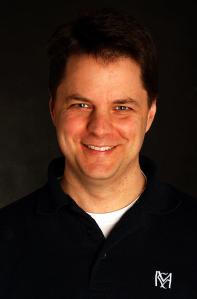
Mychailo Wynnyckyj, PhD
President Putin’s press conference seems to have taken some of the heat off Ukraine today. Although Russian troops continue to face off with Ukrainian military personnel in Crimea, tonight it seems unlikely that Putin’s invasion of Ukraine will be extended to the eastern oblasts – a least not immediately. Russian troops currently in various areas of Crimea are likely to gradually begin withdrawing back to their base in Sevastopol during the coming days – or so we hope.
However, by no means is this conflict over. Putin has received a massive slap across the face, and there is no way that he will forget it. Nevertheless, for the moment, we seem to have gained a few days of relative peace.
Lately, I have been giving numerous press interviews about the situation in Ukraine. Since Saturday, western reporters have started each conversation with the same question: “are you frightened?” For the record, and so that I can possibly avoid having to repeat it ever again: until today, I wasn’t just frightened, I was damned scared!!! What about my friends here in Kyiv? Well, they were scared too. We were all scared…
But during the past few days I think we’ve all realized that being scared is useless. As someone wise once said: danger is real, fear is in your head.
Putin’s ultimatum to Ukrainian military personnel stationed in Crimea (to surrender, defect or die) expired at 5 am this morning Kyiv time. Notwithstanding the fact that their units were all surrounded by Russian forces, not a single Ukrainian officer or soldier succumbed to the Kremlin’s psychological pressure (with one exception: the treason of Naval Admiral Berezovsky that occurred on Saturday). Tonight, Ukrainians are inspired as they watch the video filmed by a reporter from The Guardian newspaper this morning, of a Ukrainian military unit marching towards its garrison in Belbek Crimea, with no weapons, singing the national anthem, and carrying the Ukrainian flag. Russian forces, armed with automatic weapons and RPG’s, had blocked the gate to the Ukrainians’ air base. As the Ukrainians (under the command of Colonel Yuriy Mamchur) approached, shots were fired over their heads, but no one even flinched. The danger was very real, but there was no fear. That’s heroism if you ask me…
This was clearly the kind of heroic restraint that Putin was not expecting from his Ukrainian adversaries. Yesterday, the Russians called an open meeting of the UN Security Council. Given that it was Russia that initiated this meeting (and not the US or other western power), it is likely that Putin’s diplomats had planned to show a very different picture to the one that actually transpired. I suspect Ambassador Churkin had envisioned being able to demonstrate to the world much more than just a written request from deposed President Yanukovych as justification for the Russian invasion of Crimea. The Russian plan called for plausible reports of violence in Crimea and Ukraine’s eastern oblasts to be available well before yesterday afternoon New York time. The Sunday raids and forcible occupation of oblast administration buildings in the eastern cities of Donetsk, Kharkiv, and Luhansk by pro-Russia demonstrators (most of whom were actually bused in from the Russian Federation) were supposed to have been opposed by “radical nationalists from Maidan,” and video footage of anarchy and violence was supposed to have been transmitted worldwide. None of this transpired. The Ukrainian side acted with the utmost restraint – doing everything possible to avoid violence.
The lack of widespread violent resistance from the Ukrainian side (and peaceful demonstrations of loyalty to commanders by the country’s military) has created a massive problem for the Russian propaganda machine. Today, Putin’s description of Ukraine as a wellspring of “dangerous extremism, radical nationalism, and violent anti-Semitism” sounded implausible: violent extremists simply don’t act the way the Ukrainians have during the past few days. The Russian President’s mention of demoralized Ukrainian troops in Crimea having defected or surrendered en masse was false – and the journalists in the room knew it. Russian television reports of large numbers of refugees from eastern Ukraine fleeing to Russia have also proven false. The Maidan Self-Defense forces did not mobilize to fight the Russian “tourists” in the east or south; Right Sector fighters did not descend on Donetsk or Kharkiv; armed Russian troops moved freely throughout Crimea with not a single shot fired at them. This kind of peaceful restraint translates into an epic failure of the Putin plan for justifying invasion on the basis of threats to the lives of Russians and Russian-speakers.
Given the commendable restraint of both Ukrainians in uniform, and of Ukraine’s civilian population, the “scholarly analysis” of pro-Russian academics (e.g. Stephen Cohen on CNN, or Jeff Sahadeo on CBC) seems increasingly misinformed and hollow. Certainly, Putin’s propagandists are doing everything possible to discredit Ukraine’s fledgling post-revolutionary government, calling it “undemocratic” and “extremist”, but given that it is the Russian side that is censoring websites and Oscar acceptance speeches (Jared Leto’s reference to Ukraine was cut out of the broadcast in Russia), it seems we may have a case of “the pot calling the kettle black”. The most graphic example of Orwellian Newspeak has come from pro-Russian commentators who deny the troop movements in Crimea as being an invasion at all. Apparently, the Russian military presence in Simferopil, Kerch, and Yevpatoria, falls within the imperative of “protecting the Black Sea Fleet in Sevastopol”. This is the equivalent of claiming that if US soldiers were seen on the streets of Havana, their presence was justified because they were protecting Guantanamo…
Thankfully, western leaders seem not to be buying Russia’s propaganda and disinformation. Today, Poland invoked Article 4 of the Washington Treaty (“Any ally can request consultations whenever, in the opinion of any of them, their territorial integrity, political independence or security is threatened.”). On Thursday, a meeting of Heads of State or Government of EU member states will be held in Brussels. UK Foreign Minister Hague visited Kyiv yesterday, and US Secretary of State John Kerry was here today. All of these events, in addition to symbolic acts like the raising of the Ukrainian flag on Canada’s Parliament Hill, are focused on demonstrating to Mr. Putin that the international community is firmly behind Ukraine.
This kind of unprecedented international support, combined with the consolidating effect of facing a common enemy, has done more for nation-building in Ukraine than 20 years of soft Ukrainianization policies (e.g. in education, advertising, political discourse). Ironically, Mr. Putin, who supposedly aimed to protect the rights of Russian-speakers in Ukraine (particularly those who feel threatened by the need to communicate with their government in the state language rather than in Russian), seems to have had the opposite effect: Russian-speakers in Donetsk, Kharkiv, Luhansk, Mykolayiv and Odesa are universally condemning Russian military intrusion on Ukrainian soil. Ukraine’s television and social media is swamped with interviews and statements from residents of the southern and eastern regions of the country, declaring their desire to live in an independent Ukrainian state – not in Russia. These same people are now very likely to vote for NATO membership for Ukraine in the future, and certainly any doubts that they may have had as to Ukraine’s European choice have now been completely extinguished. Once this crisis is finally diffused, Ukraine’s regional divisions will finally be recognized for what they are – a reflection of diversity rather than cleavage.
However, diffusing this crisis is not going to be easy. It is highly unlikely that President Putin will simply accept the humiliating defeat of his Ukrainian operation quietly. Authoritarian leaders who see themselves as charismatic and brilliant generally do not like to fail or to be told bad news. Therefore, although Putin has officially ordered the troops that had been participating in “previously unannounced but planned training exercises” on Ukraine’s eastern border back to barracks, they are unlikely to stay there for long. Ukraine’s Foreign Ministry has warned of continuing equipment and materiel build-up on the western border of the Russian Federation, and today Putin himself (during his press conference) clearly left the door open for future military interventions in Ukraine.
More than likely, during the coming weeks, there will be more staged demonstrations by supposedly pro-Russia citizens in the eastern and southern Ukrainian cities of Donetsk, Kharkiv, Luhansk and Odesa. Many of the protesters are likely to be paid and/or imported from across the Russian border. Their goal will be to provoke violence and instability in Ukraine, so as to create a justification for a future direct intervention by Putin’s forces. Meanwhile, in the Crimea, a referendum scheduled for March 30 will likely be recognized only by Russia, and its results will serve as justification for either the direct annexation of the peninsula, or the creation of a Russian protectorate in the south of Ukraine. In both cases, Putin’s actions will be broadcast to as broad a domestic Russian audience as possible, and spun as evidence that popular revolutions such as the Ukrainian example result only in death, destruction, anarchy, and discord. The acceptance of this message by the Russian people is absolutely key to Putin if he is to remain in power. Cynical as this may be, given the risk of mass casualties resulting from his actions, avoiding a domino effect seems to be the primary motivation for Russia’s brazen actions in Ukraine.
Through his actions this week, Mr. Putin has shown himself to not only represent an ongoing threat to the security of Ukraine, he has become a global pariah. It is now clear that Russia does not recognize Ukraine’s right to exist as a sovereign state. Furthermore, Russia does not recognize the basic principle of the global security order – namely, that the territorial integrity of sovereign states is sacrosanct. He has created an international precedent by violating the Budapest Memorandum that now places all nuclear nonproliferation efforts at risk: countries like Iran and North Korea will now see any security guarantees promised to them in exchange for giving up their nuclear weapons as hardly reliable. Mr. Putin is now truly a global problem…
In the midst of all of this we find the Ukrainians feeling like pawns in someone else’s global chess game.
During the past 3 months, Kyiv residents have had ample opportunities to experience both danger and fear. Since the first shock of police beatings on Nov 30 of last year, and then during the Dec 11 attempt to clear Maidan, during the first clashes on Hrushevskoho St. in January, and during the peak of violence Feb 18-20, we all knew deep down that danger was very real and very close. But it was OUR danger. Notwithstanding multiple reports of Russian snipers, special forces units, and killers/torturers dressed as Ukrainian Berkut officers, deep down, every Ukrainian knew that we were facing our own thugs and criminals. Ukrainians had allowed a corrupt gangster to come to power, and he had hired many of his own kind to serve and protect him. Regardless of our disgust with these people, these were Ukrainians who were now beating other Ukrainians for having the gall to protest against the country’s President.
Through it all, Ukrainians believed (seemingly naively) that if they banded together, if they went to Maidan, if they demonstrated discontent with their government, eventually good would prevail. And so we faced them. And we won!
There is a difference between the fear that I felt three weeks ago when Kyiv burned, and the fear that I felt this week. Then, I believed in people power; in the feeling of mutual solidarity that comes from pursuing a righteous ideal, from battling a corrupt ruler. Yesterday I doubted that the same principle could be applied to an invading army. But today I saw the face of Colonel Yuriy Mamchur – the man who led his company of Ukrainian soldiers, completely unarmed, towards a group of Russian invaders blocking the entrance to a Ukrainian airbase with their guns at the ready, and having fired warning shots. He and his men advanced unflinched. In the face of danger, they sang the Ukrainian national anthem – just as I had countless times in the midst of danger in the center of Kyiv.
Today, I think I truly understood why I love this country so much. I used to think it was because of my ancestry and my upbringing: a romanticized version of Ukrainian history was put into my head (and my heart) throughout my youth, and in the end I had become convinced that the churches, the fields, the rivers, the Cossack imagery, the castles, the embroidery and the eggs (!) – all of that was mine, and so to be loved and cherished. Today, faced with a foreign military invasion, the Ukrainian Maidan became a truly national phenomenon. And I understood: it’s all about the people: intelligent, peaceful, good people who live in all of the diverse corners of this great land. I’m proud to be one of them.
God help us!
Mychailo Wynnyckyj PhD
Kyiv-Mohyla Academy
Source: Facebook

 On March 3, 2014, the UN Security Council met again on Ukraine to hear further from Russia on its involvement in Crimea. Russia’s Permanent Representative to the UN, Vitaly Churkin, explained afterwards in a statement to the media that Russia “called for this emergency meeting of the Security Council to explain, as fully as possible, our position on the current situation in Ukraine.”


