By Olga Kasyanenko 05.19.2014 Translated and edited by Voices of Ukraine
There are so many “experts” who are speaking and arguing on behalf of Donbas that it’s not being heard. I was born and raised in Yenakiieve, let me tell you about Donbas.
Field commander Girkyn is bemused that there are no people willing to die for the chimeras of the Russian TV propaganda! Those in Russia think that everyone in Donbas dreams about joining Russia,but the past “referendum” clearly indicated that it’s not so. In western Ukraine, they consider Donetskys [Donetsk gangs] to be the enemies both in the historical context and in the modern situation, remembering the “titushkys” who came from there to pummel revolutionary Kyiv. But mercenaries arrived, ones who didn’t care from what side to get the money, and they were sent by Akhmetov–the man who’s been robbing the people of Donbas for many years.
Of course, Donbas residents are not the residents of blooming Kyiv or hospitable Lviv. These are stern guys with metal grit in their hair and coal dust under their skin. They smoke and drink a lot, and do it for three reasons: a drunk person is not as afraid to go down a mine shaft that is long past its safety requirements, or the “kopanka” (a pirate shaft), which was never up to code, where [the shaft] can collapse on top of you, where you can get flooded, or where you can get burnt alive. People are not officially registered at enterprises, they are paid salaries every day because trauma and deaths are a regular occurrence here. Who counts the residents of Donbas? The last census in Ukraine took place in 2001…
They say, when a person smokes and drinks, it’s easier to tolerate the radiation, dust and fumes that fly in the air from shafts and plants. The sky over Donbas hasn’t been blue for a long time, it is red, violet, green, and yellow. In the mornings, the metal shine is visible on the grass, ground, and buildings–just like frost–it’s the metal dust. And the black coal dust is everywhere here, one cannot wash it off either with water or soap for many years to come, it crunches on the teeth and forms a large black lump in the throat. That’s why people don’t wear light-colored clothes here, and linens aren’t dried outside.
Even the parsley, dill and garlic in garden beds twist into whimsical spirals, and the weeds burn as well. At a temperature of mere 25C [77F] it’s impossible to handle the heat, it seems as if one is in a room with lamps that melt one’s internal organs. And when it rains it burns holes in the leaves, which is why people are especially cautious with the rain here.
They drink from hopelessness. Because the children here suffer from terrible diseases from birth, and the medical care is at a level below nowhere. Because for hard and dangerous work one gets paid pennies that aren’t even enough for nominally free medical treatment. Because nothing grows in the ground. Because with all their concerns, they are irritated by more political games: some lack freedom, others territories, and still others the recognition of historical correctness.
From Moscow arrived Commander Girkyn, who is fond of historical reconstruction, but here they have nothing to feed the children–people don’t care about historical reconstructions. Weapons are brought to their home, but they won’t take them because it’s impossible to force those people to fight when they don’t have anything to fight for…
However the Kyiv authorities, and the new President who will be chosen on May 25, still are able to do something for these people. Purifying equipment needs to be installed at plants. Earlier, filters protected the towns from harmful emissions. Currently, for example, the Yenakiyevo steel plant belongs in parts to several owners, all of whom think only about their benefits, and [as a consequence] the purifying equipment not only doesn’t work, but it self-destructed a long time ago.
It makes sense for the new authorities to grab these plant owners by their gills, as well as the shaft owners, and force them to establish safety systems in workplaces. Introduce strict standards of ecological safety and emissions control, adopt such fines for violators in the Verkhovna Rada [Ukrainian Parliament] that it would be cheaper to install the filters and observe the safety rules than to pay the fines.
The state should help fix some particularly complex technological issues in the field, even if the enterprise cannot objectively handle a task like this. Actually, Russia can offer this rescue option for Donbas, but it won’t because it doesn’t intend to invest in this region, “Why feed meat to the slaves, when they can survive on millet.” But we are not slaves, and those who understand this will hear Donbas, and Donbas will hear them.
————
About the author: Olga “Matilda” Kasyanenko (Mukhacheva)–was born in Donetsk Oblast [region], lived in Moscow for 12 years, participated in oppositional social-political activity, but was then forced to leave Russia with a small child in her arms in 2011 after a criminal case was launched against her for participating in a rally that supported Russian political prisoners. She publishes political memoirs about the events of 2005-2011 on her http://matilda.pro.
Authors: Iuliia Zubrytska, Canada-Ukraine Parliamentary Program Alumnus and a lawyer (Kyiv, Ukraine) and Dr. Markian Shulakewych, M.D., FRCPC, Canadian specialist physician with extensive medical experience in Ukraine (Ottawa, Canada)
In March 2014, Iuliia Zubrytska and Dr. Markian Shulakewych interviewed Maryana Zayats (Winnipeg, Canada), focusing on civil society democratic engagement in the upcoming Ukrainian Presidential elections, first round voting May 25, 2014, and possible second round voting June 15, 2014, and hopefully soon to be scheduled Ukrainian Parliamentary elections, and what Canada, Ukrainian diaspora and Ukrainian citizens can do to enhance, facilitate and realize the voting process.
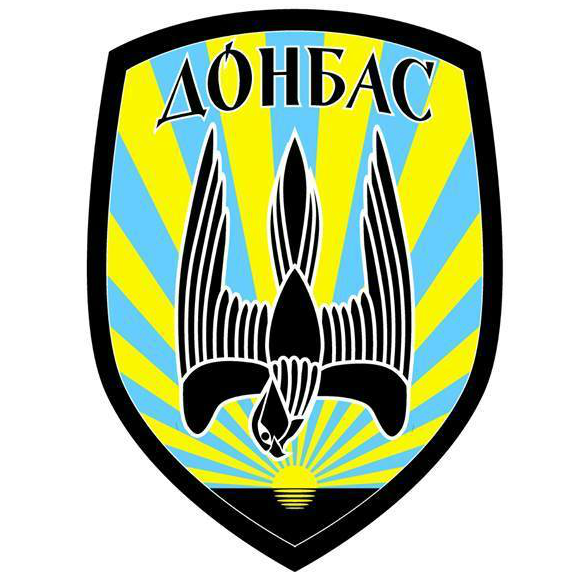
As soon as it became obvious that Defense force “Donbas” is capable of mopping-up terrorists from next and next districts of the Donetsk region, an unaccountable event happened. Actually, there is an explanation. “Donbas” has been betrayed and information about its movement route became know to the terrorists. “Donbas” ran into an ambush near village Karlovka and accepted battle. Snipers, submachine gunners were engaged against “Donbas” and bazookas were being used. There are wounded (the amount is being verified). There are 2 persons in the hospital of one of the nearby towns, 2 persons were moved from the block-post to the hospital. One of them is in the surgery operating theatre and the other one is in traumatic surgery. Guards were left near the hospital with the wounded. The other wounded are waiting for evacuation.
May 21 was a notable date: 3 months after Yanukovych’s flight from Kyiv, exactly 90 days after the massacre of the Heaven’s Hundred, and 6 months since the first Euromaidan protest. It should have been a day to remember and rebuild. At the very least, it should have been a day to calm one’s emotions. But then came May 22 – the bloodiest day since the beginning of hostilities in the Donbas: more than 20 Ukrainian servicemen killed (16 near the town of Volnovakha), and at least 40 injured; similar casualty figures were reported by the separatists’ side. Today, May 23, Ukraine’s Security Service (SBU) apparently foiled an attempt to falsify the results of the upcoming Presidential vote with a virus on the server of the Central Election Commission – good news! Meanwhile, Igor Bezler, a Russian Special Services officer, and commander of the terrorist bands in Donbas…




 Voices of Ukraine