By iPress.ua 09.06.2014 Translated by Stepan Nikitchuk and edited by Voices of Ukraine
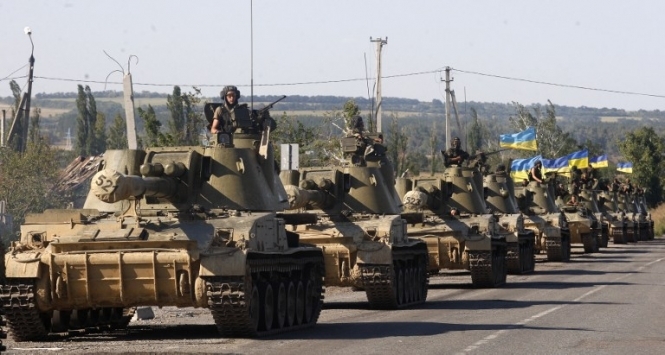
Ukrainian Military Lost Four Tanks, Almost All Returned on the Remaining Four
Ukrainian tankers show examples of great courage. In the 4 months of the war our soldiers have repeated and surpassed all, or nearly all, that we saw in the Soviet movies and read in books about the World War II.
Photo: AFP
Sergiy Karazy, a journalist, wrote about one of the heroic episodes on his Facebook page:
He said: “Yesterday morning at about 8 a.m., before the ceasefire, at a checkpoint on the outskirts of Mariupol, I met [Ukrainian] tankers that had just returned from a battle. Their seven T-64 tanks ran into 30 Russian T-80s. They took the fight. Lost 4 tanks – returned on three.
Most of the crew survived. Not all. The commander was in a post-shock state. He asked to not to take photos/video and give a rest to the soldiers. After two or three hours the guys were already loading ammunition into the surviving tanks and going back into the battle. They were moving so quietly, business-like, without unnecessary emotions.
This is just one episode in one day. In the 4 months of the war our soldiers have repeated and surpassed all, or nearly all, that we saw in the Soviet movies and read in books about the Great Patriotic War [World War II]. It would be nice if the rest of the country could catch up with the level of our soldiers. All those sitting in restaurants, cinemas, bars and clubs, who book tickets and hotels to go on vacations have to understand what and how much they owe to the guys who sit in the trenches and go into attacks, become happy when they get old armored vehicles, new helmets and flak jackets, lay wounded in terrible provincial hospitals, become disabled for life. They do it all for us. We can never fully thank them for their sacrifice.”
By Taras Polataiko, Ukrainian Canadian artist, Assistant Professor, University of Lethbridge, Alberta, Canada
09.07.2014 Translated and edited by Voices of Ukraine
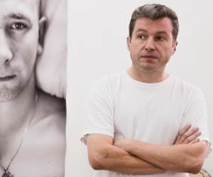
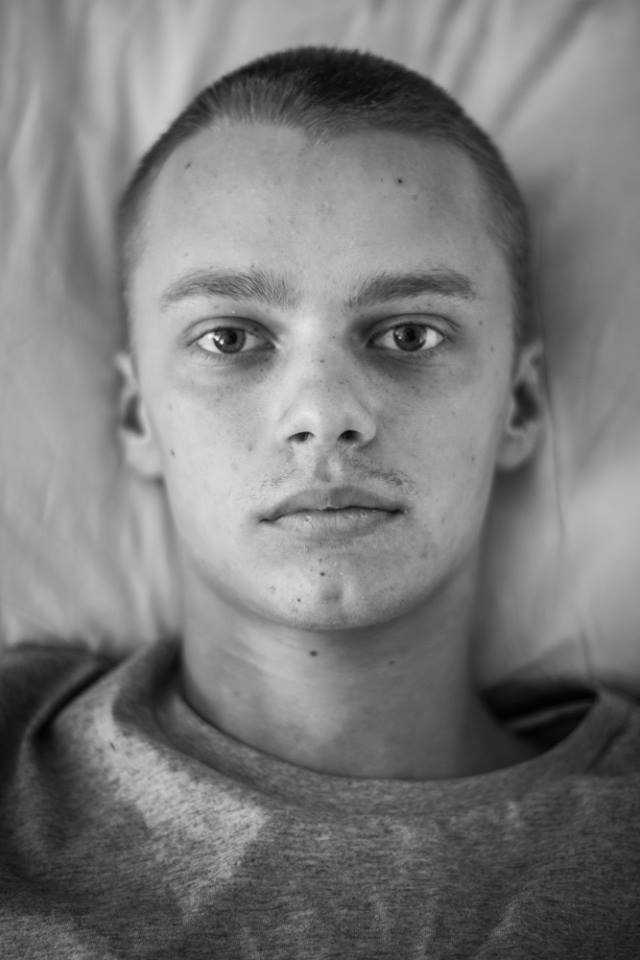
Taras Polataiko’s project War. 11 Portraits opens the National Art Museum of Ukraine’s [NAMU] charity fundraising initiative to help wounded soldiers and museums who have suffered or been damaged within the Ukrainian ATO (Anti-Terrorism Operation) zone.
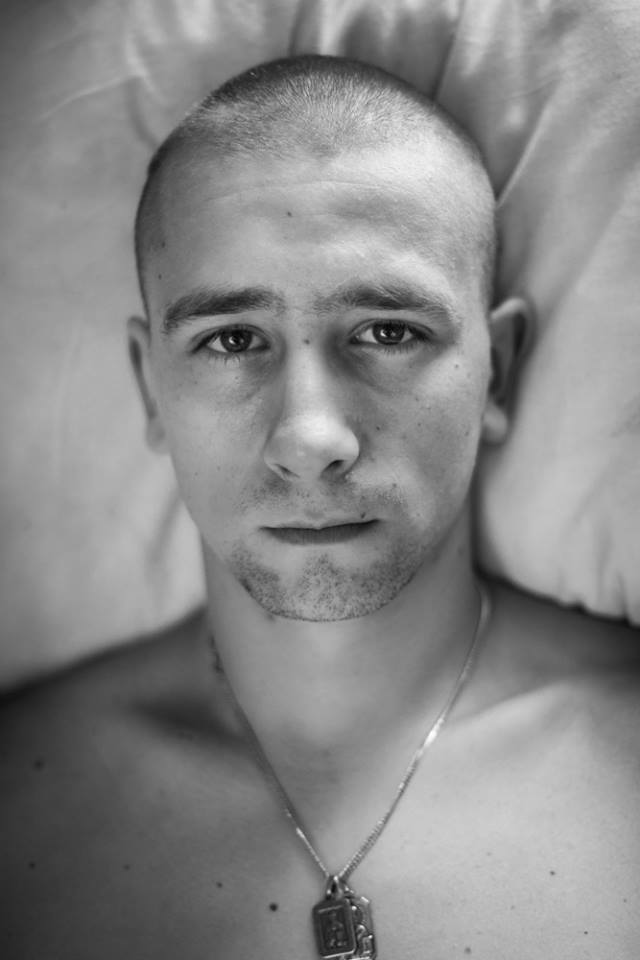
For several days in early August, the artist talked with patients of the surgical department of the Central Military Clinical Hospital in Kyiv who came there from the front with serious injuries. Polataiko had 11 photo-portraits taken and recorded the stories of the people who have been in the inferno of war. They are very diverse people: volunteers, mobilized and contract soldiers, veterans of the Afghanistan War. They belong to different generations and went to the war zone from different regions of Ukraine. They have different attitudes to war and their experiences. For some, war rushed into their regular course of life and broke their personal, comfortable world. For others it simply is hard work that must be done as well as possible. However, all of them admit that “life is valued quite differently” now, and the belief that “we are fighting for our land” helped them to stand firm in the most difficult moments. Speaking with the wounded soldiers isn’t easy. Most of their answers are short and specific. But their voices and facial expressions tell much more than the most detailed interview.
The exhausting conflict in eastern Ukraine has been going on for over six months now. During all this time, our attention has been focused on the developments of war, which keep changing our attitude to life, our values and ourselves. War involves everyone in its orbit. Depriving us of a sense of a peaceful life, it leaves virtually no room for concentrated everyday work. Hope for the future rests on the shoulders of the heroes – such men as are in Taras Polataiko’s project. War has subjected these men to its needs, levelled their pre-war personal experience, and confronted them with a cruel necessity to live on the edge of their mental and physical ability.
According to curator Oksana Baryshnova, “Their heroism has no external attributes and is devoid of pathos. It is shown only by the monumentality of the photos, the uniformity of perspective, and the emotional restraint. At the same time, the gaze of each individual’s portrait directed at the camera, pulls the viewer into the field of individual experience. The artist is focusing on the inner strength as opposed to the physical losses, thus creating an intense dialogue and forcing us to look at those whom we are afraid to look in the eye.”
The project provides us with an opportunity to overcome our fear of war at a time when the media is bombarding us with war images daily. It gives us a chance to make our own choice of what to do: to remain an observer or act, help, share, and support.
The artist is very grateful to Pavlo Terekhov for his photographic assistance.
VASYL:
National Art Museum of Ukraine (audio portrait, transcribed below).
Vasyl, a former Afghanistan veteran: “Yeah, shoot at us? Oh well, we’ll answer!”:
This is Vasyl’s story:
Taras Polataiko: How did you get to the war?
Vasyl: I was in the Ukrainian House [in Kyiv], went outside for a smoke, and saw a bus packing up to go. I’ve been planning to apply to the [Ukrainian] National Guard, but, being an Afghanistan veteran, I wanted to get into action right away. So I saw that bus, packed my bags in half an hour, and was in Luhansk the next morning.
You didn’t go to a training base?
I’m an Afghanistan vet, I don’t need training. Of course, once we were geared up, we had a few trial runs – to teach the young guys what to do, and to get to know our guns. As far as training goes, that was it. Combat, as they say, is the best practical training.
None of this was new to me. It didn’t take me long to get back into the groove.
How does this war compare to your experiences in Afghanistan? Is there a psychological difference?
In Aghanistan, we knew who and where the enemy was. But here… Who knows whether the next guy is friend or foe? Often, it was very difficult to tell the difference. Of course, once he raises his weapon, you know for sure. But if he’s hiding among the locals, go on, try and track him down…
The locals helped us, though. They would tell us – who, what, where. Local self-defense would get involved – pro-Ukrainian self-defense, I mean.
For example, in Starobilsk, people asked us to help them hang up the Ukrainian flag, instead of the Luhansk [People’s Republic] and the Communist party banners. They came and asked for our help. We didn’t interfere, but we watched over the situation. That happened in the first few days of us being there – May 8, just the beginning of this all.
So we stood there and watched. Some people, standing to the side, were wearing the ‘Colorado beetle’ [black and orange] ribbons. They took them down, quietly. Then the Ukrainian flag was hung up, and it’s there to this day.
Later, during [Presidential] elections, we were helping out as well. Stavropol Cossacks would attack voting stations and take ballot boxes from them. We tracked them down and put a stop to that. The next day, a local came up to us, wearing a Ukrainian style shirt and saying – god, I never thought I’d find myself dressing up like this. (laughs) Some people had a great change of heart.
Or, take Shchastya, for example. There was no police left there. In all our time there, we didn’t see a single policeman. So people would come to us, asking for help or assistance. Sometimes even for family trouble – like a drunk man beating his wife. Without any police around, we were the only ones people could turn to. So we would go and help set things right. Some of our guys were actually former policemen.
What is the first impression of someone who goes from normal life to a war?
For me, that was thirty years ago, in Afghanistan. We flew from Termez to Kabul, and got under fire as soon as we stepped off the plane. It was terrifying. Then they started bringing in the wounded.
You tell me, what’s the first impression of an 18-year-old boy, who got under fire on his first day, and had to load wounded people onto a plane? We were all scared. After a bit, we started finding our feet.
But those were the 80’s, there was plenty of patriotism in the air. People were in a certain frame of mind, with a kind of Soviet spirit – ‘if we don’t do this, then the Americans will get here.’ That sort of thing. The communist ideology worked very well at the time. We were proud of doing our international duty.
You are already a veteran. Did your experiences in the ATO [Anti-Terrorist Operation] change you?
No, nothing changed for me. But I saw many young boys – and they did change.
Tell me about them?
One of them, twenty-two years old, also from the Aidar Battalion, was in the same hospital as me. What can I tell you about the young ones? We do our best to give them pointers. One of them said to me, ‘Uncle Vasya, I’ll be following you like a tail. Where you go, I do. Tell me everything.’ Right now, he’s alive, thank god. He was always by my side. Another boy, a bit older than him, did the same. He served before, but he had no combat experience.
We did our best to help the boys, to show them the ropes. We are very proud of them, of how patriotic and brave they are. All the best people are over there right now – the prime of Ukraine, no other word for it. Everyone among us was a volunteer. They weren’t drafted or sent there – they came freely. We didn’t have a single man from the reserve.
In tough situations, what keeps you alive? What helps you hold on when death is just around the corner?
The will to live, the basic fact that you want to survive. When you try to do everything you can to survive, there’s no room for thoughts about death. Sometimes, you get swept up by everything around you, and there’s no room left for fear. So they’re shooting at us – alright, we’ll shoot back at you!
So you don’t get scared?
There’s a saying that goes – only idiots don’t get scared. Everyone is afraid. Fear, like an enemy, can attack and then fall back. You catch the thrill, and all your thoughts are about your next move – which way to go, where to hide from the enemy fire. When you’re fighting, the fear is gone. But certainly, everyone gets scared. No man is without fear. And it’s more frightening to wait than to actually do things.
Do you have any family?
A wife and two kids. My son is 25 years old, the daughter is 31. I wasn’t afraid to go to war, knowing that they’re both adults and can take care of themselves. My daughter’s married, and my son is engaged. He’s waiting for me get out of the hospital – so he can finally have a wedding. (laughs)
What are going to do after the war?
Cleaning up, and putting things in order. First, we finish up there [in eastern Ukraine], and start cleaning up here [in Kyiv], because the place is a mess.
Did you know that Maidan was cleaned up today?
Oh, good. Those guys should’ve been dispersed long ago. There isn’t a single real Maidan person there.
Some time ago, I was transporting a 200 [dead body] to Nizhyn, and asked some guys there for a ride to Kyiv, to spend a few days at home. I went to take a look at Maidan, and wish I hadn’t. Those people had nothing to do with Maidan, and should’ve been kicked out of there long ago. Some guys from Aidar told me that they would come at those squatters with AKs if they didn’t clear out.
People say a lot of things about the Aidar Battalion. What makes it special?
They call us crazy. We don’t have a specific ideology, like Azov, but we don’t wait for orders. If we decided, for example, to take a checkpoint – we will take it, and we won’t turn back.
I remember, we were once canvassing a patch of vegetation and thought – hey, what’s that on the edge over there? No one ordered us to check it out, but we jumped into an APC and went to see. Then three tanks came at us, so we had to turn around.
All orders are given between us. We talk on radios, coordinate between ourselves, and discuss everything together. There is a company commander. But we don’t have a headquarters or anything.
What is the situation like with supplies?
We have a real shortage of metal helmets. My own helmet saved my life, I would be missing half my skull, had it not been for it. Not everyone has good bulletproof vests. (sighs)
Food is a problem. We get supplies of canned food, tinned meat. But at the front, we don’t have a field kitchen or anything. So a lot of food spoils, and many guys have stomach problems because of that.
Then there’s medical supplies. When I was in a hospital in Kharkiv, I hears some general saying – we have everything. I said to him – I’m sorry, I came right from the front, and I was carried on a dirty blanket, because there wasn’t a stretcher. We had many wounded, and one dead, and only one stretcher. They carried me on a blanket, and then drove me 200 km, all the way to Kharkiv, still covered in dirt. I might’ve recovered much more quickly if I weren’t caked in dust and grime. We were promised supplies, packets, whatever else… We got none of that.
We, the Aidar Battalion, don’t have our own equipment – even though we hear promises about it at every turn. Working with others’ equipment isn’t good, because they get the order to retreat, so they retreat, while we stay on the mission without any heavy armaments. As a result – lots of dead, lots of wounded.
Of course, we knew this was all done at our own risk. We were aware where we were going and what we were going to do. That’s what keeps us going.
By Ukrainska Pravda 09.05.2014 – 13:28 Translated by Stepan Nikitchuk and edited by Voices of Ukraine
The Russian Army has sustained significant casualties in the Donbas; the number of dead has reached two thousand.
This was stated by National Security and Defense Council spokesman, Andrei Lysenko, at a briefing on Friday.
He said that “according to the latest intelligence information, the total losses of Russians during the conflict are about two thousand killed.”
“The number of wounded can be estimated by multiplying the number of deaths by four,” stated Lysenko.
According to his statement, wounded Russian soldiers are being treated at military medical facilities in St. Petersburg, Rostov, Volgograd, and Yeysk.
He said that the army of the Russian Federation delivers new equipment and soldiers to Donbas, and from there, it picks up the wounded and dead.
He said that two columns of military vehicles drove from the Russian Federation through Dubrivka towards Dmytrivka in Donetsk Region composed of: “20 tanks, nine Grad rocket launchers, APCs, 13 covered KAMAZ trucks, and 10 Ural trucks with military personnel.”.
Six passenger cars and four KAMAZ trucks went in the opposite direction
“According to the latest information, Russians transported their dead and wounded on these vehicles,” said Lysenko.
He also said that “last night, in order to conceal their casualties, Russian military threw several dozen bodies, which were transported in two KAMAZ trucks, into the shaft of one of the coal mines near the town of Krasnopartizansk, Luhansk Region.”
By Dmitry Tymchuk, Coordinator, Information Resistance
09.07.2014 Translated and edited by Voices of Ukraine
Operational data from the Information Resistance group:
Russian-terrorist forces continue intensive shelling of Ukrainian troop positions and civilian targets, in spite of the ceasefire. Ukrainian troops adhere strictly to the truce, without taking action and opening only returned fire.
In particular, on the evening of September 6th, the Ukrainian forces were fired upon near the village of Stanitsa Luhansk, Donetsk, Zolotoe, Debaltseve. Mortars were fired at the airport in Donetsk. The Russian troops and terrorists, using conventional and rocket artillery, fired on Mariupol. In addition, last night Ukrainian troop positions and roadblocks were shelled in the settlements of Avdiivka, Zolotoe, Nekishino, Shyrokyne, Lebedynsk.
As a result of return fire, 1 enemy tank was destroyed by Ukrainian troops.
In the village of Debaltseve, terrorists attacked an ambulance.
By elise.com.ua 09.06.2014 Translated and edited by Voices of Ukraine
Here it is, a Russian truce. That which politicians agreed to really turns into the corpses of young guys.
The Ukrainian side listened hard to the words of Commander-in-Chief Poroshenko, while the Russian special forces that are not in Ukraine (according to the liar and bastard Putin) continues to kill …
What are you? How can you negotiate with someone who does not recognize themselves to be a party to the conflict? From those who basely lie and unleash a world war 3? From those who have the blood of hundreds of thousands of innocent people on their hands. Putin is a terrorist. The terrorist must be destroyed ….
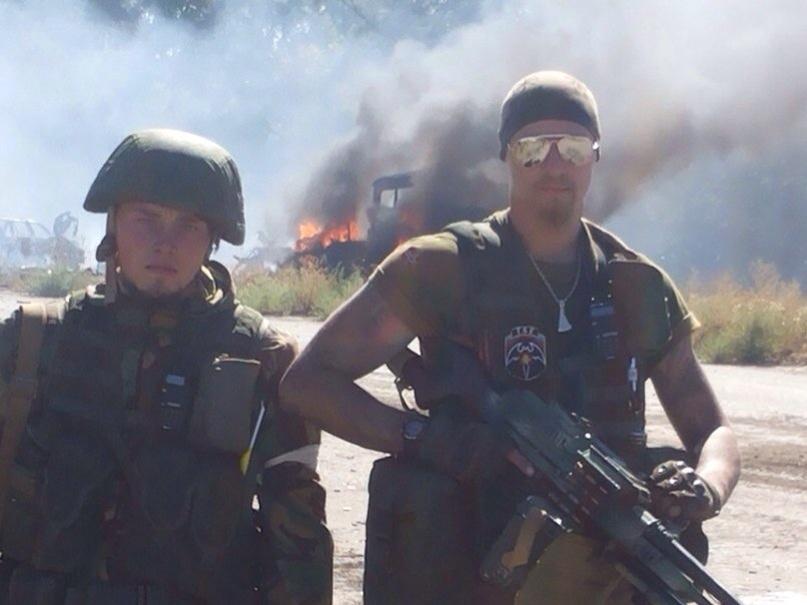
Source: elise.com.ua Please click on Source link for full photos, please note these are for 18+ only.







 Voices of Ukraine