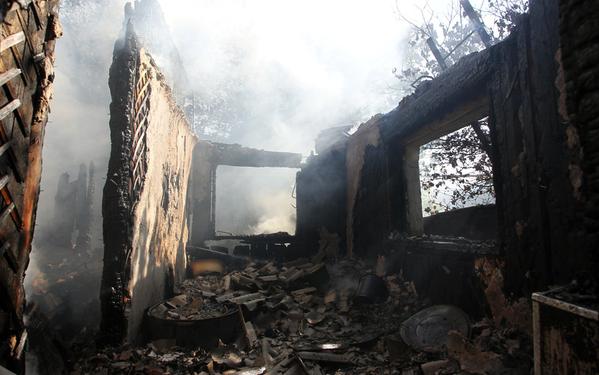
Dmitry Tymchuk: Military update 5.20 #FreeSavchenko

information_resistance_logo_engDmitry Tymchuk, Head of the Center for Military and Political Research, Coordinator of the Information Resistance group, Member of Parliament (People’s Front)
05.20.2015
Translated and edited by Voices of Ukraine

Operational data from Information Resistance:

During the past 24 hours, a sharp surge in the activity of Russian-terrorist forces has been recorded in Donbas. The number of fire strikes on the positions of ATO forces has increased; illegal armed groups have also made several unsuccessful attempts to break through the defense of the Ukrainian troops.

Russian troops and the terrorists fired from 152- and 122-mm artillery systems, 82-mm and 120-mm caliber mortars. They also used tanks, armored vehicles, all kinds and types of both light and heavy infantry weapons. In addition to the positions of ATO forces, the terrorists launched aimed fire onto [civilian] settlements.

The situation is heating up in the Artemivsk direction, where new insurgents units were earlier deployed to the flanks. During the past 24 hours, terrorists have fired at Ukrainian positions near Shyroka Balka, Luhanske, Zolote, Katerynivka, and Svitlodarsk.  

The situation in the area has been aggravated between the settlements of Popasna and Orikhove. Positions of Ukrainian troops and their strongholds succumbed to massive mortar and artillery bombardment practically along the entire length of this area, including the town of Popasna and the village of Katerynivka. During the long firefight with the ATO forces division defending Katerynivka, terrorists from the “Pryzrak” [Ghost] gang made an unsuccessful attempt to surround the stronghold from the flanks. Ukrainian troops promptly identified and stopped the advancement of the infantry units of this illegal armed group.

Russian-terrorist forces have escalated in the vicinity of ​​Hranitne, Novohryhorivka, and Starohnativka. The positions of Ukrainian troops were repeatedly fired at with 82- and 120-mm mortars and Zu-23-2 anti-aircraft twin-barreled autocannon. Four BMP-2 fired at a stronghold of the ATO forces from standard weapons in the vicinity of Trokhizbenka and Sokilnyky.

Shellings and firefights have also been recorded near Avdiivka, Krasnohorivka, Pisky, and Mariinka. A sharp increase in enemy sniper fire has been observed in several areas at once.

On movements of units and military equipment:

At least two 11-12-vehicle convoys with covered transport have been recorded moving through Luhansk towards Krasnodon and Rovenky. Later, another convoy of 20 vehicles, including three buses with armed personnel, has been observed heading in the same direction.

Transfer of military equipment, weapons and ammunition for the needs of insurgents continues through the railway stations of Krasnodon and Ilovaisk. The arrival of eight tarped platforms with tracked vehicles has been observed in Ilovaisk.

The transfer of four units of TOR-M1 surface-to-air missile systems and radar reconnaissance systems has been recorded in the area between Yenakijeve and Horlivka. The relocation of air defense systems (currently in the service of the Armed Forces of the Russian Federation) was carried out without any disguise.

The movement of a mixed “mechanized infantry” company of insurgents with 14 ACVs has been observed on a highway between Starobesheve and Telmanove.

A group of Russian-terrorist forces in the vicinity of the Yasynuvata junction has been reinforced with two T-72 tanks, six BMP-2, two MT-LB and a “Strela-10” SAM within the past 24 hours.

In addition, a significant movement of motor vehicles within Donetsk, mainly in the Kyivskyi and Petrovskyi districts of the city, as well as south of Luhansk between Dokuchajevsk and Olenivka has been observed.

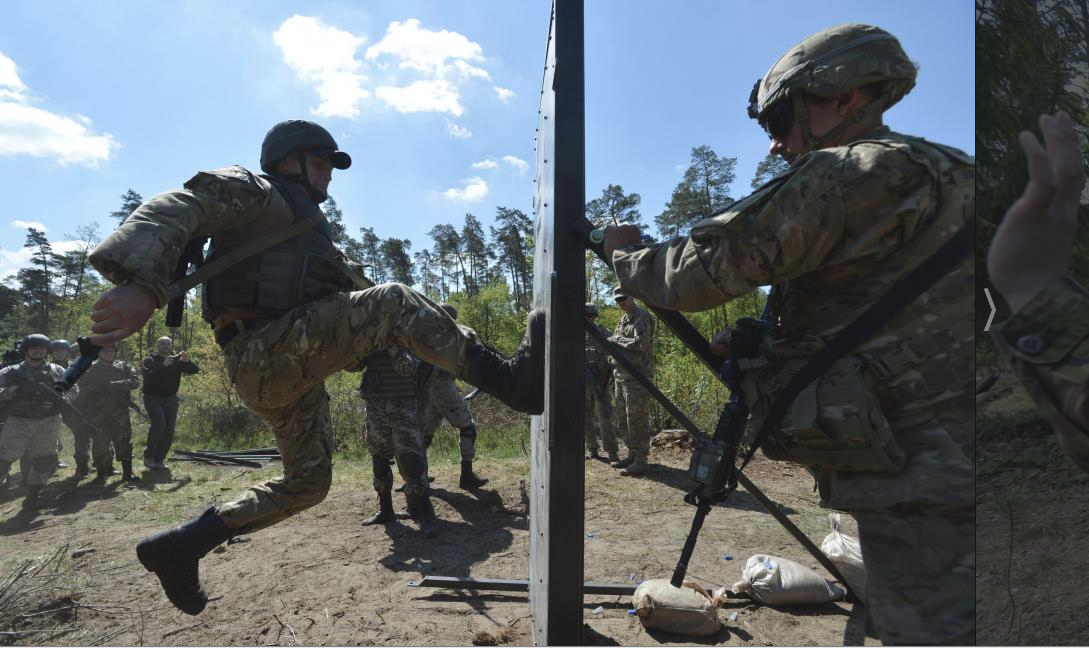
A serviceman of the U.S. Army's 173rd Airborne Brigade Combat Team (R) trains Ukrainian soldiers during a joint military exercise called 'Fearless Guardian 2015' at the military training area in Yavoriv, outside Lviv, Ukraine, May 12, 2015. REUTERS/OLEKSANDR KLYMENKO. Source.

A serviceman of the U.S. Army’s 173rd Airborne Brigade Combat Team (R) trains Ukrainian soldiers during a joint military exercise called ‘Fearless Guardian 2015’ at the military training area in Yavoriv, outside Lviv, Ukraine, May 12, 2015. REUTERS/OLEKSANDR KLYMENKO. Source.

Source: Dmitry Tymchuk FB  

Posted in Dmitry Tymchuk, English, English News, South&Eastern Ukraine, War in Donbas | Tagged , , , , , , , , , | Leave a comment

Defense Attorney Feygin: By saving Savchenko, we’ll be able to solve other prisoners’ problems. #FreeSavchenko

By Anastasiya Ringris, Ukrayinska Pravda
05.13.2015
Translated and edited by Voices of Ukraine

On May 11, 2015, aviatrix Nadiya Savchenko spent her birthday in the “Matrosskaya Tishina” detention center.

A weekend. No gifts or visits.

Shortly before this, her case was separated from a general case on war crimes in Donbas, which includes about 60 defendants, including [Ihor] Kolomoisky [former Governor of Dnipropetrovsk region], Arsen Avakov [the Minister of Internal Affairs], Valery Geletey [former Minister of Defense], and the commanders of volunteer battalions.

Despite a decision by the European Parliament calling for Russia’s release of the PACE delegate Savchenko, the Investigative Committee of Russia has extended the investigation for six more months.

International pressure, including the activity of the Committee on Foreign Affairs of the U.S. House of Representatives, which approved the new text of a resolution regarding Savchenko, indicates [that there will be] a new round of sanctions against Russia and its officials.

But it seems few people care about this in the Kremlin.

Mark Feygin, the defense attorney for the Ukrainian pilot, says that everyone involved in Savchenko’s case in the Kremlin and at the detention center are well aware that the case of the Ukrainian pilot is a farce, but continue to play their designated roles.

We met with Mark Feygin on Ostrozhenka Street [in downtown Moscow].

An infamos lawyer, known as a defense counsel to Pussy Riot, he is waiting outside. With a nod, he invites [me] to a completely deserted “Geraldine” restaurant.

Feygin looks like he is ready to defend his clients beyond the limits of the law. He is wearing Neo’s sunglasses from “The Matrix.” And he feels like a member of the resistance movement against the “system.”

He talks quite casually about wiretapping and the fact that he might end up being suspected of extremism.

“Savchenko’s case could be my last. But I am ready for any turn of events. I have defended a lot of people, and I know that I will be revenged. They will kill everyone,” said the lawyer, narrowing his eyes.

It seems that he is referring to the nationalists, with whom he keeps in touch. He did represent the founder of the “Combat Organization of Russian Nationalists” (BORN) Ilya Goryachev alongside with Nikolai Polozov.

Tell me, when was the last time you saw Nadiya? How is she feeling?

– We met on Friday, May 8th [2015]. She feels good.

Originally, she was a sturdy woman, not at all frail. Her weight fluctuated between 75-77 kg [165-169 lbs] and now she weighs 52 kg [114 lbs]. This is a direct result of her hunger strike.

At the moment, her body is truly unable to digest food. Even though she is now fed liquid foods. Her peristalsis [muscular contraction that moves the food down esophagus] has been disrupted, and her esophagus and stomach are not prepared to digest solid food after so many days of hunger strike. She will have to spend a significant amount of time to restore her health back.

Recently, you visited Washington D.C. to meet with the U.S. congressmen regarding Savchenko’s case. Can you share the results of your trip?

– This is my second trip to the U.S. on behalf of Savchenko. I met with congressmen and senators, mostly from the Ukrainian caucus, which works closely with the Ukrainian diaspora in the United States. A dozen congressmen and several senators attended the meeting.

We were received at the highest level. Maria Ivanovna Savchenko (Nadiya’s mother) and myself met with Samantha Power.

Nadiya's mother Maria with Samantha Power, April 22, 2015. Source.

Nadiya’s mother Maria with US Ambassador to the UN, Samantha Power, April 22, 2015. Source. Readout of meeting.

There were informal meetings to discuss a political program of support to Savchenko. All these meetings took place to ensure that the resolution passed all stages of ratification.

What will it accomplish?

– It will [officially] name Savchenko a prisoner of war. Because the term hostage is still being used to define her status.

The Geneva Conventions and Additional Protocols definitely characterize Nadiya as a prisoner of war. With this status, any proceeding in Russia’s general courts will be impossible.

I think this is one of the ways to release Savchenko.

How strong is Savchenko’s lobby? What do the Congressmen say?

– They all understand that Savchenko is not guilty, they realize that she has become a part of political bargaining. They maintain a pro-Ukrainian position on Crimea and the persons who were illegally transported to the territory of Russia.

Do you have the exact figure, how many Ukrainians are now held in detention centers on the territory of Russia?

– Around 10 people, and according to my unconfirmed reports, up to 30 people.

These could be soldiers, operatives of Ukrainian special services, because I know that there are espionage charges [against them].

Every time we are confronted with new information. And completely random people.

For example, a retiree who went to visit his acquiantances in Crimea and got detained. Mykola Karpyuk, one of the leaders of the UNA-UNSO, who was detained on March 6 at the border with the Bryansk region, is currently in Vladikavkaz. It is very difficult to get to Karpyuk right now. We are working on it.

Plus a case of Crimean “terrorists” ­­– Sentsov, Kolchenko, Cherniy, and Afanasyev. Cherniy and Afanasyev, who cooperate with the investigation, were sentenced to 7 years. Sentsov [the filmmaker] faces up to 20 years. These detainees are under the FSB investigation, which has a military court jurisdiction starting this year.

With which Ukrainian agencies do you work on Savchenko’s case? How effective is this work?

– [We work] with relevant government agencies on both the legal as well as political issues. We get the documents for Savchenko’s case from the investigation carried out by the SSU [Security Service of Ukraine] in Kyiv.

All evidence of [her] innocence, obtained by investigators in Kyiv, we managed to cite in her case. The most critical [part] has been done – the cell phone billing data prove that she was captured two hours before the death of the Russian journalists.

This evidence is absolutely exhaustive. We have officially submitted it to the Prosecutor General’s Office of Ukraine in accordance with the legal aid agreement.

In addition, we submitted interrogatories of Savchenko’s colleagues – Siyneovskyi, Gvozdykovskyi, and her sister Vira Savchenko, who was a participant of those events and was also captured.
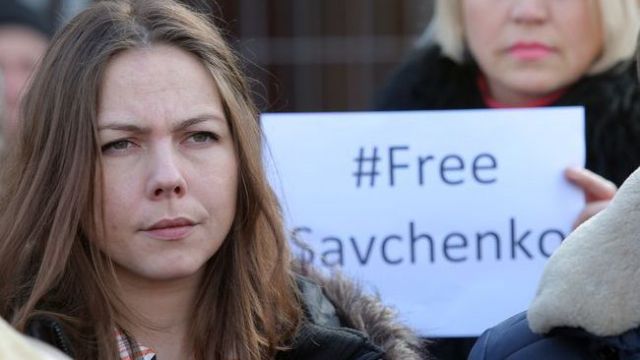
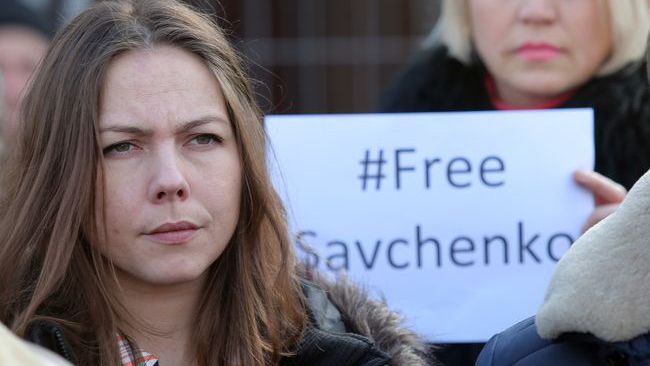
Vira Savchenko at a rally. Photo: Artem Slipachuk, The Day.

Vira Savchenko at a rally. Photo: Artem Slipachuk, The Day.

Moreover, we received documents regarding Moretskiy, who claimed that Savchenko abused him. The billing of his cellphone that we received [conclusively] proved that at the time he was beaten by Savchenko according to his version of events, she was at a military unit in Brody [town in Sumy region, eastern Ukraine].

Everyone understands that there is no corpus delicti in the actions of Savchenko. Her case consists of 24 volumes each 300 pages long.

What does the investigation charge her with? How do they word it?

– The final version lists three charges. The first charge is aiding and abetting in the murder of two and more persons. The investigators have now removed the wording that the individuals were killed while performing their professional duties.

The second charge is attempted murder, alleging that she wanted to kill five civilians from Aidar [Battalion’s] firing positions. They did not die but escaped from the place [she] fired at and thus survived.

The wording implies that Savchenko allegedly climbed a 40-meter match in the vicinity of Stukalova Balka [Luhansk region], and from there, she observed the village of Metalist from binoculars and adjusted artillery fire. At that very same time she was held captive at the military office of the Zarya battalion [of the Luhansk People’s Republic], as evidenced by the billing.

The third charge is the illegal crossing of the state border. Allegedly, Savchenko was released by the Zarya militiamen on June 23, 2014, and then she independently entered the territory of Voronezh region [of Russia], where she was detained.

Understanding well the political context, in your opinion, what are the realistic scenarios of the development of events?

– This is not a procedural, legal case, but rather an exclusively political matter.

If it were decided in a procedural manner, the independent court – like an arbiter – would have let her go a long time ago based on the multitude of exculpatory evidence of her innocence.

But there is some political will of Putin’s to bring this process to an end and convict Savchenko. This will is so severe that there’s no other way.

It is quite easy to understand this case. It is obvious that Nadiya Savchenko, and not only she, has become a hostage of Russia.

They can no longer release her just by law. Because then, by law, nobody would have annexed Crimea.

You are criticized for excessive publicity of this case. If it had been less public, would other solutions have been possible? Perhaps at some point it was possible to win back the situation?

– I was criticized for interfereing with procedural matters to prove Nadiya’s innocence. While Russia illegally took over the function of universal [court of] justice, undertaking to judge a crime committed on the territory of another state.

Yes, Article 12 of the Criminal Code [of Russia] allows them to proceed when it comes to crimes against Russian citizens and the interests of Russia.

That is, the critics insisted that we needed to maintain that Russia had violated the jurisdiction, because it was not clear [at the time] whether Russian citizens were the object of her assault. In addition, Nadiya was fulfilling her oath and her duty, and theoretically could have been involved in the death of some people as a servicewoman.

We chose a different strategy – an active proof of her innocence.

What can such a strategy lead to, if you say that Putin has taken a resolute decision to imprison Savchenko at any cost?

– Putin wanted to use Savchenko as a propaganda tool. But the tool has appeared to have an opposite effect.

Absolutely everyone will know that she is not guilty, regardless of the court decision. Our publicity and openness have accomplished this.

It’s such an omerta, a conspiracy. Everyone knows that she is not guilty, but everyone will keep quiet and pretend that she is.

They [the authorities] will act as if something is being resolved here, that justice exists. And my strategy is to call white, white, and black – black. There is no justice in Russia, and I say it as it is.

I’m not trying to play along with the Russian authorities in their decorative productions. I’m not trying to play their games. And I try not worry about my future.

The paradox is that this is the only way to help Savchenko.

At the same time, the case of Oleg Sentsov is now in production. Can you say that it attracts this much attention? Can you imagine, that he was initially charged only with arson of the office door of “United Russia?!” That is not enough even for a disorderly conduct charge.

And now there is every chance that he will get 20 years.

What is the mistake of Sentsov’s defense team? The fact that they failed to make the process so public? What else can be changed?

– Nothing. It is too late. I refused to sign a case non-disclosure agreement. But Sentsov’s defense counsel did.

Until July 9, 2014, Nikolay Shulzhenko was Savchenko’s attorney, but no one knew that she was in Russia. On July 10, I got a call from the Ministry of Foreign Affairs of Ukraine, and they sent me a [legal services] agreement after our conversation. I am part of this case since July 11, 2014. A few days later, I asked Nikolai Polozov and Ilya Novikov to join, they are strong “proceduralists.” I am in charge of the [case] strategy.
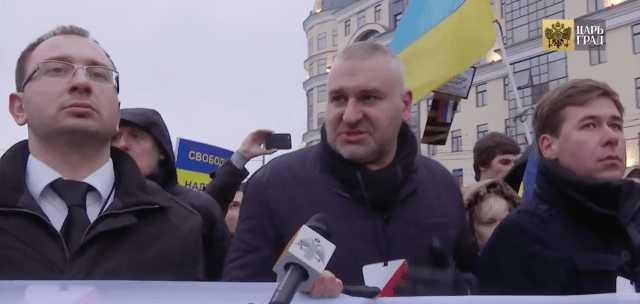
Savchenko defense team lawyers Nikolai Polozov (L) and Ilya Novikov (R) flank Mark Feygin at March 1, 2015 Nemtsov/Savchenko rally in Moscow.

Savchenko defense team lawyers Nikolai Polozov (L) and Ilya Novikov (R) flank Mark Feygin at March 1, 2015 Nemtsov/Savchenko rally in Moscow.

So, if you were to go back to scenarios of the development of events, which ones are the most realistic in your opinion?

– This is a very good scenario under current conditions. She will be convicted, but the provisions of the Criminal Executive Code [of Russia] allow her to serve the sentence on the territory of Ukraine. She will be transported [back], and she will serve her sentence in Ukraine.

Recently, [Angela] Merkel has talked with Putin, and I am 100% sure that the question of Savchenko was part of that conversation.

The more Western leaders talk about it, the more likely the scenario I told you will come true.

The bad scenario is if she is convicted, and she will remain here to serve [her sentence]. She is not ready for this.

Nadiya during her May 11, 2015 court appearance. Screenshot from Hromadske.TV coverage.

Nadiya during her May 11, 2015 court appearance. Screenshot from Hromadske.TV coverage.

During the ten months working on this case, what were you able to understand about the system, the prospects, or your client?

– For me, Nadiya has become a symbol of rebellious Ukraine before Imperial Moscow. For me, Ukraine in general is associated with a woman.

What is the sacred meaning of this situation?

Savchenko is the essence and the face of the new Ukraine.

She has never been to Russia. She is part of a generation that has matured in independent Ukraine. They did not know the Soviet Union.
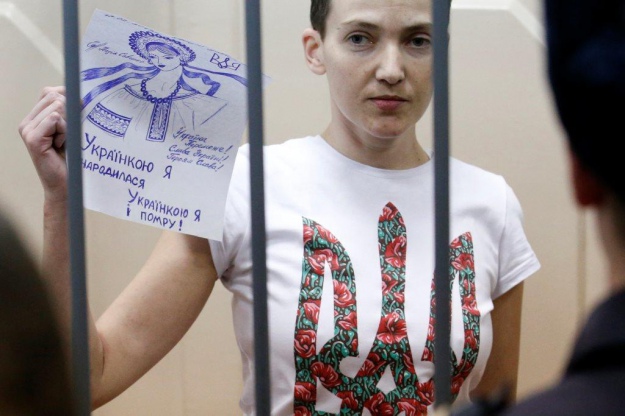
Nadiya has spent 24 years out of her 34 year-long-life in independent Ukraine. She has found her identity there.

She does not consider herself a part of the ‘brotherly people.’ She is a Ukrainian. And this is not a pose as [those] in Russia read it – it is her essence.

She, in every sense, parallels the popular image of a Ukrainian woman. She is quite suitable to the role of the wife of an UPA [Ukrainian Insurgent Army] fighter.

Her character is impulsive, energetic, and restless. A true Ukrainian woman is exactly like this.

Many misjudge her, believing that a female is something unnatural in the army. She is very feminine in her strength.

She is interested in things of purely female nature no less than military things.

Nadiya adheres to traditional Ukrainian views. She is a person of free beliefs. It is wrong to call her a Ukrainian nationalist. She is an anti-Communist, a person of free opinions, but she treats the liberal-left phenomena like Pussy Riot and Femen with skepticism.

She is very straightforward. She holds out nothing. She sometimes asks me fearfully, “And what will happen when I am released? How will I bear it all?” “You will endure [it] because you can,” I tell her. And she says, “And what if I suddenly don’t justify the trust?” Then you don’t justify the trust. Freedom – is a risk. I will defend her for as long as the [legal] process lasts.

I understand that this might be my last case. The FSB tell me that they are very unhappy with my behavior. They are looking into extremism charges [for me]. They do not want me to practice legal defense and [take on] major political cases …

You and Nikolai Polozov defended Pussy Riot. It was also a high-profile case, and you have been criticized for publicity, for excessive PR. Two years after the women’s release from a colony, Pussy Riot died as a phenomenon.

– Unlike Savchenko, Pussy Riot had no substance.

Their act was larger than themselves, just like many Russian commentators said. They just changed their clothes and colored their hair.

But the publicity also helped them. They, just like [Mikhail] Khodorkovsky, were allowed by Putin to go to the Sochi Olympics.

I envision that by saving Savchenko alone, there will be an opportunity to solve the problems of all the others.

I do not know what her future will be like. It is quite possible that when she gets back, she will create an organization for the protection of Ukrainian prisoners, she will go to the meetings at PACE and the Verkhovna Rada [Ukrainian Parliament] …

What, in your opinion, is Putin seeking by holding Ukrainians hostage?

– There is no logic nor elements of a crime in these arrests. It is an absolutely irrational decision. Putin has fear. And that is what motivates him to compromise.

When we worked on the Arctic Sunrise case, at one point I was told that it was necessary to withdraw from the case, and there will be some result. And so Putin dismissed the guys at the request of the President of Norway. And this gesture took place in time for the days of Russian culture in Norway.

American [Presidential] administration must get involved in Savchenko’s defense. Because the Normandy format does not seem to work, and we need the Geneva solution.

Putin himself really wants a new Yalta-2.

Of course, no one will negotiate with him about the redistribution of the world. The most that he can achieve – are negotiations. This does not mean that they will recognize the annexation of Crimea or give Donbas back. Even Merkel said there had to be a dialogue. Things will not resolve themselves.

Ukraine still needs to integrate into Europe. There is no other way. And if it needs to make territorial concessions, then it is must make them. Play long-term, not short-term.

If you play short-term, you’ll stay in this state for a long time. It is necessary to improve life now, to set an example of positive reforms.

I tend to think that the military atmosphere [in Ukraine] is good for reforms.

And what about Russia?

– There is no project in Russia. Crimea and Donbas are clear-cut stand-ins. If you look at the rate of emigration by the so-called creative class from Russia, the future looks bleak. All this social tension is unlikely to infuriate in an adequate manner. You see, Russia is now in such a state that it is quite easy to imagine Ramzan Kadyrov [Chechen dictator] as the new prime minister.

Kadyrov’s appointment could become the trigger. Or the second option – a social explosion caused by the economic decline. It is most likely that we can expect our own Donbas in Moscow.

I intend to stay and watch how everything will go down. I will be at the forefront. Pure eschatology.

Gold currency reserves are diminishing. I feel like saying to those who support the annexation of Crimea, “There will be no bridge in Kerch [one of the largest cities in Crimea].”

You were a member of [Russian] Parliament and stay in close contact with the opposition. Do you see them as a real force that could push society towards a new quest, an attempt to revise the [existing] social contract?

– I think that by my actions and words alone, I influence so much more. My role is a separate one. I was promoted to the Moscow City Duma.

I do not participate in coalitions; I consider them meaningless. At the moment, it is an imitation, flirting with the system.

The [legal] process of Savchenko and everything connected with it – the war in Ukraine and the drama of Crimea, they are much more important.

This process creates more new meanings than participation in regional elections in Kaluga or Novorossiysk [cities in Russia].
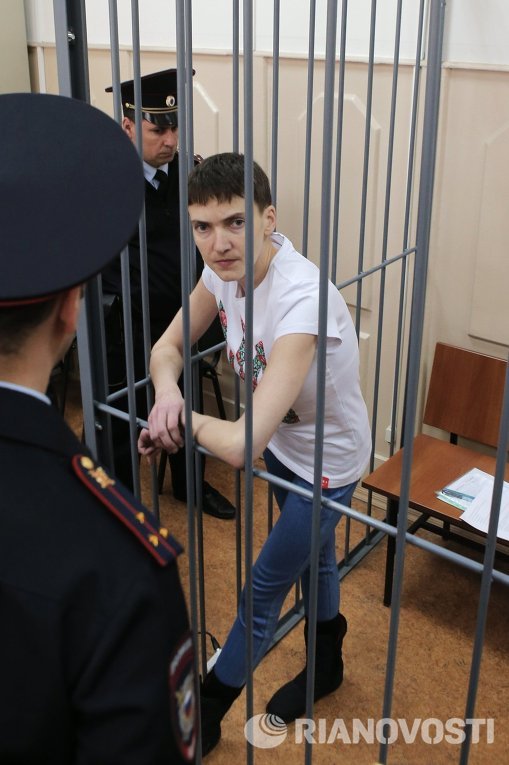
RiaNovosti archival photo.

RiaNovosti archival photo.

Source: Pravda.com.ua
Posted in #Free Savchenko, English, English News, Eyewitness stories, News, Pictures, War in Donbas | Tagged , , , , , , , , , , , , , | 2 Comments

Dmitry Tymchuk: Military update 5.19 #FreeSavchenko

information_resistance_logo_engDmitry Tymchuk, Head of the Center for Military and Political Research, Coordinator of the Information Resistance group, Member of Parliament (People’s Front)
05.19.2015
Translated and edited by Voices of Ukraine

Operational data from Information Resistance:

Russian-terrorist troops in Donbas continue using heavy infantry weapons to shell the positions of Ukrainian troops and civilian objects (including heavy automatic grenade launchers, mortars, large caliber machine guns), also operating artillery systems.

In the seaside (Mariupol) direction, insurgents shelled the positions of Ukrainian troops near Shyrokyne using several 82-mm mortars similar to 2B9 “Vasilyok.”

Insurgents used the same weaponry to fire at positions of Ukrainian troops in the vicinity of Opytne and Vodyane.

Terrorists fired at the positions of Ukrainian troops near Mayorska station and the settlement of Avdiivka from 82- and 120-mm mortars.

In the vicinity of Pisky, Krasnohorivka, and the Butovka mine, insurgents actively use AGS-17 “Plamya” automatic grenade launchers and large-caliber machine guns similar to “Kord.” During shelling, the movement of several terrorist groups (up to 20-25 people each) has been observed in the direction of the Petrovskyi district of Donetsk.

Terrorists shelled Pisky, injuring two pensioners. Source.

Terrorists shelled Pisky, injuring two pensioners. Source.

In the vicinity of Luhanske, Lozove, Myronivskyi, Zolote, and Leniniske, terrorists are actively shelling the positions of Ukrainian troops from mortars (120-mm and 82-mm caliber) and other weapons (AGS-17 automatic grenade launchers, heavy machine guns NSV-12.7, “Utes,” and “Kord”; use of anti-aircraft cannons ZU-23-2 has been observed). The insurgent fire-strike groups are well coordinated in the Artemivsk direction.

Terrorist sabotage and reconnaissance groups continue to operate in the vicinity of Novotoshkivske ­­– Krymske and ShchastyaStanytsia Luhanska, supported by intense mortar and artillery unit fire. Also, the command of the Russian-terrorist forces does not cease attempts to make a breakthrough on the right flank of this stretch. All actions by insurgent gang formations are thwarted by ATO forces’  response fire.

Another enemy sabotage and reconnaissance group (up to 15 people) has been identified, during their attempt to infiltrate the tactical rear of Ukrainian troops, by combat outposts of the ATO near Troitske. The enemy sabotage and reconnaissance group made a tactical retreat as a result of the armed confrontation, returning to the territory controlled by terrorists.

There is a growing movement of terrorist formations at the forefront near Hranitne. Also, several fire strikes at positions of Ukrainian troops in the area have been observed (mostly from mortars and small arms) to cover up the regrouping of forces.

East to the MalomykolayivkaMyrneUspenka highway, insurgents launched several “combat training centers” and at least two reinforced battalions (one of them – a tank battalion). Large numbers of armored vehicles and artillery have accumulated in the area (up to 25 tanks (T-64 and T-72), 38 armored combat vehicles (various types, including BMP-1, BMP-2, and BMP-97 “Vystrel”), 22 MLRS, 16 cannon artillery guns (mainly D-30 howitzer), and 12 units of self-propelled artillery (howitzers 2S1 “Gvozdika” and 2S3 “Akatsiya”).

During the last 24 hours, we recorded approximately 40 insurgent vehicles moving throughout the occupied area. These were mainly individual cars or small (2-3 vehicles) supply convoys, and in less frequent instances, up to 5 vehicles. Cargo transport was moving the most actively in the vicinity of Luhansk and north of it, as well as from Krasnodon and Sverdlovsk towards Luhansk, Krasnyi Luch, and the Donetsk “hub.”

The following convoys merited particular attention:

– a motor convoy of 12 vehicles between Lutuhyne and Krasnyi Luch. The convoy included several specialized machinery units (one PZM-2 regimental ditching  machine, two IRM engineer reconnaissance vehicles, one BAT-2 trail builder, and one E-305 military excavator). The convoy proceeded in the direction of Debaltseve.

– on the Donetsk – Luhansk highway, in the vicinity of Yenakijeve (near the turn to Shakhtarsk), we spotted a convoy of 4 thoroughly tarpaulined trailers (according to our preliminary data, they were transporting TOR-M1 anti-aircraft missile systems), plus three trucks, and an escort of two BTR-80 armored personnel carriers.

Movement of armored vehicles and personnel:

– Four insurgent tanks and two BMP-2 infantry fighting vehicles were spotted transferring to the area east of the Yasynuvata junction. The armored vehicles took camouflaged positions.

– Mortar details continue transferring to the Spartak area. Terrorists are using motor vehicles en masse: for lateral transportation of their personnel and equipment, as well as to rapidly increase the mobility and maneuverability of their firing groups. The prevailing majority of insurgent firepower with the highest resistance intensity has now been mounted on mobile platforms (mainly on trucks).

– A part of the insurgent armored group that had previously operated between Pervomaisk and Stakhanov has moved in the direction of Donetske and Frunze (the group includes 6 tanks and 6 armored combat vehicles). An insurgent group from Alchevsk (up to 80 personnel, on board of tanks and ACVs) was spotted in the vicinity of Bryanka.

– A terrorist infantry unit was transferred from Starobesheve to the vicinity of Olenivka (a total of up to 50 personnel, with two 120-mm mortars, three trucks, two BTR-80 APCs and two BMP-2 infantry fighting vehicles).

– The terrorists are rotating their units in a number of areas in the Seaside (Mariupol) sector. Several groups of Russian mercenaries (up to 250 personnel organized in several “units”) arrived [in this sector] from the north and from Russia.

Source: Dmitry Tymchuk FB  

Posted in Dmitry Tymchuk, English, English News, South&Eastern Ukraine, War in Donbas | Tagged , , , , , , , , , , | Leave a comment

Dmitry Tymchuk: Military update 5.18 #FreeSavchenko

information_resistance_logo_engDmitry Tymchuk, Head of the Center for Military and Political Research, Coordinator of the Information Resistance group, Member of Parliament (People’s Front)
05.18.2015
Translated and edited by Voices of Ukraine

Operational data from Information Resistance:

Russian-terrorist troops continue to carry out armed provocations and shellings of the positions of ATO forces and settlements located on the territories under Ukraine’s control.

In the vicinity of Pisky and Avdiivka, illegal armed groups pushed forward several infantry groups under cover of fire from 82-mm and 120-mm mortars and inflicted a massive fire attack from small arms, including large-caliber machine guns, and then moved to the starting line under cover of mortar fire. This provocation was immediately followed by shelling of the specified area from ​​a 122-mm cannon artillery.

Intense small-arms firefights have been recorded near the settlements of Luhanske, Sokolniki, Hranitne, and Mayorska station. Terrorists thereby probe the density of defense and fire cover at the front end of the ATO forces. Sniper-pairs of insurgents fire at observation posts and the posts of ATO forces in the vicinity of ​Krasnohorivka and Mariinka.

The activity of armored groups of Russian-terrorist forces has been observed between the settlements of Mariinka and Shumy. In the vicinity of ​​Troitske, terrorists on three BMP-2 with the support of the AGS-17 attacked the positions of a stronghold of Ukrainian troops. With heavy machine gun fire, insurgents attempted to prevent the entry of Ukrainian ATGM detachments to a counter attacking tactical group of insurgents. After opening return fire, the armored group of an illegal armed gang quickly moved behind their left flank.

In the seaside direction, an armed confrontation between advanced units of Ukrainian troops and an infantry group of terrorists has been observed between Chermalyk and Pavlopil. Insurgents tried to drive Ukrainian soldiers out of their positions. The attack was repulsed with return small arms fire.

Short gunfights have been recorded near ​​the settlements of Svitlodarsk, Krymske, Donetske, and Shchastya, which resulted from tactical movement (rearrangement) of opposing forces and equipment at the forefront, as well as actions by sabotage and reconnaissance groups and raid teams.

Russian terrorists continue to conduct active radio and aerial reconnaissance of combat formations of our troops. Use of UAVs has been observed near the left flank and the rear of the sector “A” (including drones coming from the Russian Federation), and in the seaside direction (north-east of Mariupol). Local observers reported the set-up of a radio intelligence station to the south of Donetsk, near the settlement of Olenivka. Another radio intelligence station has been discovered when moving from Yenakiieve to Horlivka.

On the movement of military units and equipment:

During the past 24 hours, the movement of 38 vehicles has been recorded mainly near Luhansk and Donetsk. The main area of equipment transfer were in the directions from Krasnodon and Rovenky towards the north (Luhansk), between Luhansk and Lutuhyne, from Alchevsk and Perevalsk towards Stakhanov and Pervomaisk, from Debaltseve towards Horlivka. Inside the Donetskhub,” transfers primarily across from the frontline have been observed between the Petrovskyi and Kyivskyi districts of Donetsk; also, a supply convoy of up to 13 vehicles, including refueling tankers and mobile repair shops have been recorded.

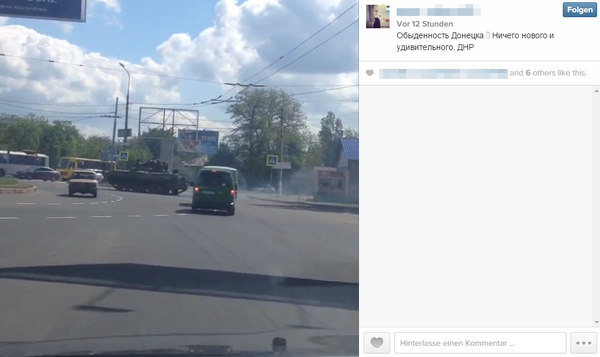
Russian army on the move in Donetsk today. "The commonness of Donetsk. Nothing new or awesome. DNR." Source.

Russian army on the move in Donetsk today. “The commonness of Donetsk. Nothing new or awesome. DNR.” Source. 

Increased traffic has been observed between Starobesheve, Ilovaisk and to the south (mainly single vehicles or small 2-3 vehicle convoys), also vehicles loaded with boxes of ammunition were observed moving in the direction of Dokuchajevsk.

The “Prizrak” [“Phantom”] gang that arrived in Alchevsk earlier (up to 80 people, about 6-7 armored combat vehicles and 3 trucks) departed to the northeast. The gang is expected to arrive in the NovotoshkivskeDonetsk stretch.

The arrival of four self-propelled artillery units has been observed at the rebel positions north of Makiivka.

The presence of two reinforced terrorist battalions has been recorded in the area between the settlements of Vesela Hora and Mykolaivka northeast of Luhansk. Battalions include 22-24 tanks, 46-48 armored combat vehicles, several smaller units with light armored vehicles (up to 25 units), 25 cannon artillery units and 16 MLRS; battalions are regularly reinforced with equipment and personnel.

In the second echelon of Russian-terrorist troops, integrated units staffed with Russian servicemen have been observed (their number fluctuates, on a regular basis, there are up to 1,000 people). Luhansk is practically the supply base for the rear. Given the task force concentrated near Slovyanoserbsk (also up to a reinforced battalion in size with 12 tanks and 25 ACVs), it is important to note the concentration and deployment of an integrated insurgent brigade north of Luhansk.

Terrorist units operating in the direction of Stanytsia Luhanska and Shchastya are managed and coordinated by a single command post; the advanced observation post has been observed near the settlement of Obozne.

Mobilization of Russian-terrorist units continues in the seaside direction. Insurgent command is trying to accumulate its tactical reserve for the units fighting in the area of Shyrokyne, near Bezimenne and north of it. Another integrated battalion tactical group of terrorists is concentrated across from Pavlopil and Chermalyk. It includes 14 tanks, 26 ACVs with infantry, and a large number of vehicles. This unit operates in the vicinity of Shyrokyne on a rotating basis.

Reinforced tactical insurgent groups, part of two battalion tactical groups, are deployed in the Petrovskyi district of Donetsk, in Spartak, and in the north-western part of Horlivka. Most of the armored vehicles got pulled back and are gathered in a few parks for combat vehicles, mainly on the territory of industrial plants or logistic terminals. Periodically, this military equipment gets deployed to the frontline in small batches.

Social and political situation:

During the past 24 hours, the excitement over the alleged “closure of a supermarket chain “Brusnichka”” has been observed on the occupied territory. Buyers literally swept everything off the shelves.

After a series of firefights between sabotage and reconnaissance groups from the “Prizrak” gang and Ukrainian units in the vicinity of Krymske, Donetsk, Novotoshkivske and the 29th checkpoint, up to eight transports of wounded insurgents, mostly with bullet wounds, have been admitted to hospitals in Stakhanov and Alchevsk over the course of a few days.

A significant number of looting “militiamen” from disbanded or “eliminated” formations has been observed on the stretch between Snizhne and Donetsk (Torez, Shakhtarsk, Zugres). Looters who have no centralized leadership and means to leave the area of ​​the ATO, gather in gangs that rob and plunder. Local “commandant offices” of terrorists have repeatedly attempted to eliminate them, but to no avail.

The military command of the “LNR” [Luhansk People’s Republic] has firmly decided to combat alcoholism among the insurgents. Drunkenness will now be punished with harsh disciplinary measures – arrest and some “socially useful” work, as well as newly instituted penalties – fines and reduction of cash allowances.

A fall in “earnings” has been observed in several armed gangs down to 1,500-2,000 Hryvnias [69-91 USD] a month. Several illegal armed formations have ceased payments altogether – the payment delay exceeds 2 months.

Source: Dmitry Tymchuk FB  

Posted in Dmitry Tymchuk, English, English News, South&Eastern Ukraine, War in Donbas | Tagged , , , , , , , , | Leave a comment

Dmitry Tymchuk: Regarding the “national-cultural autonomy of Bessarabia” #FreeSavchenko

information_resistance_logo_engDmitry Tymchuk, Head of the Center for Military and Political Research, Coordinator of the Information Resistance group, Member of Parliament (People’s Front)
05.17.2015
Translated and edited by Voices of Ukraine

Regarding the “national-cultural autonomy of Bessarabia:”

Yesterday, on May 16th in Odesa, the so-called “People’s Council of Bessarabia” held its second conference, at which they presented some “draft law on the national and cultural autonomy of the Bessarabian Region.”

This is a new round of the Russian special service’s activities on the territory of Ukraine. While preparing a large-scale offensive in Donbas, the Kremlin is also trying to ignite a “second front,” so as to destabilize the situation in the South as much as possible, and divert our defense forces and equipment from ​​the ATO zone. At the same time [the Kremlin] is testing the waters for further splitting Ukraine and stealing its territories using a third scenario (after the first two: the bloodless “Crimean scenario” and the bloody “Donbas” one). The proximity of a Russian military springboard in the form of Transnistria makes this scenario not at all unrealistic.

Infographic by The Economist

Infographic by The Economist

The newly-minted “Bessarabians” are not trying very hard to conceal the fact that they are controlled by Russia. The conference participants received a greeting from Moscow, by Alik Vetrov, one of the founders of the “People’s Council” and a Russian anti-Ukrainian activist known in Odesa, who stated, “Together with you, I will continue fighting for the bright future of Bessarabia!” There were several more infamous Russian lapdogs on the video call, including the former “Foreign Minister” of Transnistria Vladimir Yastrebchak. (It should be noted that Yastrebchak and Vetrov had long been proclaimed personae non grata by other states in the region that are conscious of their national security – for example, Azerbaijan.)

The “Bessarabians” also did not bother to hide the fact that the “draft law on the national and cultural autonomy of the Bessarabian Region” was written by people whose relation to Ukraine was tenuous at best. That paper slip is chock full of borrowed Russian words (e.g. the phrase listed in this Law translated as перелічені в цьому Законі [an amalgam of Russian and Ukrainian words] instead of перераховані в цьому Законі [correct Ukrainian translation]; the term aimed translated as направлених [Russian] instead of спрямованих [Ukrainian], etc.). If the Russian FSB [Security Service] lacks the wits and finances to pay a Ukrainian-speaking editor $10 to proofread their masterpiece – then I feel sorry for the degenerate agents of this Russian special services that operate under cover of freak shows like the “People’s Council of Bessarabia.”

No-one should let themselves be fooled by “camouflage” stunts such as spreading the statement about a “purely cultural autonomy of Bessarabia as part of Ukraine.” The purpose of this project is to use the cover of language- and culture-related messages to carve a whole region out of our state, and subsequently turn it into a quasi-state formation, much like the neighboring Transnistria. And it’s painfully obvious whose rule it will be under.

The fact that the “Bessarabians” (whose relation with another Russian project, the “LNR” [Luhansk People’s Republic] has been proven by the SBU [Security Service of Ukraine]) are listing tasks for the Verkhovna Rada [Parliament] of Ukraine in their “draft law” and are essentially trying to change the Constitution of Ukraine – that is, of course, a joke. But the real problem lies in the fact that this Russian initiative can actually receive support from certain demographics in the districts of the Odesa oblast listed in the “draft law” (areas that, according to Moscow’s design, should make up “Bessarabia”). The reason for that is simple – those districts are either partially or entirely outside the Ukrainian media field, and have no Ukrainian digital TV coverage (while the TV is the main source of information for the local residents), as the IR group has reported earlier. Instead, the locals spend years being brainwashed by Russian TV, broadcast from Transnistria, even though there is a technical capacity to rectify the situation (without significant costs to the state budget!). The IR group has access to relevant estimates made by professionals. But those are issues for the attention of our Ministry of Information Policy (I have already addressed a relevant query to Yuriy Stets [Minister of Information]).

Thus, seeds of hatred and separatism sowed by the FSB may fall on very fertile soil in the Odesa oblast. With all ensuing consequences…

Source: Dmitry Tymchuk FB  

Read more (in Russian):
http://dumskaya.net/news/narodnaya-rada-bessarabii-prodolgaet-provodit-so-046615/

(video) http://news-front.info/2015/05/16/molniya-v-odesse-narodnaya-rada-bessarabii-oglasila-proekt-avtonomii/

Posted in Dmitry Tymchuk, English, English News, Pictures, South&Eastern Ukraine | Tagged , , , , , , , , , | 3 Comments