Dmitry Tymchuk: Military update 6.08 #FreeSavchenko

information_resistance_logo_engDmitry Tymchuk, Head of the Center for Military and Political Research, Coordinator of the Information Resistance group, Member of Parliament (People’s Front)
06.08.2015
Translated and edited by Voices of Ukraine

Operational data from Information Resistance:

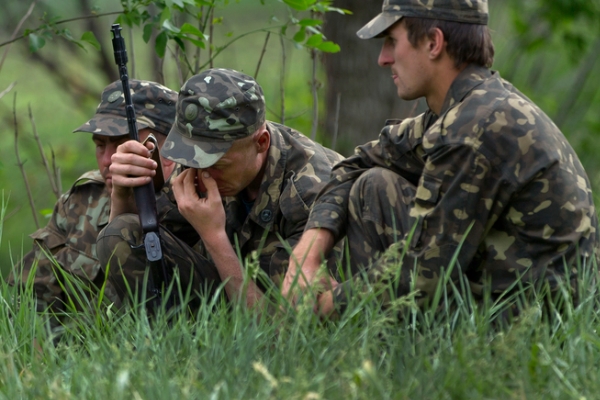
After a disastrous offensive in Mar’inka on June 3, Russian-terrorist forces in Donbas continue to operate in a number of areas along the confrontation line. According to the IR data, the offensive on Mar’inka was planned by the Russian-terrorist command and was supposed to become the beginning of a large-scale offensive towards the Kurakhovskaya thermal power station. For this purpose, terrorists transferred two reinforced “mechanized infantry battalions” and a tank group in addition to the previously accumulated forces to Donetsk before the offensive; one battalion went to the Petrovskyi district of Donetsk, another – to the north (the IR group has reported about these movements– the transfer of armored vehicles was carried out  in “preparation for Victory Day” on May 9, however, the armored vehicles remained in the Kyrovskyi district of Donetsk after the “parade”). Another artillery group has been transferred after the launch of the offensive.

During the past 24 hours, enemy sniper groups and insurgent sabotage and reconnaissance groups have become active near Mar’inka and Krasnohorivka, operating under cover of dense small arms and mortar fire.

In the vicinity of Pisky, Opytne, north of Avdiivka, near Shumy, the Mayorska station, terrorists have attacked from small arms, mortars, and cannon artillery. “Roving” tanks, IFVs, ZU-23-2 anti-aircraft auto cannons, and 82-mm mortars on transport platforms have been observed in these areas; 120-mm 2B16 “Nona-K” towed guns have been recorded in the Artemivsk and Luhansk directions (a battery in each direction).

In the seaside direction, insurgents have actively shelled from 120- and 82-mm mortars near ShyrokynePavlopil (elevations to the northwest and north of Shyrokyne); the latter were mainly used from mobile transport platforms. 122-mm artillery has also been reported (two batteries – up to eight weapons). Two enemy sniper groups have actively “operated” on the forward positions of ATO forces near Shyrokyne for several days in a row; these groups are well-trained.

In the vicinity of Novotoshkivka, Krymske, and Sokolniki, a “war by small groups” continues; sometimes insurgents used mortars and AGS-17 to cover the approach and retreat of their sabotage and reconnaissance groups. Shellings from heavy infantry weapons have been observed simultaneously with the activity of enemy sabotage and reconnaissance groups near Zolote and the Svitlodarsk springboard; occasionally, insurgents used armored vehicles – mainly tanks – to fire at the ATO forces’ forefront positions at dusk or in the dark, trying to make it difficult for ATO anti-tank systems to determine the distance and location of their firing positions.

In the vicinity of Shchastya, insurgents have actively fired from 120-mm mortars (two groups about which IR reported earlier). Under the cover of attacks, enemy “raiding groups” operated on the stretch from Vesela Hora towards Shchastya and Stanytsia Luhanska. A terrorist tactical group deployed near Obozne (a reinforced company in size) has used large-caliber machine guns and AGS-17 during shellings.

In the vicinity of Hranitne, terrorists have once again used the tactics of “luring out armored vehicles” against Ukrainian troops: active shellings of advanced positions are initiated to provoke return fire, after identifying armored vehicles at the positions of ATO forces, anti-tank missiles get launched (three launches in total, all without results).

Movement of military units and equipment:

• The build-up of an insurgent group deployed south of Donetsk has been observed. A tactical group of Russian mercenaries (a company in size) has arrived from the Russian Federation from the direction of Amvrosiivka. North of Starobesheve, the transfer of four tanks, and 11 ACVs (including 3 BTR-82A) has been observed. Also, the arrival of three BM-21 “Grad” has been registered in the area.

• The rotation of an insurgent group deployed in the northern part of Horlivka has been observed (up to a reinforced battalion). Over the last 24 hours, the transfer of six tanks has been reported; four tanks and four IFVs have been moved out. In the southwestern part of the “Horlivka garrison,” up to 10 tanks and several integrated units with 12 ACVs have been recorded between Panteleimonivka and Yasynuvata.

• An armored group from three BTR-80, a BMP-2 and three T-72 tanks has been transferred through Luhansk in the southern direction (to “boot camps” in Lutuhyne).

• Movement of two Russian BMP-97 “Vystrel” in a convoy with the BTR-80 has been observed to the east of Luhansk (from Khryashchuvate to Mykolayivka).

Source: Dmitry Tymchuk FB
 

Posted in Dmitry Tymchuk, English, English News, South&Eastern Ukraine, War in Donbas | Tagged , , , , , , , , , , | Leave a comment

Roman Donik: It would take three hours to go from perfect silence to a big war. #FreeSavchenko #freesentsov

By Roman Donik
06.05.2015
Translated and edited by Voices of Ukraine

A big war is very near. A big one, specifically. The one from which we all hide under our blankets. As the past 24 hours have shown, [a big war] is 2-3 hours away from perfect silence. And it is not a certainty that it has not yet begun.

I do not share the [popular] optimism regarding the fact that the separatists got their butts kicked and fell back. Neither do I share the belief that they counter-attacked because of fearing an offensive.

We should not consider our enemy to be clinically stupid.

The fact that yesterday [June 4, 2015], a lot of resources happened to be in the regions that came under attack [Marinka, Donetsk oblast] – that was neither luck nor coincidence. And it is definitely not a reason to walk headlong into superior forces that are ready for an assault.

I think it is quite the opposite. This is an indication of the enemy’s preparations.

Despite all the hysteria regarding a large winter war, I personally was witness to the fact that the Armed Forces of Ukraine were ready for a terrorist offensive, and foiled it. Awkwardly, yes, but foil it they did.

Last night, in my opinion, was in a similar vein. And nothing is over yet.

The immediate objective [of the enemy] has been defined. Whether it is their real goal, or merely a red herring – only time will tell.

In addition to the hysteria in the Web and several particularly distinguished newsmakers, several things should be noted about yesterday – small things that had passed almost unnoticed:

– The relatively quick MoD/General Staff efforts to inform the public.

– The very quick response (compared to our past benchmarks) to threats and problems.

– The rapid call-up and deployment of reserves.

– [President] Poroshenko’s permission to use ALL of our artillery.

– The opening of artillery fire with minimal procedural delays.

Although, some unidentified unit did hit [the enemy] very hard before the official orders, using large-caliber MLRS. That definitely was not the Ukrainian Armed Forces. The Army are not like that, they don’t do violations. The style [of the attack] was more like the Volunteer Corps – but then, the Volunteer Corps don’t break the rules, either. Some devilry at work there.

Recently I came across an article saying that [Dmitry] Yarosh [Head of the Right Sector Volunteer Corps] had received a clean bill of health and headed to the front. Maybe.

And of course, the medics. Today, there was no horror where the wounded don’t get driven all the way [to the hospital] or not admitted.

But do you know what was the most important thing today, for the rear?

The wave of panic, which [different parties] tried to create, whether by habit or to draw attention to themselves – it stopped halfway. It didn’t take off.

We are learning to fight, not just on the front line. We are learning to fight in the rear and in the informational field.

And we will win. No question of that.

Unfortunately, I still strongly believe that a big war is about to happen. No-one is going to take back all those mountains of military hardware. Or re-educate the insurgents who have taken up arms.

They will try to use them here. There will be battles. Brutal. Bloody. As they have been before every round of negotiations so far. That is the Russians’ tactics.

And the infrastructure and logistics will be damaged. That goes without saying.

Source: Unitpost.com

Posted in English, English News, Eyewitness stories, Others, Pictures, South&Eastern Ukraine | Tagged , , , , , , , | Leave a comment

Leonid Plyushch, activist and dissident: A remembrance. #FreeSavchenko #freesentsov #FreeKolchenko #FreeKostenko

06.05.2015
Voices of Ukraine senior staff

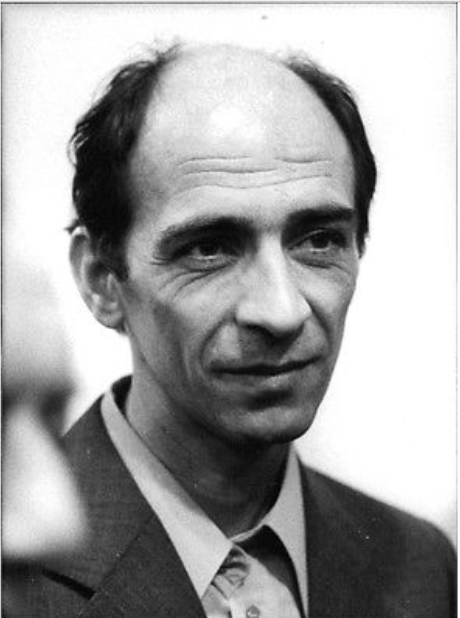
Leonid Plyushch, a legendary human rights activist, dissident and symbol of resistance to the totalitarian Soviet regime, died in France yesterday at the age of 76.

“Leonid died on Thursday morning [June 4]. He was an extraordinary person who has gone through a difficult time,” said his friend Arina Ginzburg, also a former dissident of the Soviet era.

Born in Naryn, Kirghyzia on April 25, 1939, Leonid Plyushch was a talented mathematician, a prominent publicist and a literature specialist, a human rights activist, a member of the Initiative Group for the Defence of Human Rights in the USSR, a member of the External Representation of the Ukrainian Helsinki group (UHG), and a victim of Soviet punitive psychiatry.

I believe that our only weapon is the truth. –Leonid Plyushch

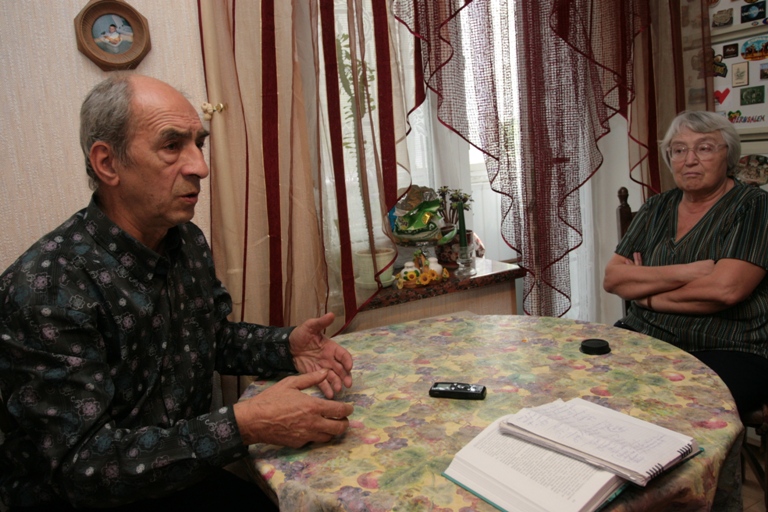
Leonid Plyushch with his wife Tatiana Plyushch in Kyiv, 2007.

Leonid Plyushch with his wife Tatiana Plyushch in Kyiv, 2007.

Plyushch’s official obituary has been republished many times in the past 2 days. This is a small remembrance of the important role he played in human rights work in the diaspora at a crucial time in the formation of international policies towards the former Soviet Union. What follows are a few excerpts, used with the author’s permission, from the recently-published book Negotiating Human Rights: In Defence of Dissidents during the Soviet Era. A Memoir by Christina Isajiw, former director of the Human Rights Commission of the World Congress of Free Ukrainians (currently the Ukrainian World Congress) who spent over twenty-five years lobbying in defense of dissidents and human rights activists of the former USSR. Some of the images and quotes are taken from other sources listed either on each image or at the bottom of this post.

Bohden Nahaylo interpreting for Leonid Plyushch in Trafalgar Square, London, in 1977 at a rally in defense of Soviet political prisoners confined in mental hospitals. Leonid PlyushchVladimir BukovskyMaria Phillimore-Slonim and British actor David Markham. Photos & source: Bohdan Nahaylo FB post

Leonid Plyushch, a former Soviet political prisoner who suffered 2 1/2 years of psychiatric repression and forced confinement [he was arrested in January 1972, brought to trial January 25, 1973, was sent by the court to the Dnipropetrovsk Special Psychiatric Hospital for forced treatment from July 5, 1973 until January 10, 1976 and was treated with dangerous drugs such as haloperidol, triftazin, and even large doses of insulin] has died on June 4th in France.

“At the time, the incarceration of this young scientist evoked a strong response in the West. Appeals poured into Moscow from the American Medical Association, Amnesty International, the International Red Cross, and Ukrainian organizations. His case acquired even more resonance when French mathematicians joined with Amnesty International to sponsor an international Leonid Plyushch Day on April 23, 1975. On October 23, 1975, a public meeting was held in Paris in support of Plyushch. Attended by some five thousand people, including representatives of socialist organizations, it was the largest rally ever organized in support of a Soviet prisoner of conscience. Fearful of losing electoral support, the French Communist Party declared two days later in L’Humanité, “If it is true that [Plyushch] is interned in a psychiatric hospital solely because he has taken a stand against some aspects of Soviet policy or against the regime itself, we can only confirm with the greatest clarity our total disapproval and demand that he be liberated as quickly as possible.” In January 1976, Tatiana Plyushch was given exit visas for her family, and the Soviet news agency TASS announced that they would be permitted to emigrate to Israel. Arriving in Austria, the family proceeded to settle in France. “Lyonya,” as he was known to his friends, was bright, witty, and sometimes bitterly sarcastic, but always engaging and a good, loyal friend.

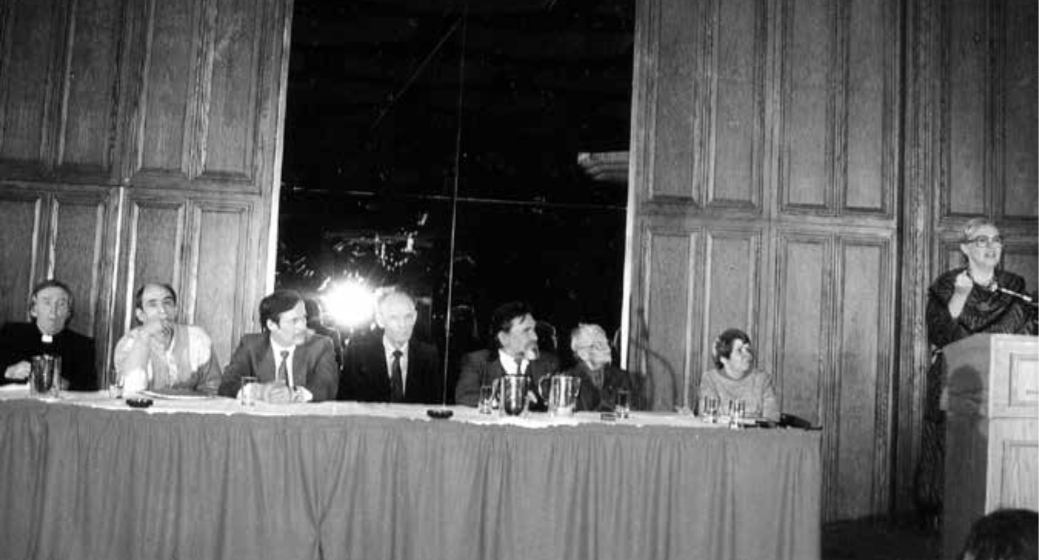
Human Rights Commission Conference on Human Rights, Toronto, 1983. Left to right: Rev Vasyl Romaniuk, Leonid Plyushch, Petro Ruban, Danylo Shumuk, Mykola Rudenko, Oksana Meshko, Nina Strokata-Karavanska, Christina Isajiw.

Human Rights Commission Conference on Human Rights, Toronto, 1983. Left to right: Rev Vasyl Romaniuk, Leonid Plyushch, Petro Ruban, Danylo Shumuk, Mykola Rudenko, Oksana Meshko, Nina Strokata-Karavanska, Christina Isajiw.

Bern Experts’ Meeting on Human Contacts, 1986
From April 15 to May 26, 1986, Bern, Switzerland was the sight of this special six-week human rights conference where all thirty-five participating states committed to talks on compliance with the Helsinki Accords on the key subject of human contacts. The Bern Meeting was something of a turning point leading to promises for changes in the Helsinki Process.

Leonid Plyushch…gave numerous interviews that I arranged…Leonid was quoted in various major news media. In Le Monde, he talked about the severe repression of Ukrainians, who constituted 30 to 40 percent of all the political prisoners in the USSR. He emphasized the fact that the KGB (secret police) was experimenting with new methods of terror in Ukraine by intimidating the family members of dissidents, including their elderly parents.

24 Heures, an important daily from Lausanne, Switzerland, ran a full-page interview with Leonid on April 16, in which he was asked whether Ukrainians limited their struggle to a form of autonomy or were aiming for independence. He replied:

“Almost all the dissidents of our republic follow the same evolution. First, they oppose the Russification of their culture and fight for more autonomy within the USSR. Then, little by little they realize that the maintenance of their culture will be impossible if Ukraine does not become an independent state. Therefore, they express themselves in such a way that the implications are clear.”

When he was asked: “For what society are you fighting in the Soviet Union?” Leonid Plyushch answered that his aim was to help Ukraine above all:

“Above all, for Ukraine, to be able to escape Russification. This republic consists of 50 million people, which is close to the population of France. It has its own language and culture. The
Russian government does everything to crush our uniqueness and to impose their ideas. To the point that when in a library in my village, I asked for information in my language and was
answered: ‘Speak to me in a human language.’ I suddenly knew what it felt like to be a Jew. This affected me pro-foundly. Today, the prisons are full of Ukrainians who fight for the recognition of their culture.’ (UkrainianWeekly, p.11)

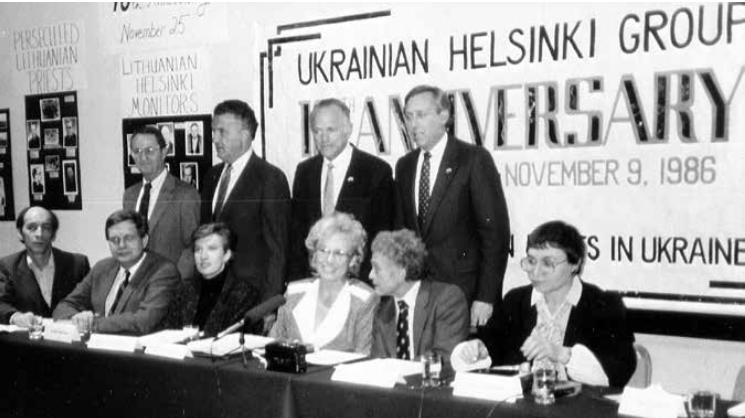
Press conference on the tenth anniversary of the Ukrainian Helsinki Group, Vienna, 1986. Left to right, seated: Leonid Plyushch, Tomas Venclova, Ginte Damusis, Christina Isajiw, Yuri Orlov, Nadiia Svitlychna. Standing: Sam Wise, deputy director CSCE Commission; Senator Paul Sarbanes; Senator Dennis DeConcini; Congressman Steny Hoyer, chairman CSCE Commission.

Press conference on the tenth anniversary of the Ukrainian Helsinki Group, Vienna, 1986. Left to right, seated: Leonid Plyushch, Tomas Venclova, Ginte Damusis, Christina Isajiw, Yuri Orlov, Nadiia Svitlychna. Standing: Sam Wise, deputy director CSCE Commission; Senator Paul Sarbanes; Senator Dennis DeConcini; Congressman Steny Hoyer, chairman CSCE Commission.

At the Helsinki Review meeting in Vienna (November 4, 1986–January 19, 1989), Leonid Plyushch emphasized that the principles contained in the Helsinki Accords had been talked about since the 1960s among the dissidents and that it was inconceivable to “solve the problems of Ukraine, the Baltic nations, or Crimean Tatars” without solving human rights issues. He detailed current abuses in Ukraine and cautioned that international issues cannot be resolved if the individual nations concerned are not allowed to be part of the resolution.”

Source: Negotiating Human Rights: In Defence of Dissidents during the Soviet Era. A Memoir.

“Leonid Plyushch once wrote:

…mine is an account of one more road to freedom, a description of how the Soviet union appears in the eyes of a citizen whose fanatical faith in the system gave way to a struggle to free himself of its illusions, slavery and terror.

Leonid became a prominent Ukrainian dissident witnessing the draconian trials of dissenters during the mid 1960s.

Forgetting, shutting my eyes and ears, remaining silent was impossible. Above all, as an oppositionist I would not need to lie or to play the double role of ‘building the brilliant future’ while suppressing the dismal present.

His spiritual awakening evolved with witnessing the continuous distortion of history, the suppression of independent thinking, the annihilation of intellectuals, a process whereby intelligent individuals were virtually forced into dissidence. With admirable courage he challenged the authorities, was persecuted and suffered two-and-a-half years of abuse and torturous treatments in the infamous special psychiatric institution in Dnipropetrovsk. The huge human rights movement in the west fought for his release and Leonid became its avid supporter and participant for the rest of his life.

Leonid possessed a unique intellectual integrity, he was a humanist and a philosopher, he was an eloquent story teller, an intellectual, he possessed inexhaustible political wit, and he was a dear friend. May He Rest in Peace!”

Source: Christina Isajiw FB

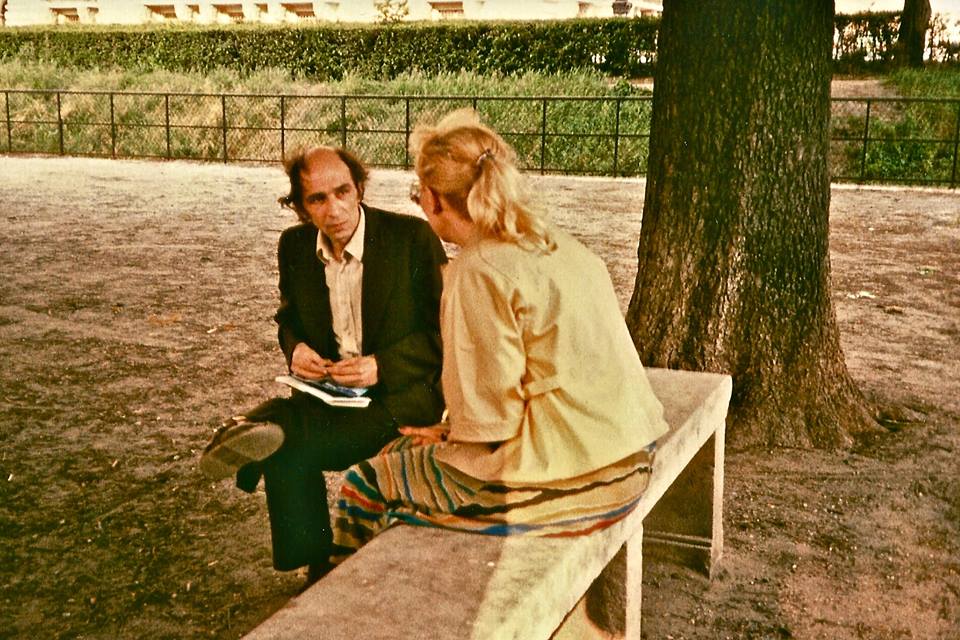
Leonid Plyushch and Christina Isajiw in a park in Nanterre, France.

Leonid Plyushch and Christina Isajiw in a park in Nanterre, France.

Truth in politics for those like Putin, is lies. And he has made a great many of them. But regardless, truth, in my view, will prevail. –Leonid Plyushch

Voices of Ukraine would like to extend its sincere condolences to Leonid Plyushch’s wife, family, fellow dissident friends and loved ones. If you remember Plyushch, please feel free to share your memories in the comments.

Related reading and viewing:

Business Insider, Prominent Soviet dissident Leonid Plyushch dies

Psychiatric Abuse of Political Prisoners in the Soviet Union–Testimony by Leonid Plyushch (March 30, 1976). Hearing before the Subcommittee on International Organizations, of the Committee on International Relations, House of Representatives, 94th Congress, 2nd Session, Washington, DC.

Video (in Ukrainian), Dialogue: Vasyl Herasym’yuk – Leonid Plyushch Part 1 (2014)

Posted in "Voices" in English, Culture, English, English News, Eyewitness stories, Other diaspora, Pictures, Video, Voices of Revolution | Tagged , , , , , , , , , | 2 Comments

In Krasnohorivka, the elderberry blooms smell like ashes…

By Hennadiy Novikov, Emmanuel Association PR Service
06.05.2015
Translated by Helen Mironova Arends and edited by Voices of Ukraine

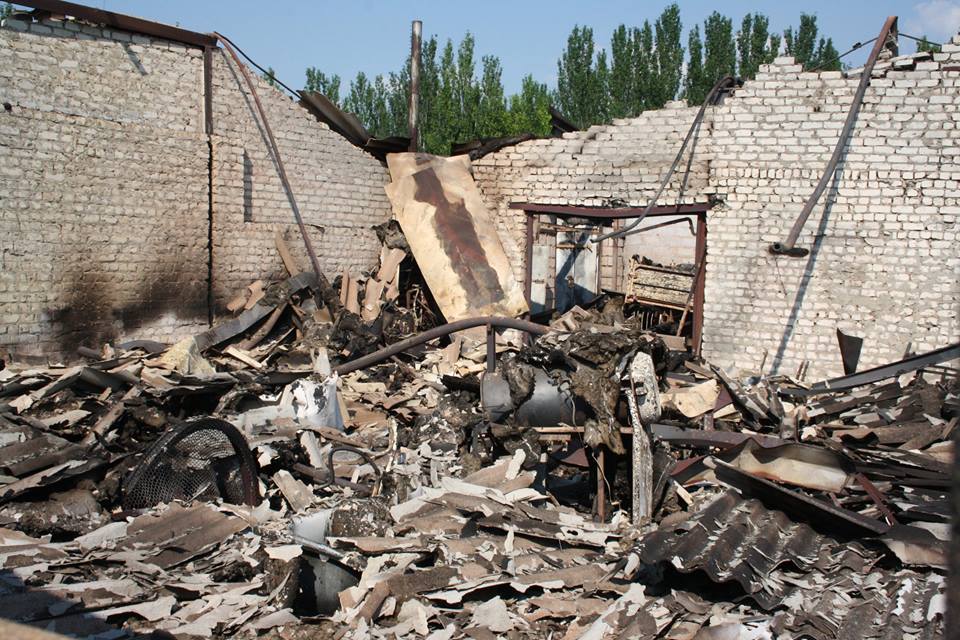
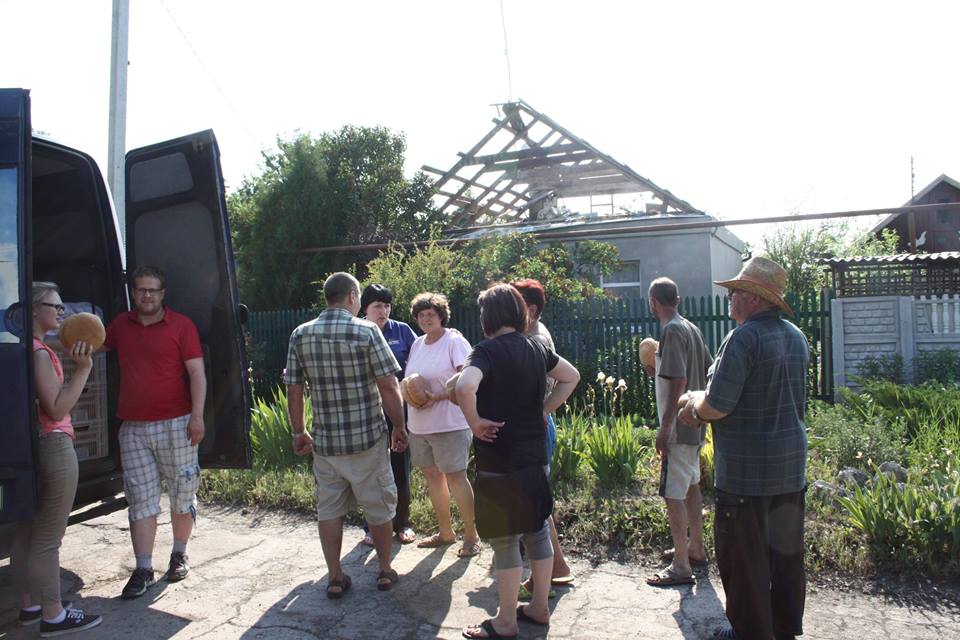
No one expected us in Krasnohorivka [40 minutes west of Donetsk city in Donetsk Oblast]. No one thought it possible that after twelve hours of heavy shelling and artillery fire anyone would be able to make it through to this place. We hardly believed it ourselves. It was clear to us that the military would refuse us entry to this place, rife with danger. There were enough videos online to prove to us that slipping into town would be near impossible. The hospital is on fire. The school is on fire. Private homes are on fire. High rise building walls are gaping with holes from the shelling…

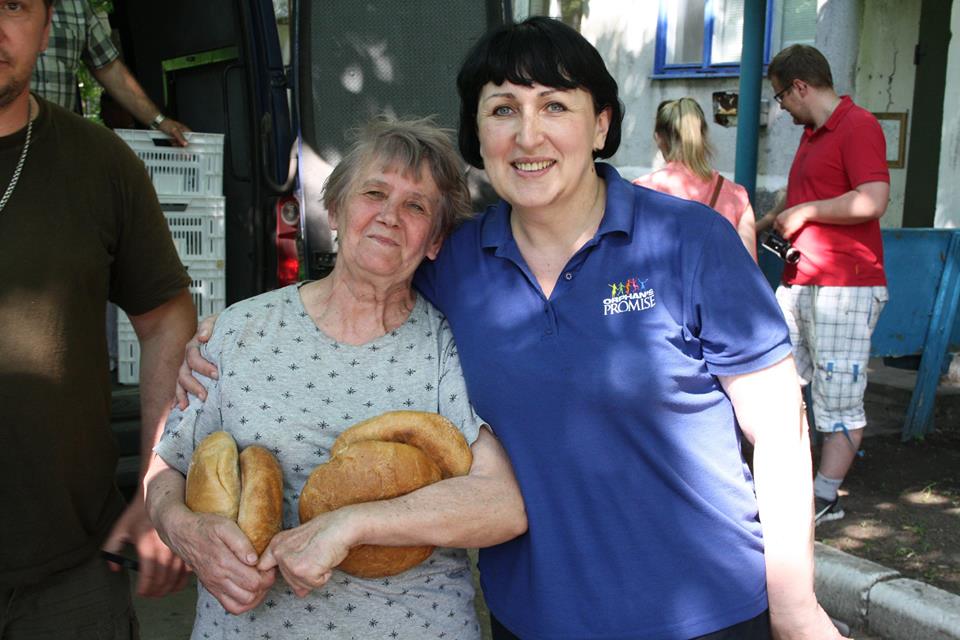
I don’t know exactly by what power, prayers, or words Halyna Kucher pursuaded the military that we must be allowed to go through. But she did it! She convinced them! Once in a while I heard fragments of her appeals,”Our friends are there….The old folks… the children….No one is answering their phones…. No news from them online….We have bread, we are bringing medicine….”

I do understand that the soldiers are not willing to put volunteers’ lives at risk. They explain in plain language what they think our skulls contain instead of brains, then they turn away. But among them, different people can be found. Our caravan consisting of two large vans stuffed with groceries was eventually let through and escorted to our destination. We had to use different roads from those we were used to from our previous travels: it’s impossible to drive through Maryinka right now, having just recently been a witness to fierce battles. We had to pick our way through a different route…Fragments of broken asphalt…Unpaved gravel… Narrow country roads, known only to the locals… A few times we had to stop to make sure we hadn’t lost our way. Reeds, nearly dry ponds…. Deserted houses on the outskirts…. Then here it is, the town which humanitarian  “Emmanuel” Association representatives visit a few times each month for the past year or so. The war gave us many friends here, who are now closer than a brother…. We are very eager to see them… To see them alive….

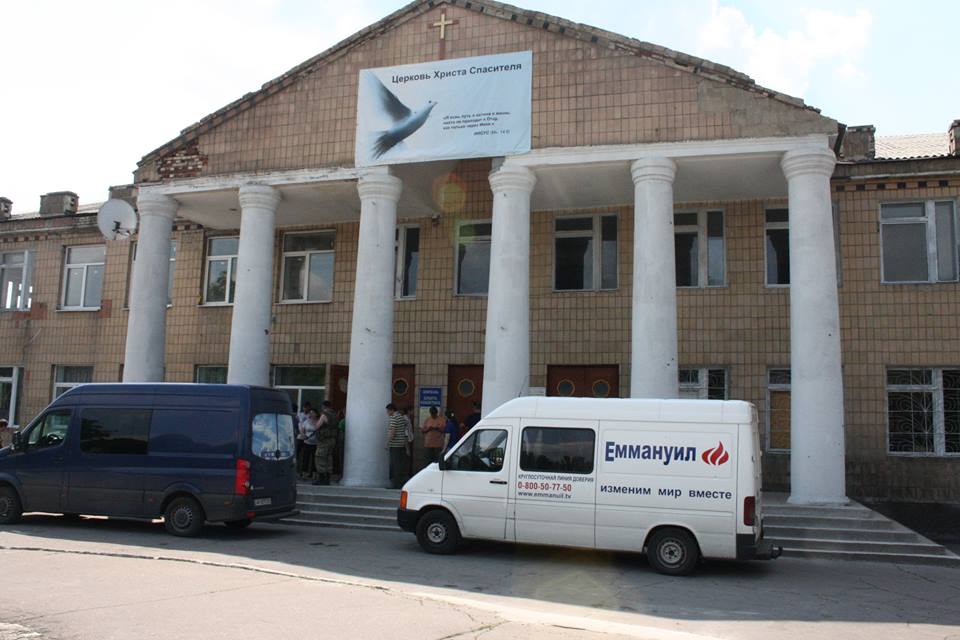
It’s quiet. It’s hot. No fire can be seen, but the air is rife with the smell of burning. Only a few people can be seen out on the streets. There is nobody waiting in the square by the church. Our vehicles stopped at the broad steps of the church building while it occurred to us that people are hesitant to take a risk and come out of hiding. They are probably still in their homes, staying close to their cellars, just in case. Then, the door opens… We hugged like we haven’t hugged before. Our embrace was not the same as it was a month or two ago… Not even the same as it was in February, when citizens of Krasnohorivka suffered greatly when electricity and heat were scarce. You could tell everyone wanted to hold on to you a second longer, hold you a little tighter. They smile, utter words, pound you on your back, but you can tell, this meeting is something precious, something not to be taken for granted. Nobody actually said it at first, you just knew, you could read it in their eyes, saying, “Thank you…Thank you that you came….Not just because you brought us bread, medicine…Thank you simply for coming to us…. Especially today… Right now… When fear weighs heavy as a cement block…. They had to pour it all out… Had to share all that held their hearts in a vise… From all directions, we heard, “Everything roared here… Thundered…Trembled and shook… Five story buildings jumped into the air…” “Imagine, I was running in the street, while the next street over was exploding with GRADS, as if chasing me…. Kids were darting around while everything was exploding around them, looking for their parents…. The ER burned down…We spent all day in the cellar, couldn’t show our nose outside…We’ve never experienced anything like this before.”

It will take more than one day for them to tell it all. It will take years. They will see it in many nightmares, waking them from their sleep….Who can possibly forget such terror, such horror!? But now we must unload our vans, distribute the groceries, as the soldiers are hurrying us up. We arrive at the deserted store that has long become a distribution center for Christian humanitarian aid. It is highly unusual to see no one waiting. We were used to being greeted by hundreds here.

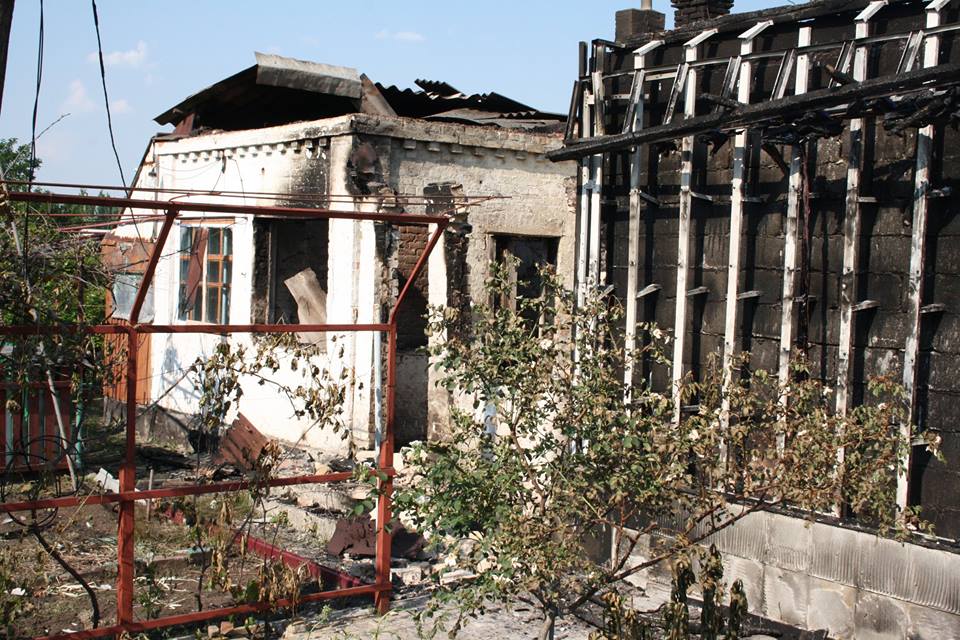
We hope that bread will be distributed later by our local contacts so we start unloading… But then… we see two men here… an elderly gentleman hurrying through a small park…over by the road someone slammed on the brakes to see what’s going on… All of a sudden people started appearing out of nowhere… Some women showed up and immediately burst into tears. Firmly, Halyna tells us we are to stop unloading, that we will distribute the bread right out in the streets. She tells us to go to the areas most harmed by the shelling. To walk along the highrise buildings, to call out, distribute bread, talk to the people, hug them, hold them…. A week ago, we would have distributed 1,500 loaves of bread in a matter of half an hour. This time, it took several hours. Several hours I don’t care to remember, several hours I will never forget….Elderly… women… children…A funeral procession leaving the cemetery having buried a man killed by fragments just yesterday… Burned out homes…Smoke still rising from the ashes…Charred chimneys standing as the only reminder of the roof that was still there yesterday…. A man pushing a wheelbarrow with chunks of concrete that used to be his home…A three-legged dog… Auntie Vera, whose memories of losing her son to a similar shelling last year, right here in Krasnohorivka, his life ended by shrapnel, were triggered and stirred by the recent shelling… We were walking the streets surrounded by big fluffy white blooms of elderberries. Do you know what they smell like? Lean down, smell them. Maybe your elderberries have a strong sweet aroma. In Krasnohorivka, elderberry blooms smell like…. ashes….

Do not let yourself forget about this.

Do not let yourself forget that in Ukraine artillery is still firing and people are still dying. Do not let yourself forget how in Ukrainian cellars kids are crying, screaming with fear, their faces buried in their mothers’ bellies. Do net let yourself forget that someone somewhere right now needs you to care, to show human mercy, to share a loaf of bread, a cup of oil, a handful of grain…

And do not grow weary of praying that this war will finally come to an end.

Source: Serhiy Mirniy FB

Posted in English, English News, Eyewitness stories, Pictures, War in Donbas | Tagged , , , , , , , , , | Leave a comment

Dmitry Tymchuk: On the escalation of conflict in Donbas, 6/4. #FreeSavchenko

information_resistance_logo_engDmitry Tymchuk, Head of the Center for Military and Political Research, Coordinator of the Information Resistance group, Member of Parliament (People’s Front)
06.04.2015
Translated and edited by Voices of Ukraine

On the conflict escalation in Donbas:

Yesterday’s offensive (June 3, 2015) by Russian-terrorist troops in Donbas (first and foremost – in the vicinity of Mar’inka) leads us to several conclusions:

1. The Minsk 2 Agreement, as expected, is nothing more than an illusion of “peaceful dialogue,” behind which Russia attempts to portray a “de-escalation” in order to tie the hands of Kyiv and not let it recover from the forceful method employed by pro-Russian boils – represented by the “LNR” and “DNR” – on Ukraine’s body. The Minsk 2 Agreement is Russia relying on the gullible idiots of the world. Luckily, there are less and less of them.

I have said this many times, and I will say it again. Negotiating with the “LNR” and “DNR” is a sign of derangement and an inadequate assessment of the situation. [We] can only negotiate with the initiator and main organizer of the aggression – i.e., Russia – after it admits its responsibility for the events in Donbas. [We also must negotiate] without a hint of guarantees: as we regularly find out, Putin’s word is not worth anything. And the words of his mongrels in Donbas are worth even less – that is a value of a negative order, less than zero.

2. Under cover of the Minsk 2 Agreements, the Russian-terrorist forces’ command in Donbas has created a prototype of a regular army with a single military command system, a single logistics system, and a powerful repair and replacement base for weapons and equipment.

Drawing conclusions from the course of military operations during 2014, the Russians have formed an “integrated” management system in Donbas – where the Russian officers work in governing bodies and give orders to gangs, and in some cases are also their commanders.

Gangs themselves are diverse in most cases – local insurgents fight along with mercenaries from the Russian Federation; some “components” also include regular units of the Russian Armed Forces. Previously, all these three “components” (local insurgents – Russian mercenaries – Russian servicemen) fought separately, and the composition of such units drastically affected their combat capabilities. The current approach allows (1) to consolidate the command in the hands of Russian Armed Forces professionals (with a few exceptions represented by “highly trusted” local commanders), and (2) to plan and conduct operations more effectively by taking into account relatively similar combat capabilities of the units (level of training and morale of the personnel).

3. Despite this “peaceful” (or rather – clearly defeatist) rhetoric, the highest political and military leadership of Ukraine drew correct conclusions from the sad experience of the initial Minsk Agreements, signed in September of 2014. This time, the Ukrainian Armed Forces have not remained the “whipping boys.” By carrying out the conditions of the present “peace agreements” and withdrawing heavy weapons from the demarcation line, the military leadership has considered the option of return for these units to their previously abandoned positions if necessary – with the notification of the OSCE. Yesterday [June 3, 2015] this [foresight] proved to be fatal for the pro-Russian mongrels.

We have heard a lot of criticism towards the General Chief of Staff of the Ukrainian Armed Forces in the last few months. Here is a fact: according to our data, the General Chief of Staff personally arrived to the ATO zone yesterday and led the repulsion of terrorist attacks. The result is well-known, and it is impressive.

Of course, no progress could have been reached without the personal courage, fortitude, and professionalism of our soldiers and officers. The current Ukrainian army is able to fight, and to fight well. Yesterday, the army proved it.

4. Up to 1,000 terrorists participated in yesterday’s attack on Mar’inka. Meanwhile, according to IR data, only the Donetsk group of Russian-terrorist troops (which provided tactical insurgent groups for the Mar’inka attack) currently estimates at least 6,000 people.

This means the following: we saw a mere “reconnaissance by fire” yesterday. If terrorists were to throw in all of their forces, plus the battalion tactical groups from the Russian Armed Forces that are now planted close to our borders in Russia – the situation would be a lot more difficult. Let’s hope that yesterday’s events have sobered the perpetually drunk “new Russians.” But under no circumstances should we become placid.

Source: Dmitry Tymchuk FB

Posted in Dmitry Tymchuk, English, English News, Pictures, South&Eastern Ukraine, War in Donbas | Tagged , , , , , , , , , , , | 2 Comments