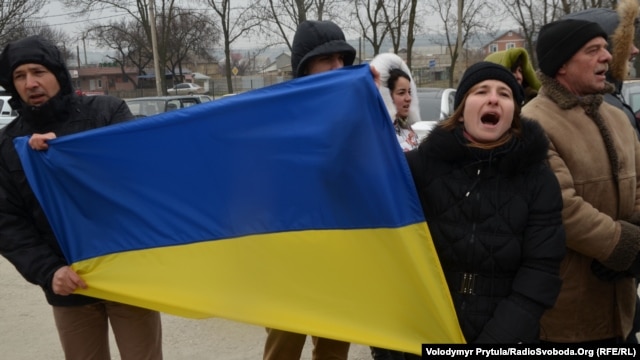
Statement of Concerned Scholars Regarding the Conflict in Ukraine
Sunday, 9 March 2014
Via: http://alliruk.livejournal.com/687418.html
We, the undersigned, are scholars of Ukrainian and Russian affairs whose knowledge of and respect for the people of the region bring us together today. Although we hold diverse views regarding the origins, evolution, and likely outcome of the current crisis in Ukraine, we agree on the following five points:
1) The continued Russian occupation of Crimea cannot be supported by reference to international law, international norms, or interstate agreements. Russian troops in Ukraine should return to their barracks immediately and all parties should allow the OSCE to enter Crimea as a neutral observer. The use of troops in unmarked uniforms must cease.
2) No status referendum in Crimea can be considered legitimate under the current circumstances. Such referenda require, at minimum, the agreement of national and regional governments, a clear question, sustained public discussion of the ramifications of yes and no votes, and the option of international monitoring to ensure a free and fair process. They cannot be held under military occupation and should be considered only as a last resort after all other democratic avenues of resolution have failed.
3) In addition to early presidential elections, the acting Ukrainian government should call early parliamentary elections and invite international election observers to monitor the campaign and the vote.
4) Ukrainian authorities should adopt deliberately inclusive policies towards the linguistic, ethnic, and cultural groups of Ukraine in order to increase mutual trust and facilitate national reconciliation. Sustainable inclusion may require a newly elected Ukrainian government to introduce measures to increase political decentralization.
5) Interested parties around the world should avoid unnecessarily inflammatory, confrontational, and militaristic rhetoric in regards to the conflict. Such rhetoric inevitably raises tensions and endangers the lives and livelihoods of all people in the region.
We call upon all parties to work towards a peaceful, sustainable, and fair resolution to the current conflict in Ukraine.
Authors
Juliet Johnson, Department of Political Science, McGill University, Canada
Maria Popova, Department of Political Science, McGill University, Canada
Signatories
Şener Aktürk, International Relations, Koç University, Turkey
Mikhail Alexseev, Department of Political Science, San Diego State University, USA
Lala Aliyeva, Baku State University, Azerbaijan
Tarik Cyril Amar, Department of History, Columbia University, USA
Hilary Appel, Department of Government, Claremont McKenna College, USA
Dominique Arel, Department of Political Science, University of Ottawa, Canada
Pavel K. Baev, Peace Research Institute Oslo (PRIO), Norway
Andrew Barnes, Department of Political Science, Kent State University, USA
Mark R. Beissinger, Department of Politics, Princeton University, New Jersey, USA
Michael Bernhard, Department of Political Science, University of Florida, USA
Doug Blum, Department of Political Science, Providence College, USA
Archie Brown, Oxford University, UK
Wayles Browne, Department of Linguistics, Cornell University, USA
Yitzhak Brudny, The Hebrew University of Jerusalem, Israel
Valerie Bunce, Department of Government, Cornell University, USA
David Cameron, Department of Political Science, Yale University, USA
Ian W. Campbell, Department of History, University of California-Davis, USA
Giorgi Cheishvili, I. Javakhishvili Tbilisi State University, Georgia
Vitaly Chernetsky, Department of Slavic Languages and Literatures, University of Kansas, USA
Kathleen Collins, Department of Political Science, University of Minnesota, USA
Timothy J. Colton, Department of Government, Harvard University, USA
Alexander Cooley, Department of Political Science, Barnard College, Columbia University, USA
Jane Curry, Department of Political Science, Santa Clara University, USA
Keith Darden, School of International Service, American University, USA
Karen Dawisha, Havighurst Center for Russian and Post-Soviet Studies, Miami University, USA
Magdalena Dembinska, Department of Political Science, Université de Montréal, Canada
Georgi Derluguian, Social Research and Public Policy, New York University – Abu Dhabi, UAE
Megan Dixon, College of Idaho, USA
Marta Dyczok, Departments of History and Political Science, Western University, Canada
Johannes Due Enstad, Norwegian Defence Research Establishment (FFI), Norway
Brad Epperly, Department of Political Science, University of South Carolina, USA
Matthew Evangelista, Department of Government, Cornell University, USA
Yakov Feygin, Department of History, University of Pennsylvania
Evgeny Finkel, Department of Political Science, The George Washington University, USA
Joshua First, Department of History, University of Mississippi, USA
M. Steven Fish, Department of Political Science, University of California, Berkeley, USA
Benjamin Forest, Department of Geography, McGill University, Canada
Timothy Frye, Department of Political Science, Columbia University, USA
Scott Gehlbach, Department of Political Science, University of Wisconsin – Madison, USA
Julie George, Department of Political Science, Queens College, CUNY, USA
Ted Gerber, Department of Sociology, University of Wisconsin – Madison, USA
Alyssa Dinega Gillespie, Department of German and Russian, University of Notre Dame, USA
Sergey Glebov, Smith and Amherst Colleges, USA
Helena Yakovlev Golani, Munk School of Global Affairs, University of Toronto, Canada
Dmitry Gorenburg, Harvard University, USA
Kate Graney, Department of Government, Skidmore College, USA
Farid Guliyev, Jacobs University Bremen, Germany
Joshua Hagen, Department of Geography, Marshall University, USA
Meryem Hakim, Department of International Relations, Konya Necmettin Erbakan University, Turkey
Henry Hale, Elliot School of International Affairs, The George Washington University, USA
Stephen E. Hanson, College of William & Mary, USA
Yoshiko Herrera, Department of Political Science, University of Wisconsin-Madison, USA
Ted Hopf, Department of Political Science, National University of Singapore, Singapore
Alexandra Hrycak, Department of Sociology, Reed College, USA
Eugene Huskey, Department of Political Science, Stetson University, USA
Yuliya Ilchuk, Department of Slavic Languages and Literatures, University of Chicago, USA
Oksana Iurkova, Institute of History of Ukraine, National Academy of Sciences of Ukraine
Adrian Ivakhiv, University of Vermont, USA
Kornely Kakachia, Department of Political Science, I. Javakhishvili Tbilisi State University, Georgia
Roger E. Kanet, University of Illinois at Urbana-Champaign (emeritus) and University of Miami, USA
Nargis Kassenova, Department of International Relations and Regional Studies, KIMEP University, Kazakhstan
Sean Kay, Department of Politics and Government, Ohio Wesleyan University, USA
Charles King, Edmund A. Walsh School of Foreign Service, Georgetown University, USA
Jeffrey Kopstein, Department of Political Science, University of Toronto, Canada
Bohdan Kordan, Department of Political Studies, University of Saskatchewan, Canada
Judith Deutsch Kornblatt, University of Wisconsin-Madison (emerita), USA
Nadiya Kravets, Davis Center for Russian and Eurasian Studies, Harvard University, USA
Martha Kuchar, Department of English, Roanoke College, USA
Andrew Kuchins, Center for Strategic and International Studies, USA
Sergiy Kudelia, Department of Political Science, Baylor University, USA
Tomila Lankina, London School of Economics and Political Science, UK
Bidzina Lebanidze, Freie Universität Berlin, Germany
Torsten Lorenz, Institute of Economic and Social History, Philosophical Faculty, Charles University, Czech Republic
Pauline Jones Luong, Department of Political Science, University of Michigan, USA
Jason Lyall, Department of Political Science, Yale University, USA
Andrey Makarychev, Institute of Government and Politics, University of Tartu, Estonia
Lawrence P. Markowitz, Department of Political Science, Rowan University, USA
Kimberley Marten, Department of Political Science, Barnard College, Columbia University, USA
Richard Matthews, Social Justice and Peace Studies, King’s University College at the University of Western Ontario, Canada
Eric McGlinchey, Department of Public and International Affairs, George Mason University, USA
Kelly McMann, Department of Political Science, Case Western Reserve University, USA
Dmitri Mitin, School of Public and International Affairs, North Carolina State University, USA
Viacheslav Morozov, Institute of Government and Politics, University of Tartu, Estonia
Susanna Nazarova, Russian and Eurasian Studies, Mount Holyoke College, USA
Andrew Nelson, Faculty of Social Science, Western University, Canada
Mitchell Orenstein, Department of Political Science, Northeastern University, USA
Robert W. Orttung, The George Washington University, USA
Andrea Orzoff, Department of History, New Mexico State University, USA
Victor Ostapchuk, Department of Near and Middle Eastern Civilizations, University of Toronto, Canada
Olena Petrenko, Department of History, Ruhr-University Bochum, Germany
Serhii Plokhii, Department of History, Harvard University, USA
Alina Polyakova, Institute of Sociology, University of Bern, Switzerland
David Powelstock, Brandeis University, USA
Joanna Regulska, Rutgers, The State University of New Jersey, USA
Allan Reid, Department of Culture and Language Studies, University of New Brunswick, Canada
Tanya Richardson, Department of Global Studies, Wilfrid Laurier University, Canada
Walter Richmond, Department of German, Russian and Classical Studies, Occidental College, USA
James Richter, Politics, Bates College, USA
Nancy Ries, Department of Sociology and Anthropology, Colgate University, USA
William Risch, Department of History, Georgia College, USA
Flora Roberts, Department of History, University of Chicago, USA
Sean R. Roberts, Elliott School of International Affairs, The George Washington University, USA
Robert Romanchuk, Department of Modern Languages and Linguistics, Florida State University, USA
Stephen M. Saideman, Norman Paterson School of International Affairs, Carleton University, Canada
Edward Schatz, Department of Political Science, University of Toronto, Canada
John Schoeberlein, Department of Anthropology, Nazarbayev University, Kazakhstan
Steven Seegel, Department of History, University of Northern Colorado, USA
Oxana Shevel, Department of Political Science, Tufts University, USA
Olga Shevchenko, Department of Anthropology and Sociology, Williams College, USA
Irina Shevelenko, Department of Slavic Languages and Literature, University of Wisconsin-Madison, USA
Liza Skryzhevska, Department of Geography, Miami University, USA
Valerie Sperling, Department of Political Science, Clark University, USA
Adam N. Stulberg, Sam Nunn School of International Affairs, Georgia Institute of Technology, USA
Benjamin Sutcliffe, Miami University, USA
Jane A. Taubman, Russian Department (emerita), Amherst College, USABrian Taylor, The Maxwell School, Syracuse University, USA
John P. Tiefenbacher, Department of Geography, Texas State University-San Marcos, USA
Joshua A. Tucker, Department of Political Science, New York University, USA
Anna Tumarkin, Department of Slavic Languages and Literature, University of Wisconsin-Madison, USA
Judy Twigg, L. Douglas Wilder School of Government and Public Affairs, Virginia Commonwealth University, USA
Mehmet Tütüncü, Research Centre for the Turkish and Arabic World, Netherlands
Andreas Umland, Department of Political Science, National University of “Kyiv-Mohyla Academy”
Julia Verkholantsev, Department of Slavic Languages and Literatures, University of Pennsylvania, USA
Zenon Wasyliw, Department of History, Ithaca College, USA
Lucan Way, Department of Political Science, University of Toronto, Canada
Cory Welt, Elliot School of International Affairs, The George Washington University, USA
Nancy Wingfield, Department of History, Northern Illinois University, USA
Şuhnaz Yılmaz, International Relations, Koç University, TurkeyAyşe Zarakol, University of Cambridge, UK
Sufian Zhemukhov, Elliot School of International Affairs, The George Washington University, USA
Jennifer Eidum Zinchuk, Language and Rhetoric, University of Washington, USA



 In a statement released on March 1, representatives of the leading agricultural associations in Ukraine appealed to the Acting President of Ukraine Oleksandr Turchynov to urgently adopt a number of laws to fight corruption in the agricultural sector of the country, reports Ukrainska Pravda, citing LigaBiznesInform.