Infowar

Criticusnixalsverdruss über Wladimir Putin, das ARD-Interview und die Rolle der Medien:

Sollte [Putin] gegen Natostaaten vorgehen, worauf vieles, vor allem beim Baltikum hinweist, dann wird es uns wie Schuppen von den Augen fallen, wie viele von ihm kontrollierte Zombies in den Büros unserer Universitäten und Parteien sitzen. Aber vor allem in allen Ebenen der Fernsehanstalten und in sozialen Netzwerken, Foren und Blogs des Internets.

Vollständiger Beitrag: Infowar.

Posted in Deutsch, Reblogged | 1 Comment

War for Peace: The story of a pacifist with an automatic gun [who became a cyborg]

By Oleg Karpyak, BBC Ukraine
11.11.2014
Translated and edited by Voices of Ukraine
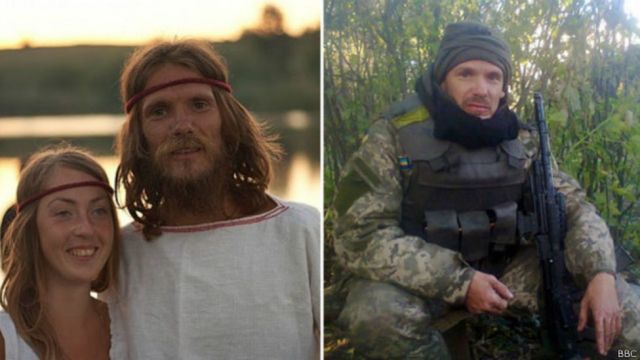
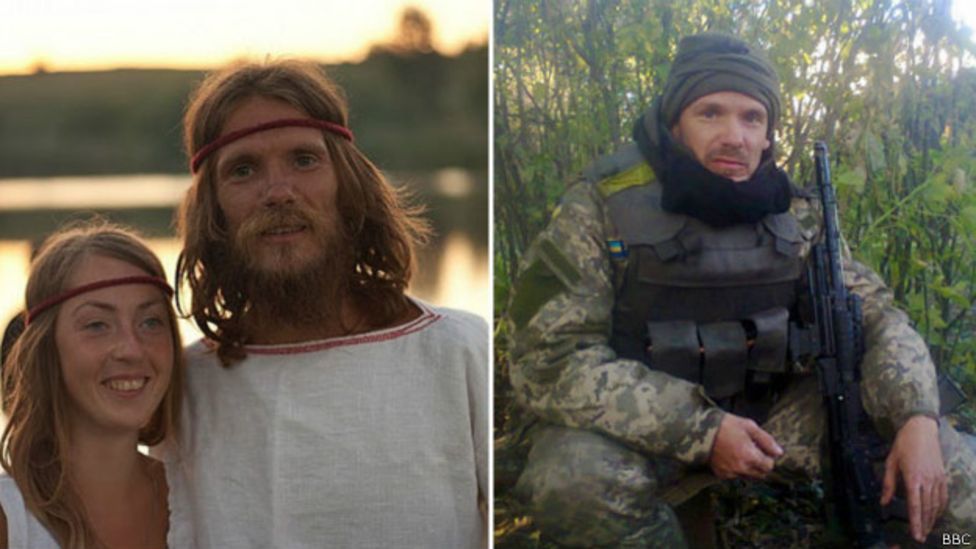
Nick Voronin in his previous life and today.

Nick Voronin in his previous life and today.

Just a few years ago he was known in the narrow circle of eccentric-pacifists who dreamed of saving the Earth from ecological disaster, was engaged in spiritual practice, lived with his wife in a self-dug out “hole” in a field in Donbas, caring for animals and eating roots and grass.

Prior to this, there was education in a prestigious university, cancer and three complex operations.

Today, 34-year-old Nick [Mykola] Voronin, a native of Kherson region – is one of the “cyborgs” that protect the Donetsk airport. He honors the orders of command, even if he doesn’t agree with them, he’s mastered the tactics, learned to practice with weapons and affectionately calls his automatic “Saniok” [a diminutive nickname from Oleksandr]. Although, he says he would be happy to part with it forever.

He says that if he had been told a year ago that he would fight in the war, he would never have believed it.

“Ringing Cedars”

In 2004, when Nick graduated as an ecologist from the Kyiv-Mohyla Academy, he discovered he had renal cell carcinoma, which metastasized to his liver.

The pain was unbearable. “There is nothing to compare it with. Each inhale and exhale for me was a feat. You can’t eat anything either, because it is very painful. You can’t drink anything. The pain is everywhere. You don’t sleep, because it hurts. It’s hell on earth” – he recalls.

Having survived three operations, the money for which was collected throughout the university, Nick lost several internal organs, and with them the disease.

In Ukraine, the Orange Revolution had started [November 2004 to January 2005]. Feeling that on the street something extraordinary was happening, Nick prematurely discharged himself from the hospital and, with his stitches still fresh, joined the protests.

“In 2004, I saw on Maidan [Maidan Nezalezhnosti or Independence Square in Kyiv] the dreamers, the geniuses, and the vultures.”

And, very soon, Maidan–2004 left a “difficult trail of disappointment” behind it. “I saw there the dreamers, the geniuses, and the vultures.” – says Nick.

But positive changes still occurred, on a personal level: “After an illness I breathe smoothly. Inhale – bliss. Exhale – bliss. And people breathe but do not notice it.”

Healing himself, Nick, as a diplomaed environmentalist, set himself an ambitious goal – to heal the Earth from ecological crisis. But how? World renowned environmentalists, with whom he spoke at international conferences, did not give clear advice.

“Environmentalists remind me of strange firemen, which do not extinguish the fire. The house is burning, the planet is dying, and environmentalists run around with a thermometer and measure the temperature: ‘here we are on fire – [we’re] burning up! – And here we burn weakly.’”

Surprisingly, the answer to the question how to save the planet came from the works of Russian writer Vladimir Megre, the author of the Ringing Cedars of Russia series of books.

“The idea is simple – Nick retells. Anyone who wants to save the world, we must take a hectare or two of land and make it the Garden of Eden.”

For this, he says, one must remove the wasteland, plant it with trees and plants from the Red Book, dig a pond, let the birds in, build an underground burrow and develop this land into a “family estate.” 

A DVD inside a player 

Nick took the writer’s ideas as a call to action. Waiting until spring, he broke ground for his family estate near Horlivka. It was a strip of field 13 km from the city. His lawyer wife helped to formulate the documents for the land division, [she was] “also turned on to these ideas,” in Nick’s words. 

To Horlivka, where he worked as a teacher of mathematics in vocational schools, he traveled by bicycle.

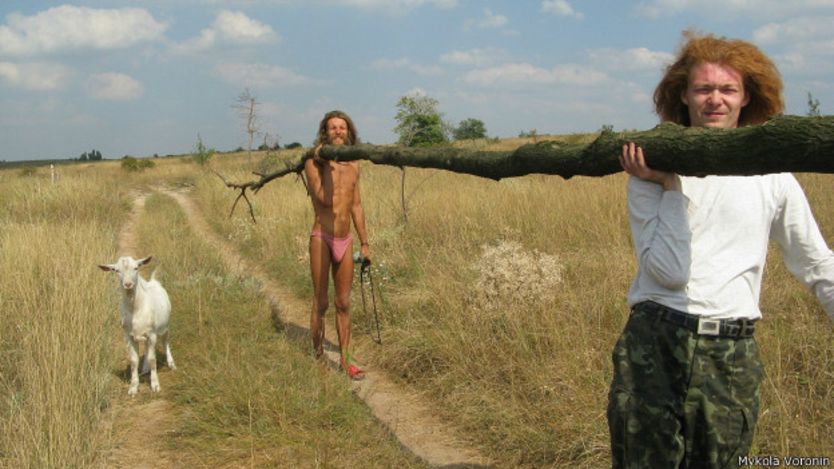
Outside it was warm, and the young family settled into a tent. But a problem appeared – a goat with its kid began to visit their simple abode, it had been given to them by friends. The animals constantly trampled the tent and soiled it. It led to building a different dwelling, closed to goats. 
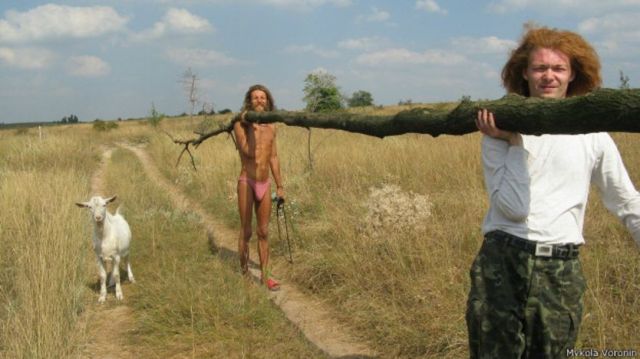
The goat, which forced Nick to build a "hole."

The goat, which forced Nick to build a “hole.”

Then Nicholas dug a tight dugout, with a height of just above the knee, which he called a “hole.” Later on the hole grew thick earthen walls and a roof covered with clay and straw. Inside there was a small stove.

The couple lived all winter in this dugout. The stove smoked so much that warming oneself from it was impractical, so they had to huddle against the cat and dog who lived with them. The cat was also needed in order to catch the mice, which, as it turned out, bite.

In the winter, when the nights were long, we had to lie in the hole a lot. It was cold, he recalls, and adds: “I understood bears who go into hibernation.”

The couple spent eight months in such circumstances – until the end of February. Most of the time they lived without money, eating only what nature gave: grass roots. In this way, they tried to disconnect from “civilization,” said Nick, with a gesture of putting quotation marks around the word.

The most memorable were the nights spent in the ground – with these deep and ‘global,’ as he says, dreams. 

“One of my friends said I was similar to a DVD, and the earth – to a [DVD] player – says Nick trying to explain the feeling of living in a hole. I was just put into the player and I started playing.” 

Despite the cold, his health has always been more-or-less good. Only occasionally did is surviving kidney hurt. 

Nick and his wife wintered in this type of "lodging.” [On his underwear it says: “There will be good.”]

Nick and his wife wintered in this type of “lodging.” [On his underwear it says: “There will be good.”] 

“War stinks”

At that time Nick, inspired by the books of Vladimir Megre and Slavic cults, was fond of the idea of the unification of Ukraine and Russia into a United Russia. 

When a new Maidan began in 2013, he treated it with suspicion and initially went to the pro-Russian meeting beneath the walls of the Donetsk Regional State Administration. But [because of] a disturbing atmosphere and conflicts amongst “their own” he immediately did not like it.

“I was a separatist at that time for a whole three days,” – he recalls

Afterwards, he visited a pro-Ukrainian meeting in Donetsk as well: “There people were praying, all religious denominations stood [together], there were people with children, moms. To me it was obvious for whom to continue to stand.”

“If you want to go to Russia – take your things and drive into Russia. Russia is big, there’s lots of land, – he said. I myself once wanted to live in Russia. I lived with my wife for eight wonderful months in Altai.”

Then something happened that finally convinced him of the necessity to take up arms, the separatists, he retells, captured his 17-year-old friend from Horlivka and abused him.

Nick, who a year ago still considered himself a pacifist and quarreled with hunters who shot game on his estate, enlisted in the Donbas Battalion. Subsequently, he went to serve in a regular airmobile unit. 

“I have never received and do not get pleasure from killing. War stinks. From war you get nauseous. Every time, you feel sick. But I see no other way to stop this filth which comes out of Russia and moves in on Ukraine.” 

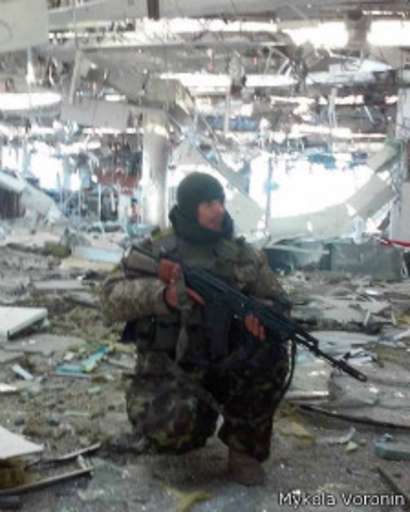
In Donetsk Airport.

In Donetsk Airport.

The most valuable lesson of war

Today, paratrooper Nick Voronin protects the Donetsk airport. He says that this dilapidated building has a special symbolic meaning to Ukraine and calls the airfield a spiritual “citadel of Ukrainian identity.”

Experiencing life in a dugout became opportune in war. Nick explains that he can go without food for a week, not sleep for several days and endure the pain.

“Pain – is one of our most powerful teachers.” 

“Pain – my old friend. Pain does not prevent life, and sometimes it even helps. It makes my thoughts faster, my reflexes – clearer. Pain – is one of our most powerful teachers.”

Nick jokingly calls his automatic “Saniok” – that’s what many of his friends are called. At the same time he says that he gladly threw his “Kalashnikov” into the weapons room when going on leave: “And I take no pleasure in the necessity to take it up in my hands again.”

I ask what he has learned in war. 

“The war taught me unity with my country, and moreover the word “Country” – with a capital letter. I began to feel that I do have a country of Ukraine. It is one of the most valuable lessons of my life.”

After a short vacation leave, Nick Voronin returned to battle.

After a short vacation leave, Nick Voronin returned to battle.

The mechanism of self-destruction

Nick says he loves all people, including his enemies, but does not respect them, because he cannot understand their views. 

“Sometimes it seems that victory is tomorrow, and sometimes – that we must fight for another 50 years.”

He willingly shares his views: “The main thing that I realized – contamination exists in the minds of men.”

“A person – is a complex self-organizing and self-healing system. And any system works and aims, produces a product. What does a person make? Thoughts. This is something that does not disappear. But if there is no goal, you lose the meaning of life, and in our overly-smart factory the self-destruct mechanism gets switched on – the disease. When a person has a goal – they recover.”

This knowledge, says Nick, helps him in battle, because there, the purpose is very clear.

“I know, that this will be, but I don’t know when. The situation is quite variable. Sometimes it seems that victory is tomorrow, and sometimes – that we must fight for another 50 years.”

Source: BBC Ukraine

Posted in English, English News, Pictures, South&Eastern Ukraine, War in Donbas | Tagged , , , , , , | Leave a comment

Cyborg Nick on Donetsk Airport

Photo: Aleksandr Zhadan

By Mykola (“Nick”) Voronin, Ukrainian Cyborg, 79th Airmobile Brigade, previously in Donbas Battalion
11.16.2014
Edited by Voices of Ukraine

Hello my dear friends.
My name is Nick.
I am an ordinary Ukrainian soldier. I am participating in the war in Eastern Ukraine with separatists. At first I was a participant in the Donbas Battalion, now I serve in the Ukrainian Army. The last [most recent] battle I participated in was the battle at Donetsk Airport. That is why I am being honorarily called a “Cyborg.”

Separatists call us Cyborgs because we managed to stand defending airport buildings 24/7. They were amazed by the way we take the battle. Ordinary soldiers, approximately 200 [of us], against thousands of Russian soldiers which mr. Putin claims got lost and somehow appeared near Donetsk Airport buildings in Ukraine, 300 kilometers from Russian border, well-equipped with guns and armour, etc. & suddenly started to shoot at Ukrainians without any reason. Well we started to shoot back. The field nearby the airport buildings is full of dead Russian bodies; city dogs eat their flesh and no one cares. Especially mr. Putin. What can I say? My friends asked me to write some things in English for English speakers. Here I am. Doing what they asked.
I am ready to write more and answer the questions you ask.
Sorry for mistakes.
To be continued.
Sincerely,
Nick.

Source: Mykola Voronin FB

Posted in English, Eyewitness stories, Pictures, South&Eastern Ukraine, War in Donbas | Tagged , , , | 25 Comments

The armor is strong. Part 2: Report from the field.

By Asya Lem and Yan, Petr&Mazepa
11.12.2014
Translated and edited by Voices of Ukraine

The 28th Separate Guard Motorized Brigade:

"The armor is strong. Part 2" "News from the field."

“The armor is strong. Part 2.” “Report from the field.”

Anticipating the noble indignation of the public and ardent patriots, which can be summarized as “Who are you and what were you doing there?!! 11,” we are answering all the silly questions at once:

– The money was received and spent by Alexander Zolotko with the moral support of fellow soldiers. And we simply covered the procurement process and the atmosphere in the unit;

– The travel expenses for the trip were paid for from the budget of Petr & Mazepa, you did not pay for this; the activities of Petr & Mazepa are, as usual, free to you.

When we got a placement with Petr & Mazepa and were given an editorial job to go to a military unit in the Mykolaiv steppes, we had very little understanding of what awaits us. Driving to a God-forsaken military unit in the middle of nowhere is a great beginning for a horror story. Life had not prepared us for this.

But the people are eager to know where their hard-earned money went, and there are plenty of extra trainees at P&M – so they sent us. We are attaching a video with the report where Alexander Zolotko will explain in detail what’s what, where and why. Listing everything by text is a waste of time.

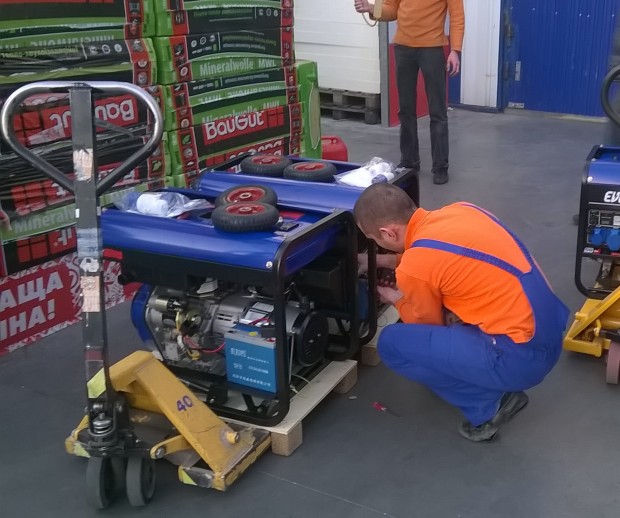
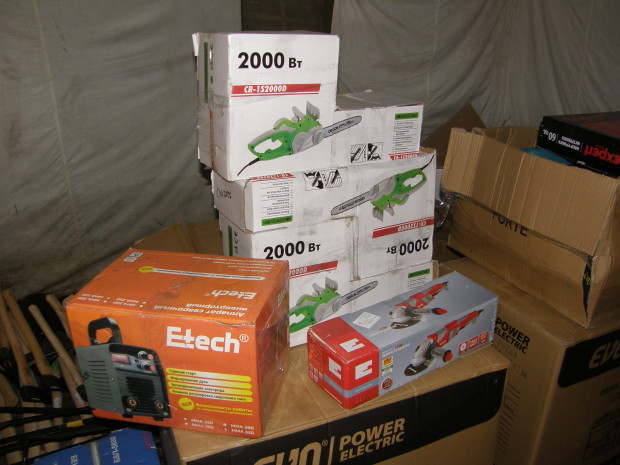
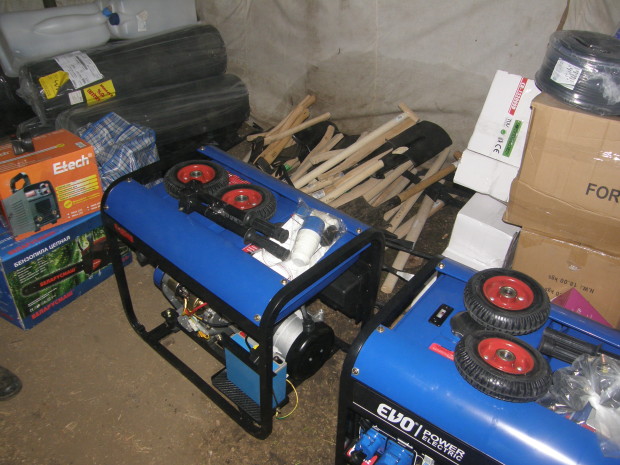
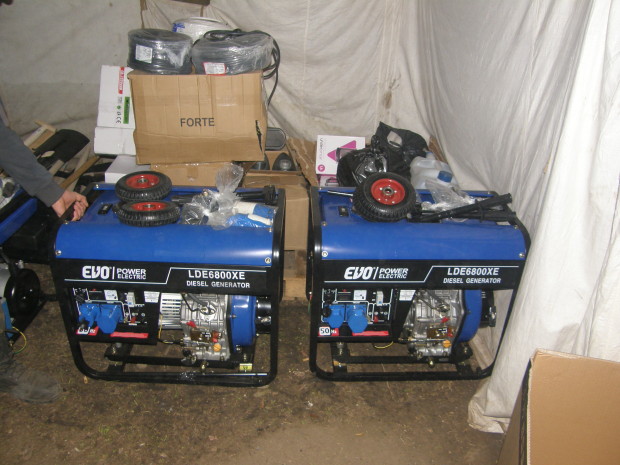
We arrived in Mykolaiv: the city is a bit gloomy, but maybe it is because it is autumn (Ed. Note. – No, it is just Mykolaiv in general). After wandering around the neighbourhoods, we made for the central market where, rumour had it, you could buy anything. But the diesel generators, it turned out, were only sold by one quirky gentleman who assured us that his prices are the lowest in town. Soon Sasha Zolotko arrived with other servicemen, and we all smartly got down to shopping. We picked up various pieces of electrical equipment, and nonetheless bought the generator as well.

Checking the generator.

Checking the generator.

Then we went to Epicentre [Ukrainian DIY store] where the first surprise awaited us – it turned out they sold exactly the same generators, but for two thousand hryvnias cheaper than “the lowest price in town.” The soldiers did not appreciate such a joke. After a polite conversation the unfortunate generator returned to its former owner, and the money returned back “into the pot.” We did not return the other equipment because the price tags were almost identical.

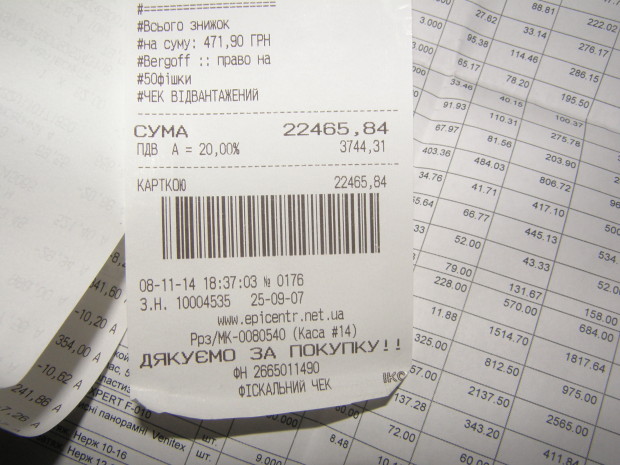
When we returned to Epicentre, we got another surprise, this time a pleasant one: the manager offered a large discount on all purchased equipment. As a result on the generators alone we saved around 6000 hryvnias. And 6000 hryvnias, my friends, is 4 extra radios with spare batteries and headsets.

We take this opportunity to convey our gratitude to the administration of the Mykolaiv Epicentre for providing discounts to the soldiers. Glory to the heroes!

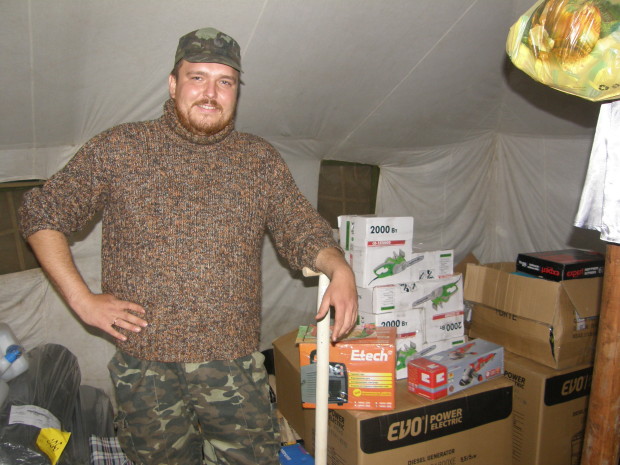
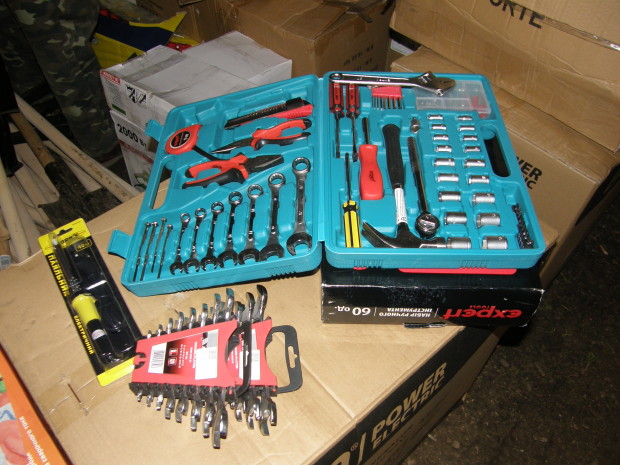
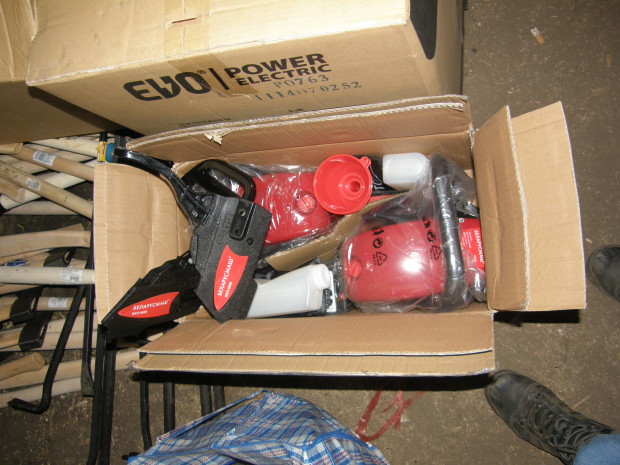
As a result we bought around a hundred thousand hryvnias’ worth of useful goods. The guys bought only the main essentials, saving wherever it was possible. But because they need everything – and I mean, literally EVERYTHING – we needed to spend a fair bit of time and effort. Until this trip of ours they did not even have tools for setting up their positions and for fixing equipment. Spades, screwdrivers, wrenches – the Motherland provided the soldiers with jack squat, they had to buy everything themselves. And the everyday needs were moved to the very bottom of the list. The presents were stuffed into a Gazelle [van] and sent to the camp.

* * *

The field camp has set up in the middle of the endless Mykolaiv steppes. The steppes, just to remind everyone, are windswept from all sides. No lights, no road. And a bitter cold. Fierce.

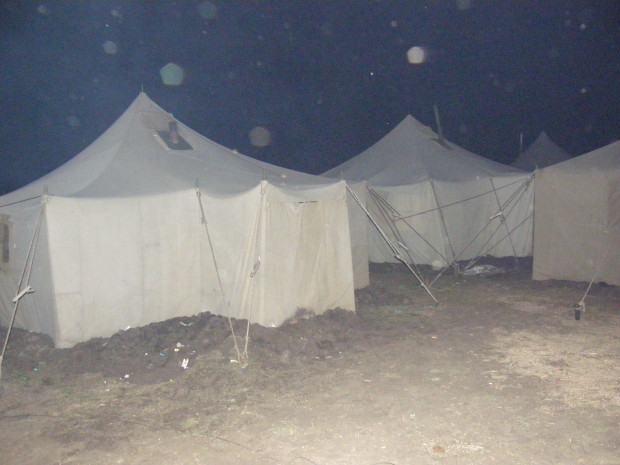
In the middle of all this pre-winter landscape stands the camp of the unit number 0006. If you photograph without the flash it looks like this:

The camp.

The camp.

And with the flash, like this:

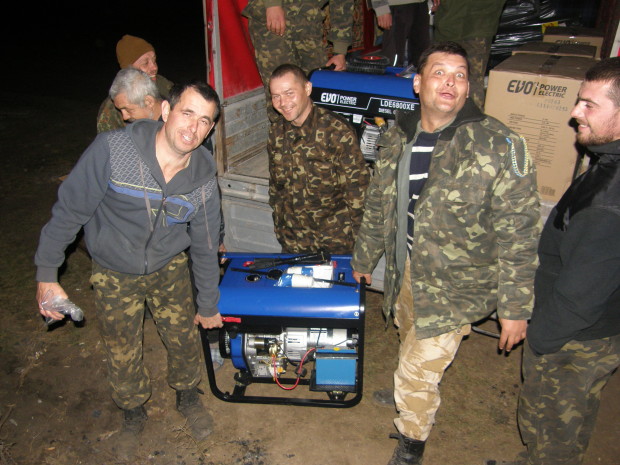
The camp using a flash.

The camp using a flash.

We have little idea how the soldiers get there after military leave without transport and navigation systems. Maybe there is some kind of a superpower – to find a road in this bloody nowhere. Possessed by pigeons and by fighters of the infernal unit 0666.

As it turned out, this very unit did periodically come into the field of view of our brother-volunteer. Mostly they helped out with warm clothes and produce. This could be seen: as far as warm clothes, the unit is more or less equipped. But there was categorically nothing in the way of generating warmth, lighting and charging. So it was clear where the childlike joy came from at getting the generators.

Video: Anastasia Lem

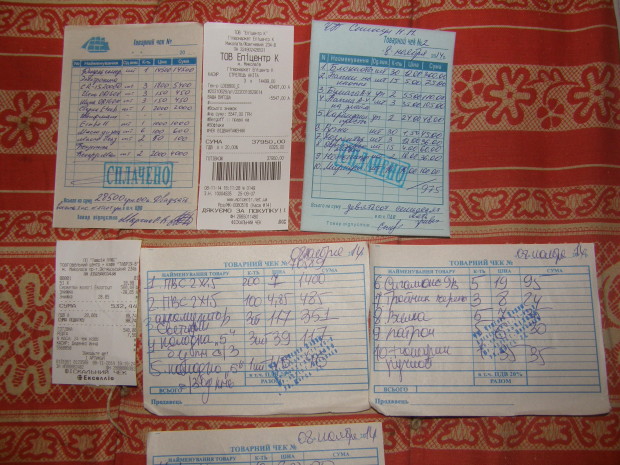
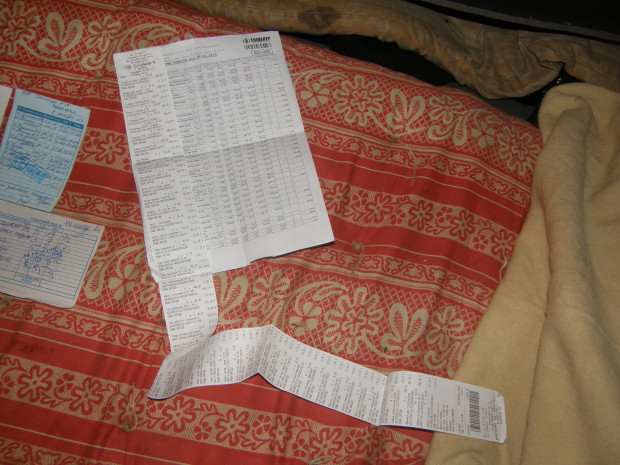
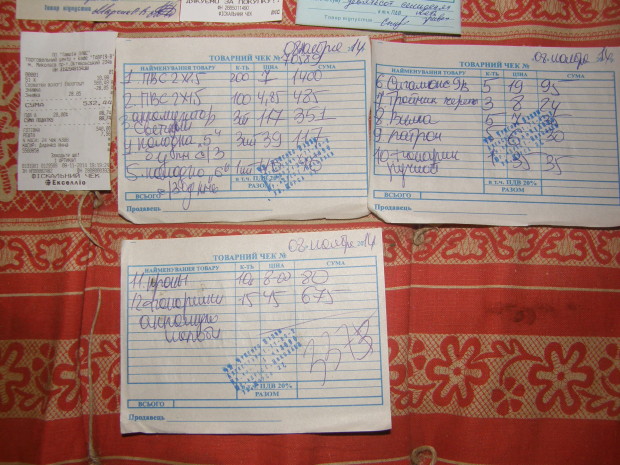
Here are the receipts. It should be understood that with the rapid procurement in various places, the reporting may suffer. So reporting everything down to the last kopeika [penny] is a little impossible. This is exactly the reason why Alexander asked for the money to be wired not to him, but to another Privat card to Igor Shedrin: 4149 6059 1120 5524.

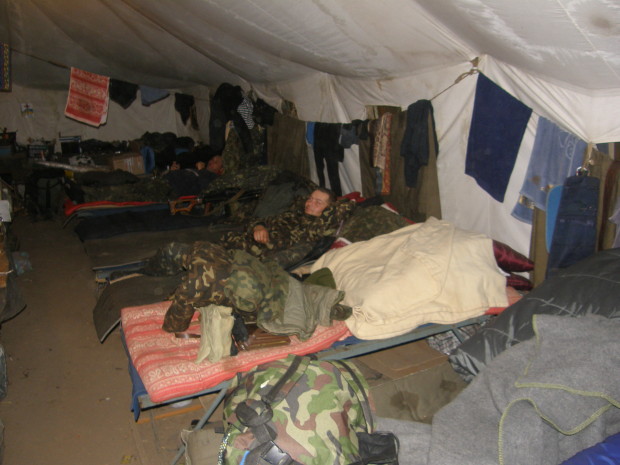
The soldiers met the two adventuring hobbits with open arms. After getting to know each other, we began examining the site. For example, the tents. You can live in them. Well, “live” as in, stitch something up, tape something down, stick something together with chewing gum, put up a stove – and live. For all of us, inhabitants of cozy almost centrally-heated, apartments, this situation may be shocking, but the guys bear it. And what is there to say, actually. During our visit it was +17 outside, so it was not too cold in the tents. But, gentlemen, in the winter it is far lower than +17. So the question remains open.

Indeed, it is nothing special. Imagine, outside the window there is a raging blizzard, at night, frost down to minus five, and you are in a warm cozy tent, with a warm and comfortable temperature of plus seven, trying to fall asleep while simultaneously drying your socks on your chest using your own body heat. Pretty common, every one of us went camping and lived in such conditions. For two or three days.

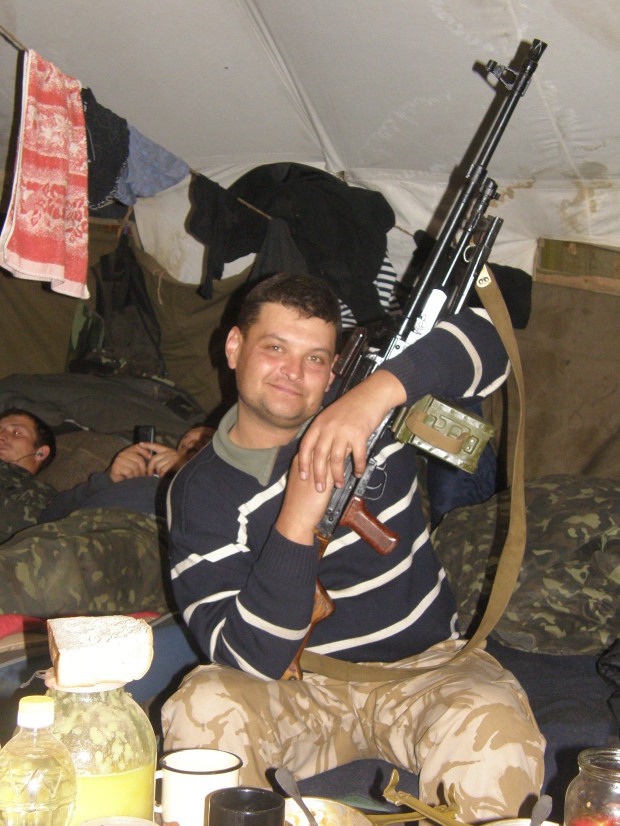
This is not a customary soldiers’ supper, quit dreaming. This is the soldiers being very happy with the presents, so they tried to show all the hospitality they can offer under their conditions. Take a look: on the table there is salt, a packet of tea, a couple of tins of canned food, and some jars with home preserves. Let’s try and guess which of the above was supplied to the soldiers by the Ministry of Defense.

At this, the cursory inspection of the unremarkable living conditions can come to an end, and we can move on from the material to the spiritual. And from the spiritual in these conditions the soldiers have only motivation.

An understanding, so to speak, of their goal. And while the goal is clear, they are ready for anything. As far as that is at all possible in the bitter Mykolaiv steppe on the eve of winter.

Who are these people? The most common of men of different ages, professions and viewpoints. One thing unites them. To the question “how do you know that you will win?” they reply: “we know what we are fighting for, and they don’t. We feel support behind us, and they don’t.”

We are completely stunned, to be honest. By these guys here, who do not lose hope and confidence in each other, even though they sit miles from anywhere, in hellish conditions. And in the hellish uncertainty they are helped by thoughts about us. You, specifically you, give them hope. When these blokes smile – it is to you they are smiling. In the steppe there is no-one else to smile to and no-one to thank.

The things bought now will radically help the guys to settle in their new location in the zone of the ATO [anti-terrorism operation]. But. There is still not enough. The unit is completely run down. Sasha asked not to write this and generally not to talk about how bad things are in reality, but Sasha can go command his platoon, and not interfere with freedom of speech. The unit. Is completely. Up shit creek.

Now there is an offer to equip the APC’s [armoured personnel carriers] with anti-cumulative screens. We are asked to pay for the metal – the welding and the work of the volunteers will be free. The offer is extremely profitable and tempting, but even so, according to preliminary estimates, it will cost around 50 thousand hryvnias, hopefully less.

In addition, two weeks ago we published material about an ambulance volunteer named Puma, who believes that every unit has a medical UAZ attached to it. Well, Puma is wrong. Not every unit. Right now Sasha is asking to find any car with a diesel engine which can fit stretchers, so the unit can take it on their balance. Do you happen to accidentally have this lying around? We don’t. We are looking for it. And this also costs money.

So in general, even supplying only Sasha’s platoon (good news – Sasha was appointed vice-platoon leader) ends up as some unimaginable money, and the more you look into all this, the more discouraged you get. Whatever you think of – they don’t have it. How in these conditions grown men who look upon all this every bloody day and in this total ruin and oblivion, live and are even planning to wage war and gain victory – is completely unclear.

Our guys really need your help and support. The stuff we bought is pretty good help in the war, but as usual, it is not enough. On the scale of the unit it is nothing. Any day now the guys will be sent into the ATO zone (actually, they should have sent them in a couple of days ago now, but that is just how the army is, it is quite unpredictable), and only after deployment can they firmly pinpoint their needs. And we will continue to cover the state of affairs in the 28th Brigade. And this trip of ours is not the last.

We understand that you, folks, have already sent us all of your available means the last time. And this last time was a week ago. But you never know, maybe the last time you thought “nah, even without me there will be a generous Vasya, who will pay for the soldiers, let Poltorak pay them.” So, the bad news – Poltorak will not pay, and the generous Vasya has already paid. Now it is your turn. For people who asked for Yandex-money – we found and put up a Yandex-purse, please show us that we did not do this in vain. Because the winter is not just near. The winter is here already.

We have 10 to 20 thousand people reading us each day. If each of you, folks, for at least one week forgo beer and cigarettes, you will save up a sum of around 200 hryvnias. And 20 thousand times 200 hryvnias is already 4 million.

So what are you waiting for? The hryvnia is already devaluing right in your hands. Use her to do a good deed while this is still possible!

Card for the transfer of funds:
Privat: 4149 6059 1120 5524 (Igor Shedrin)

Yandex purse: 41001690315741

Source: PetriMazepa

RELATED:

Petr&Mazepa, The armor is strong, Part 1

Posted in English, English News, Help for ukrainian army, Pictures, War in Donbas | Tagged , , , , , , , | 3 Comments

Zum Volkstrauertag

1911864_377322305769453_281626039765347831_n Heute ist Volkstrauertag. Der Volkstrauertag ist in Deutschland ein staatlicher Gedenktag und gehört zu den „Stillen Tagen“. Er wird seit 1952 zwei Sonntage vor dem ersten Adventssonntag begangen und erinnert an die Kriegstoten und Opfer der Gewaltherrschaft aller Nationen.

Wir zünden in diesem Jahr diese virtuelle Kerze für die Opfer des unbegründeten, völlig absurden und aufgezwungenen Krieges gegen das ukrainische Volk an.

Auf Anregung von Fes Tus.

Posted in Deutsch, Posts - Deutsch | Tagged , | 1 Comment